Developer Tools
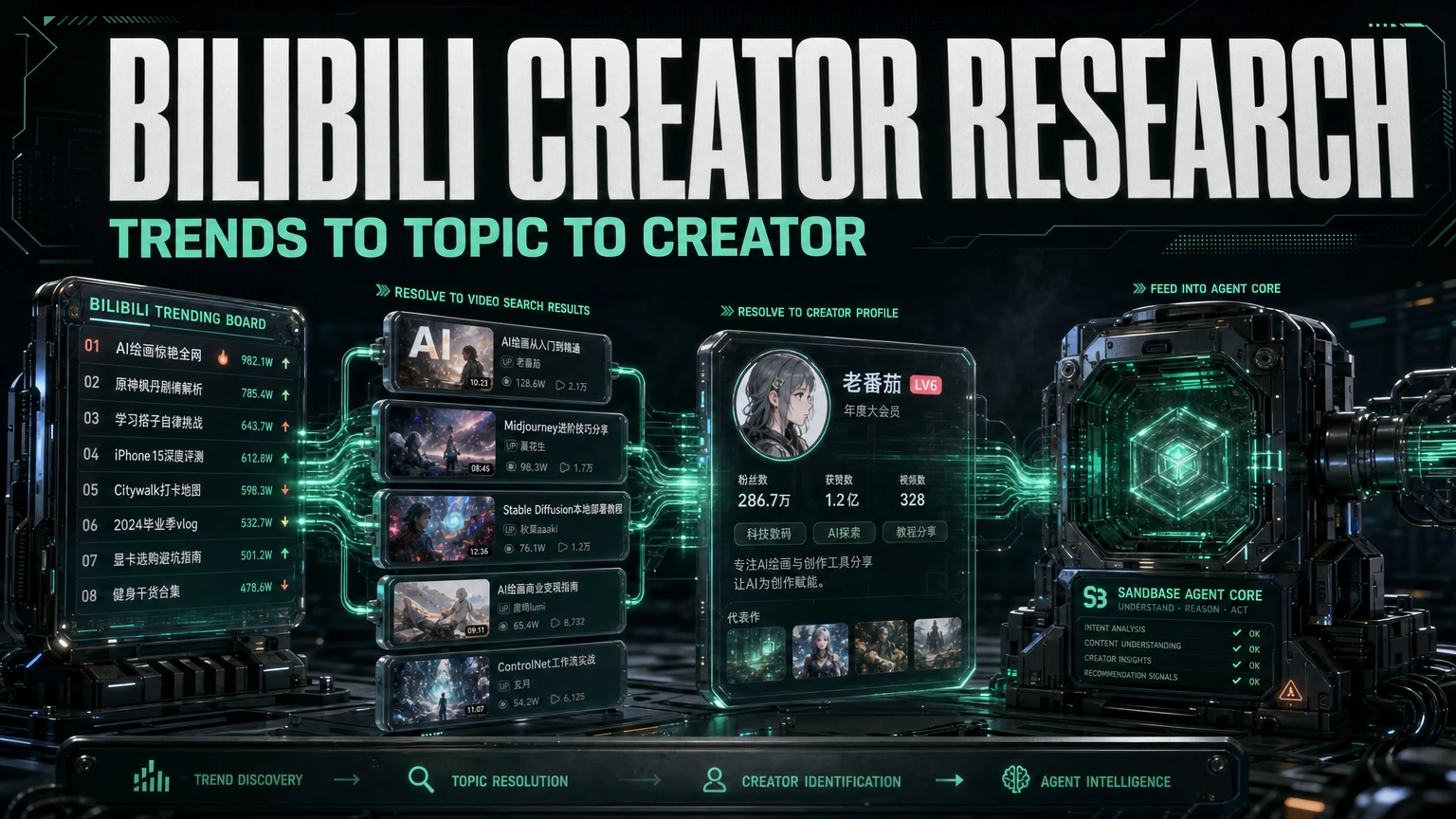
Bilibili Creator Research API Workflow | SandBase
Build a Bilibili creator-research workflow: read trends, search a topic, and profile the creator — one SandBase key, no Bilibili login.
ReadBuild a Bilibili creator-research workflow: read trends, search a topic, and profile the creator — one SandBase key, no Bilibili login.
Read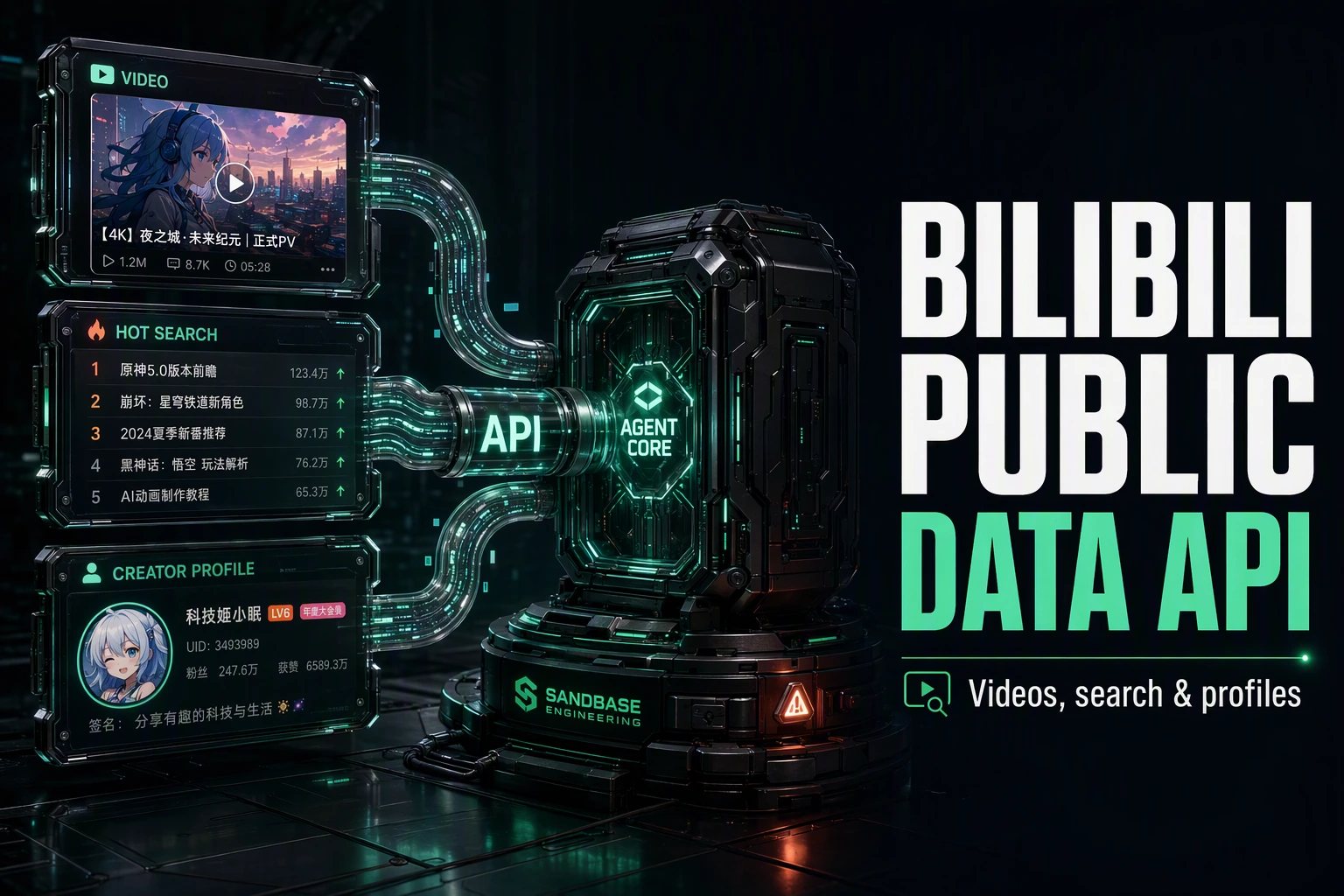
Read public Bilibili videos, search, hot search, and user profiles with one REST API. No Bilibili login, no SDK — one SandBase key, built for agents.
Read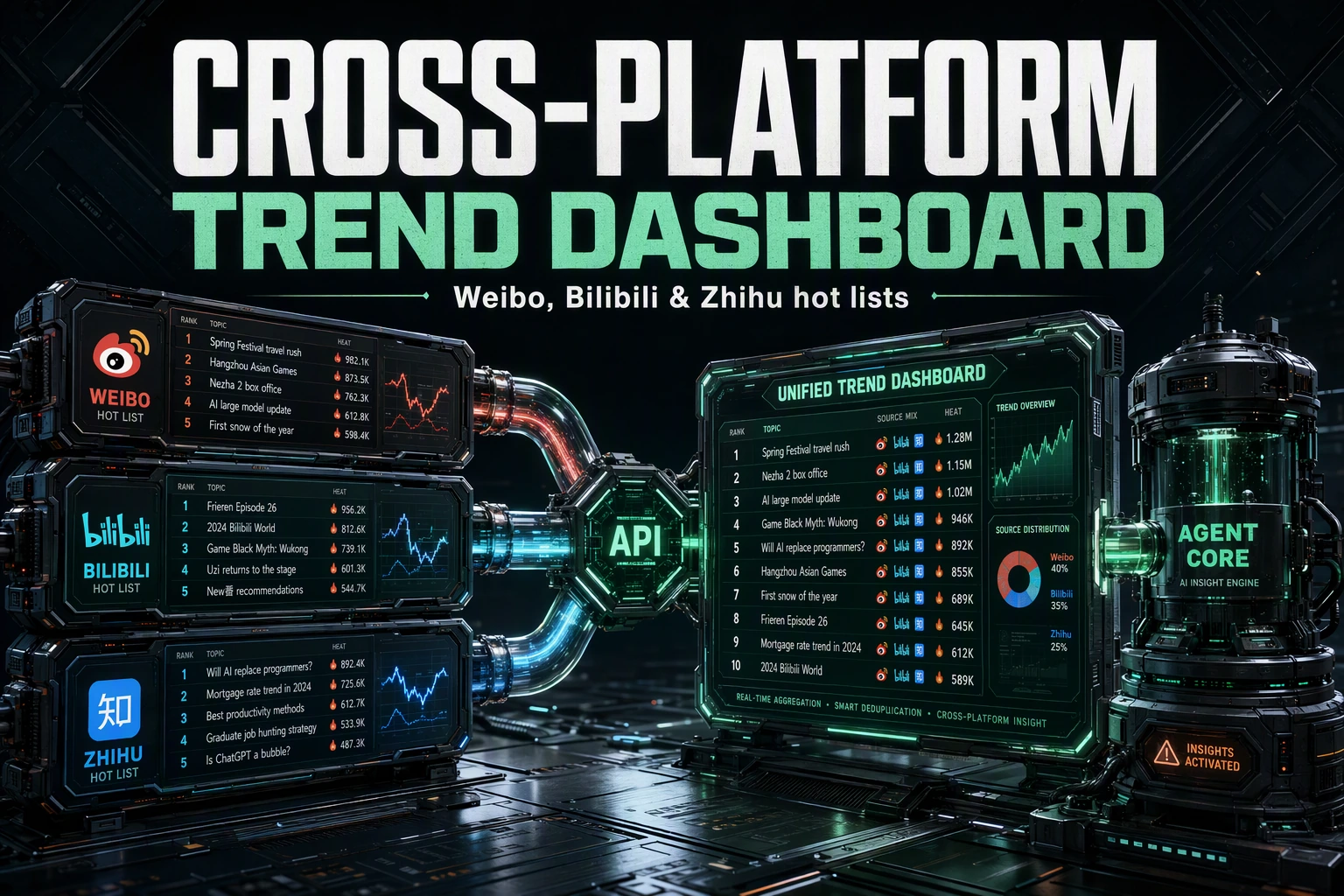
Aggregate Weibo, Bilibili, and Zhihu hot lists into one trend dashboard with one REST API — one SandBase key, no logins, normalized to a shared shape.
Read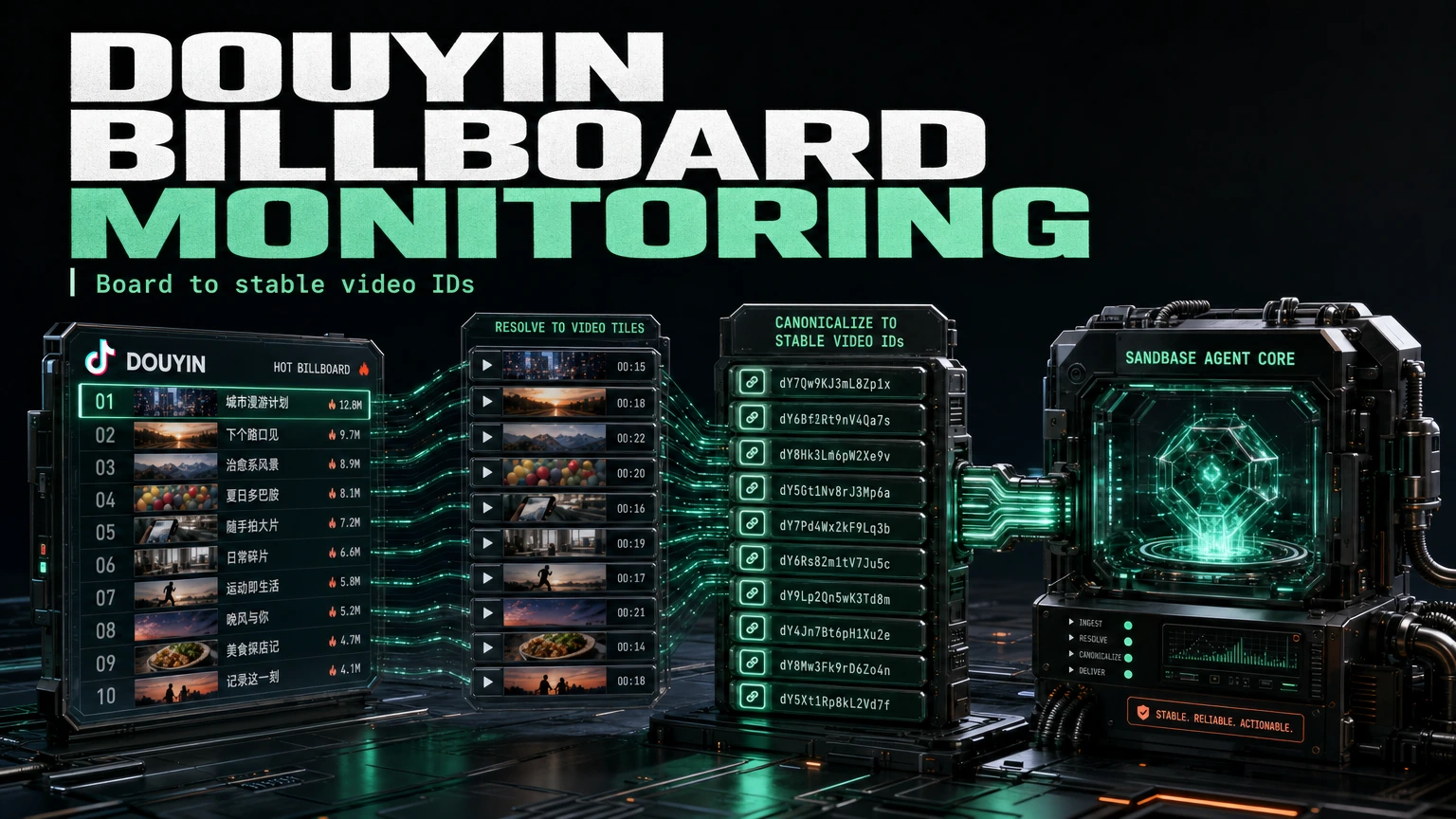
Monitor Douyin's high-like billboard and resolve each video to a stable aweme_id with one SandBase API key — poll the board, dedup by ID, no login, no SDK.
Read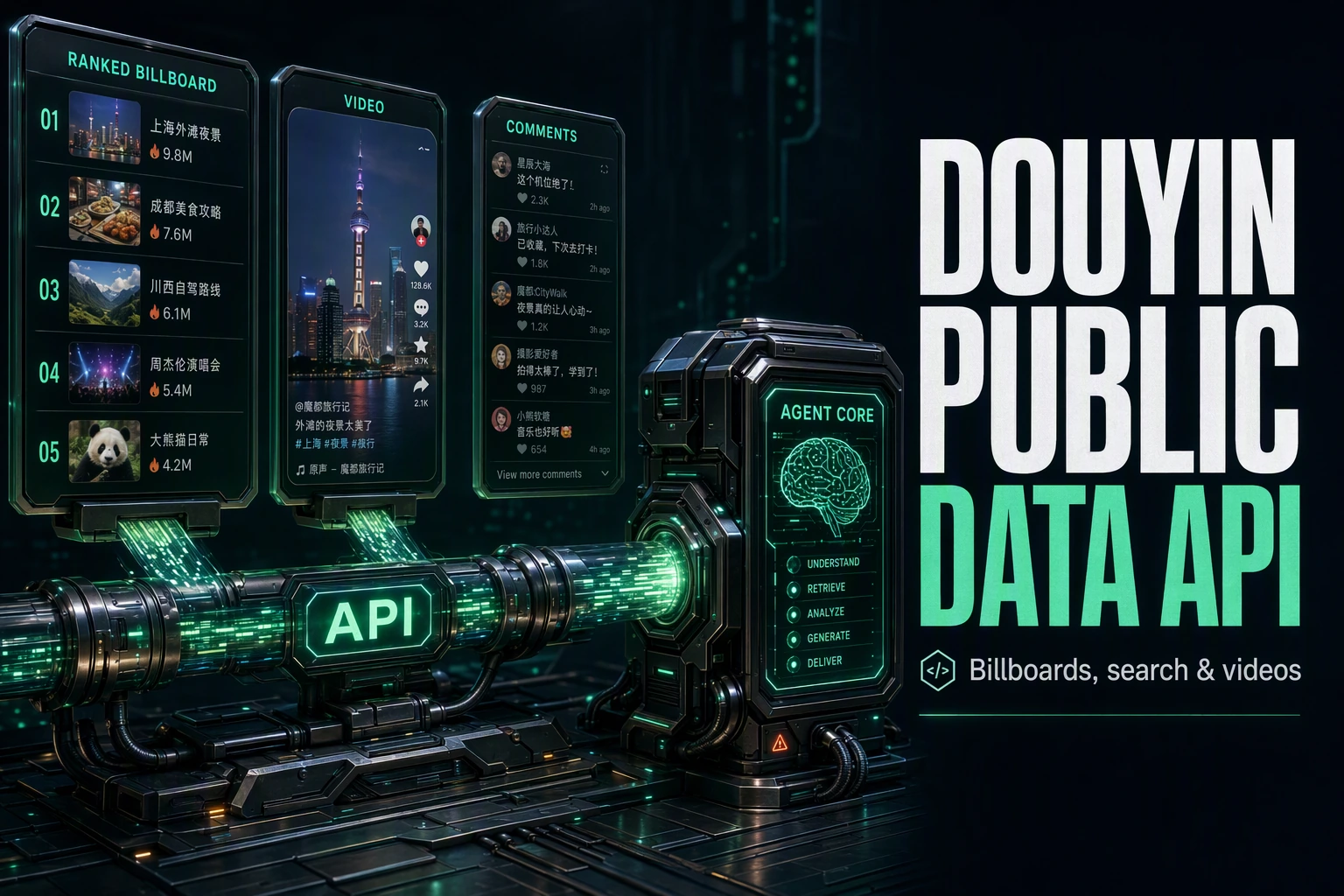
Read public Douyin billboards, search, videos, and comments with one REST API. No Douyin login, no SDK — one SandBase key, built for agents.
Read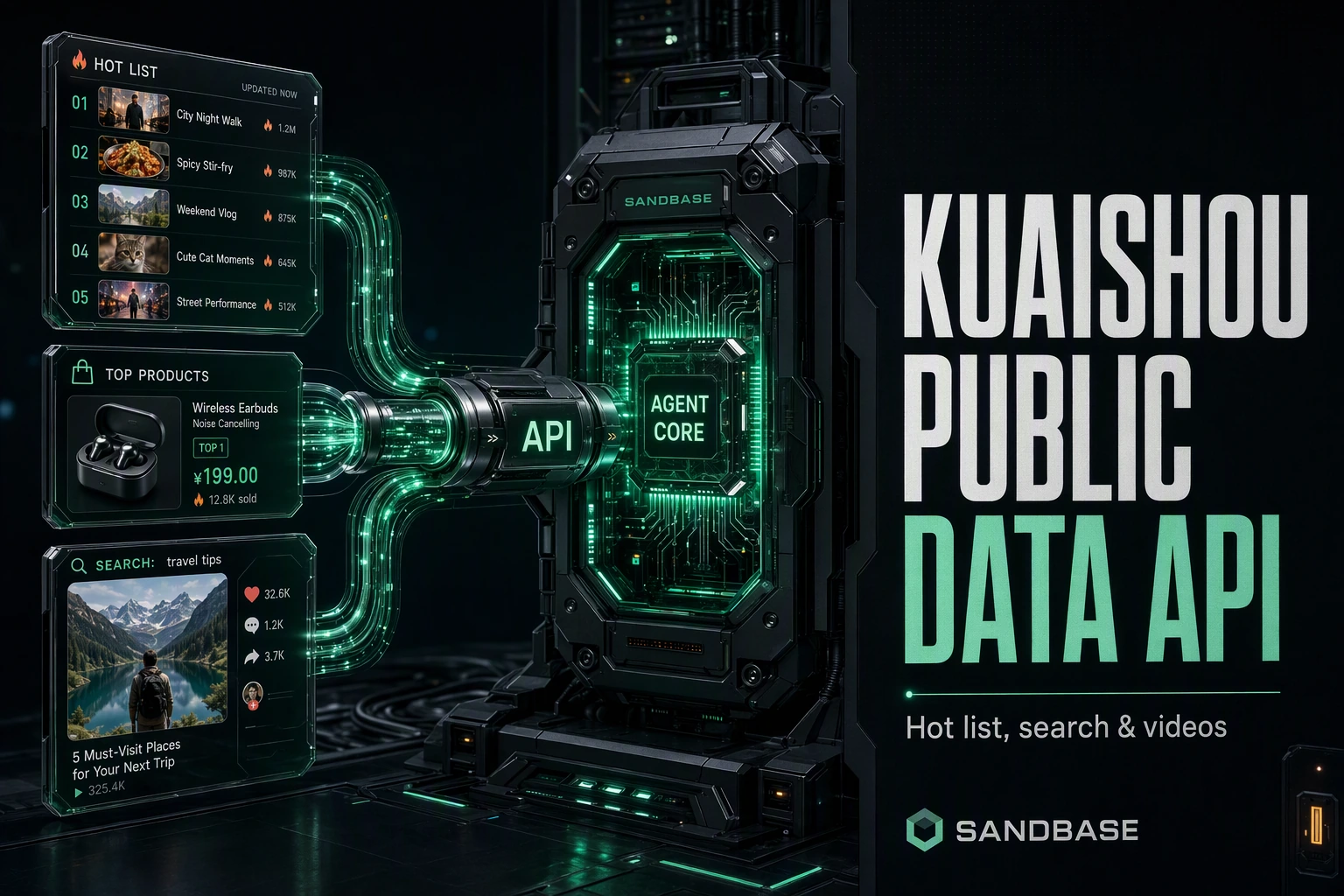
Read public Kuaishou hot list, search, shopping rankings, and videos with one REST API. No Kuaishou login, no SDK — one SandBase key, built for agents.
Read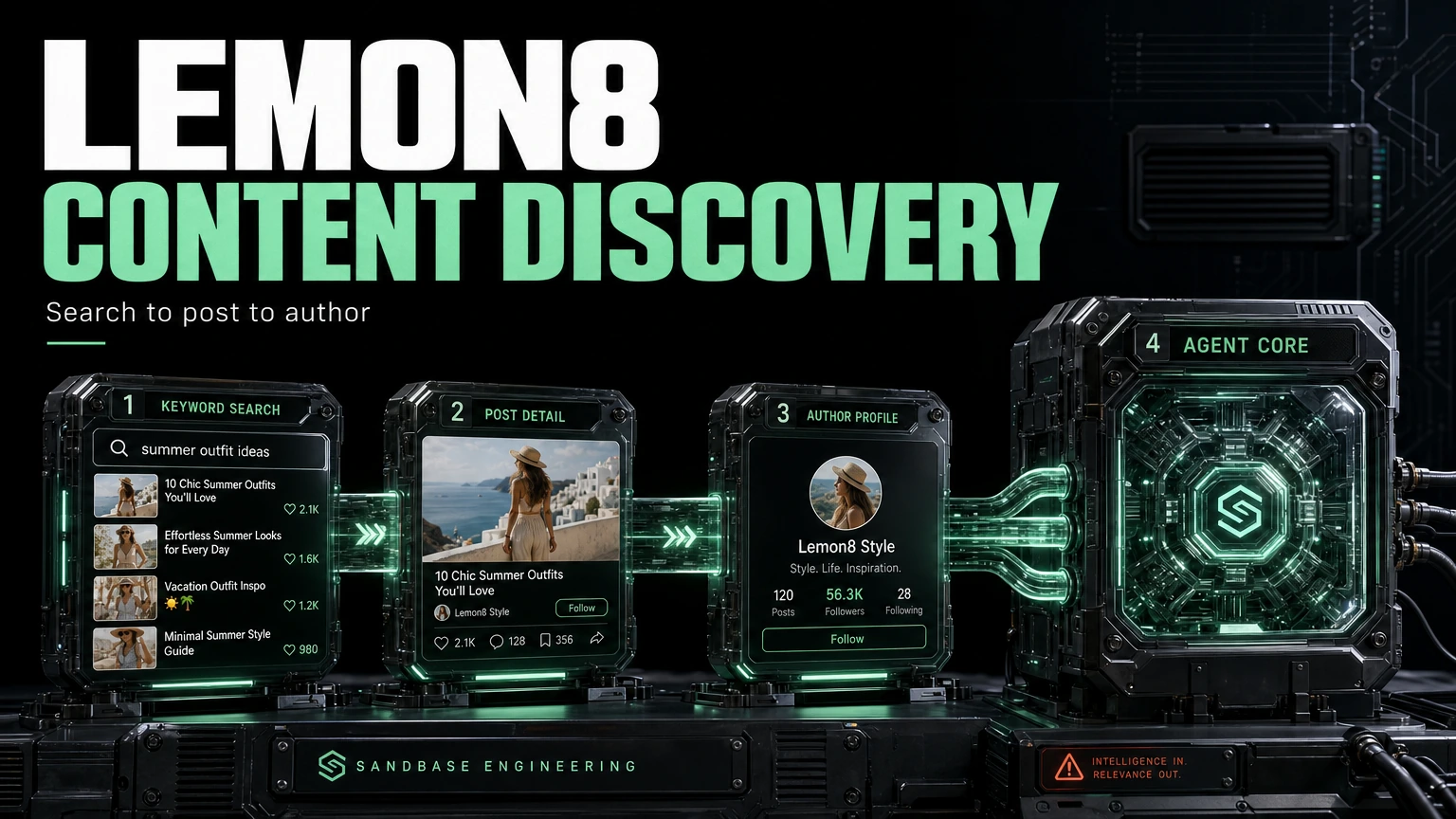
Build a Lemon8 content-discovery workflow: search a keyword, open a post, and profile its author — one SandBase key, no Lemon8 login, no SDK.
Read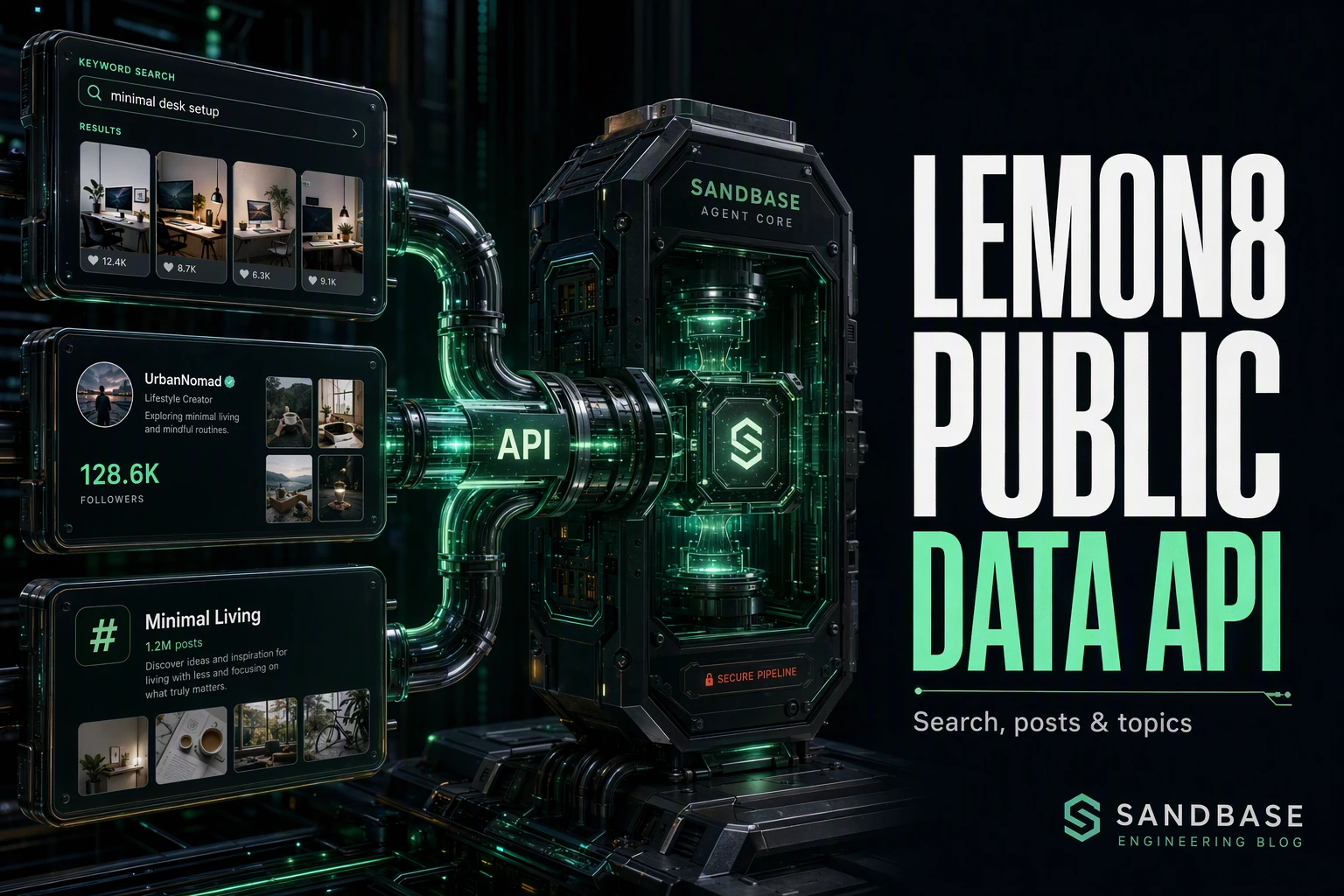
Read public Lemon8 search, posts, users, and topics with one REST API. No Lemon8 login, no SDK — one SandBase key, built for agent workflows.
Read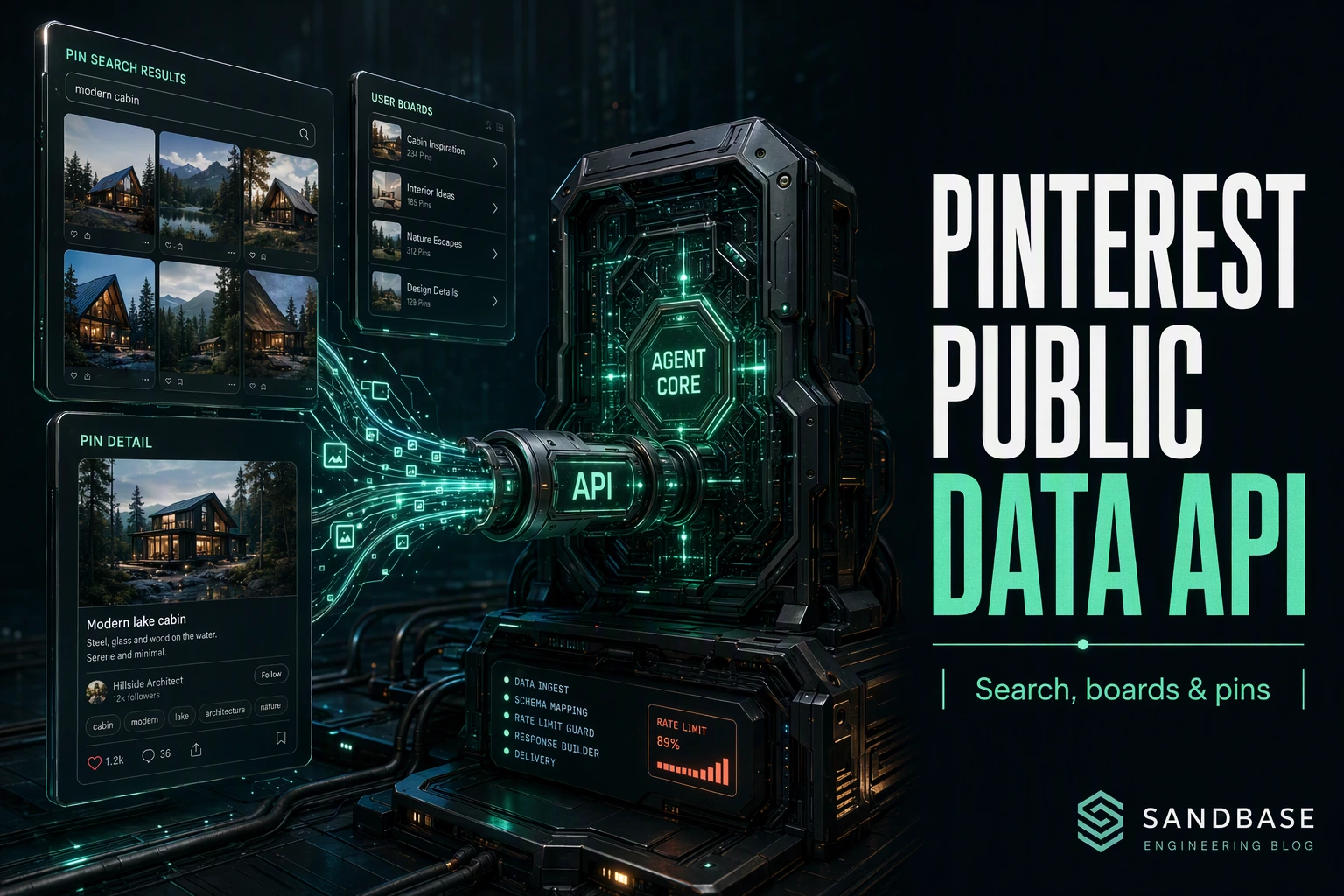
Read public Pinterest search results, boards, and pins with one REST API. No Pinterest login, no SDK — one SandBase key, built for agent workflows.
Read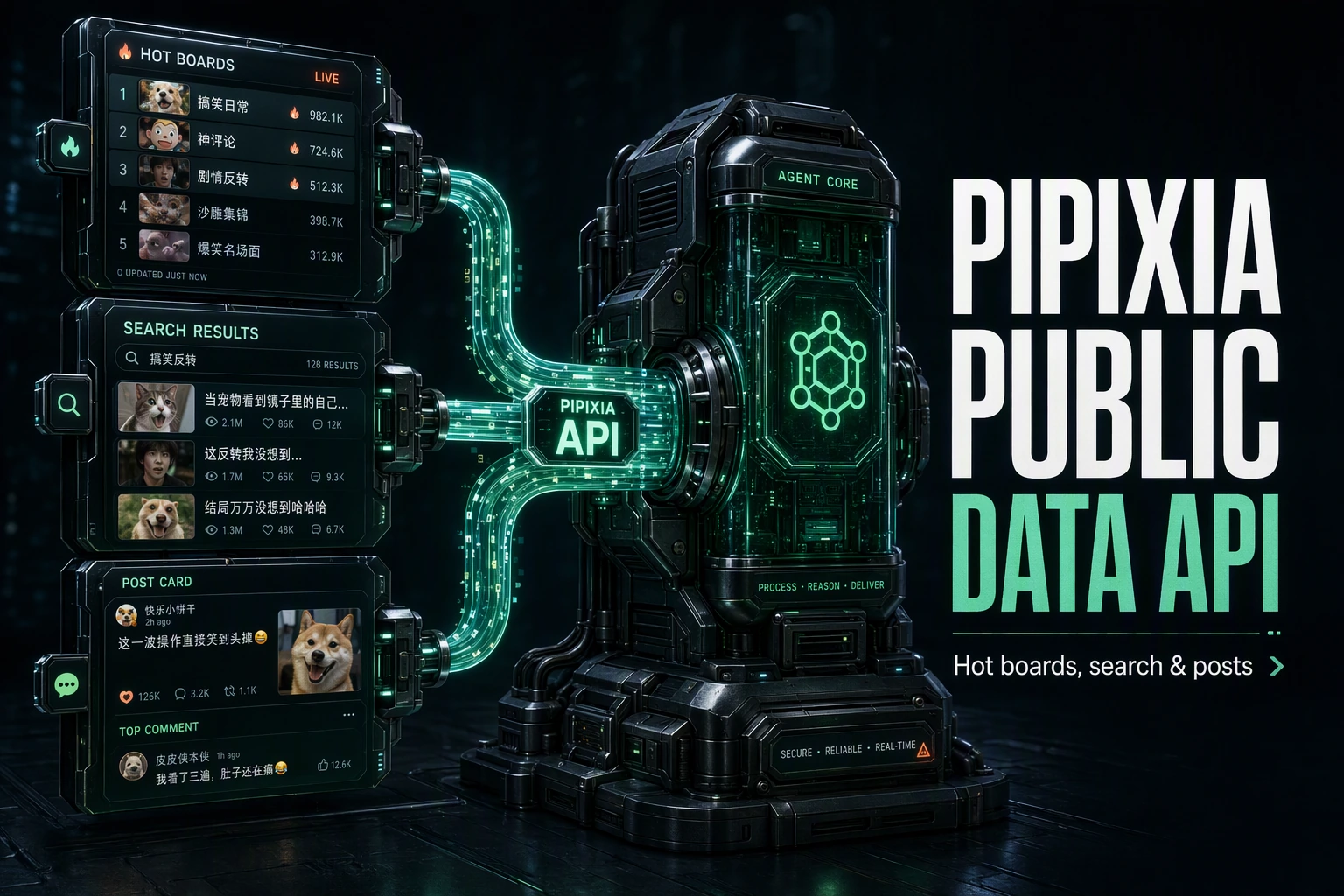
Read public Pipixia hot boards, search, users, and posts with one REST API. No Pipixia login, no SDK — one SandBase key, built for agent workflows.
Read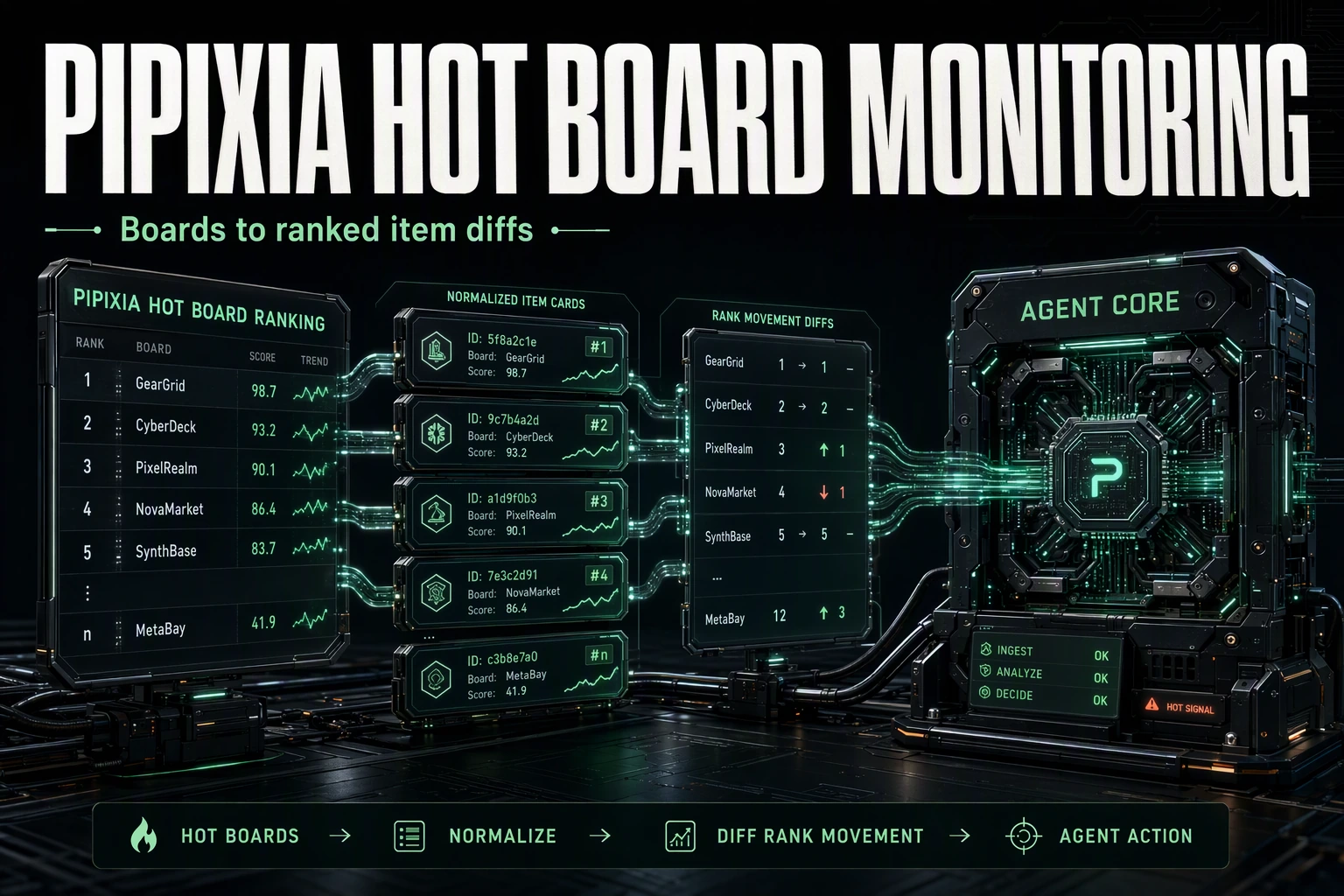
Monitor Pipixia's hot boards with one REST API: read the board list, normalize items by id, and diff rank across runs — one SandBase key, no login.
Read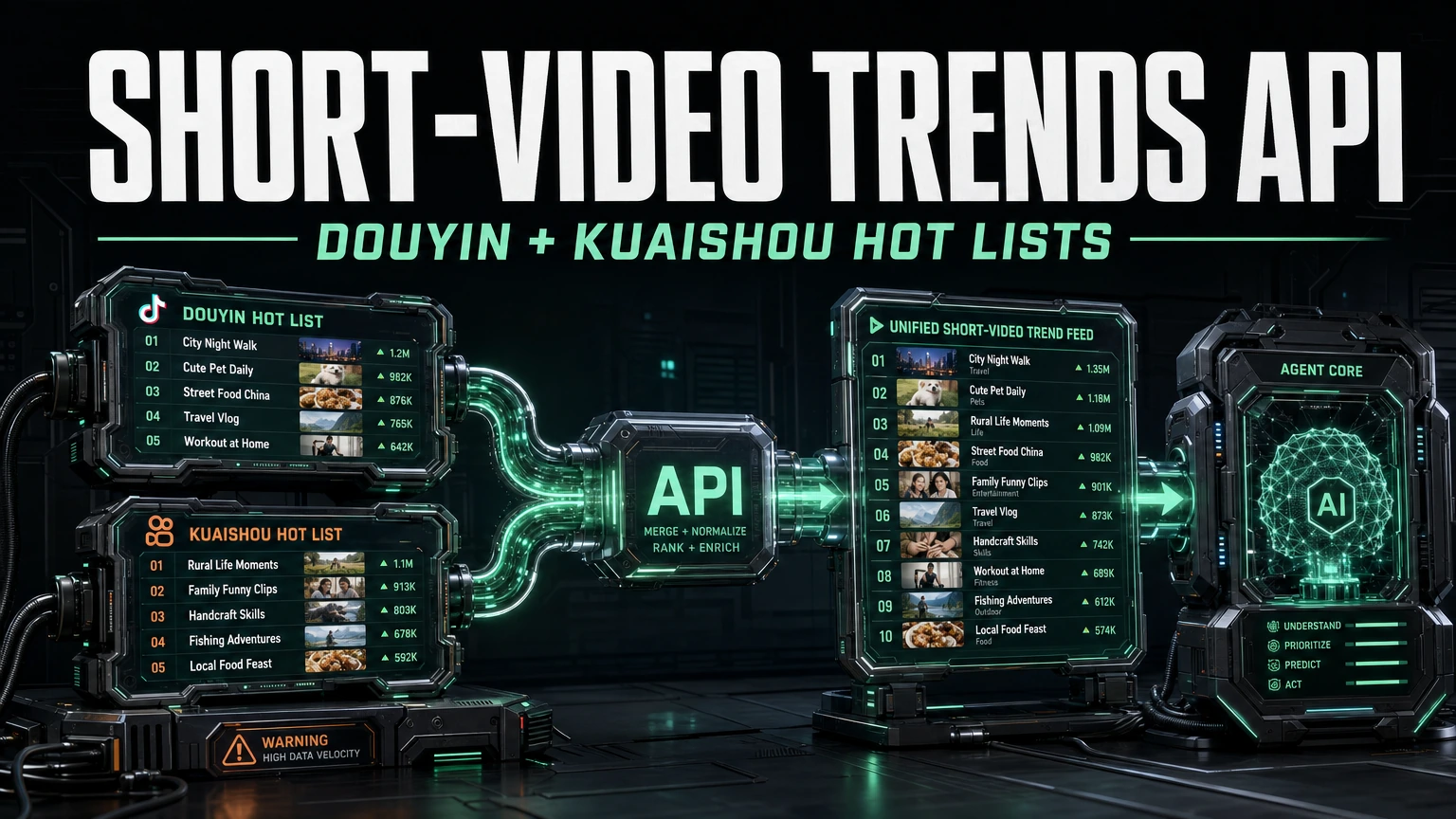
Aggregate Douyin and Kuaishou hot lists into one normalized trend feed with a single SandBase API key — read both boards, map to one schema, no login, no SDK.
Read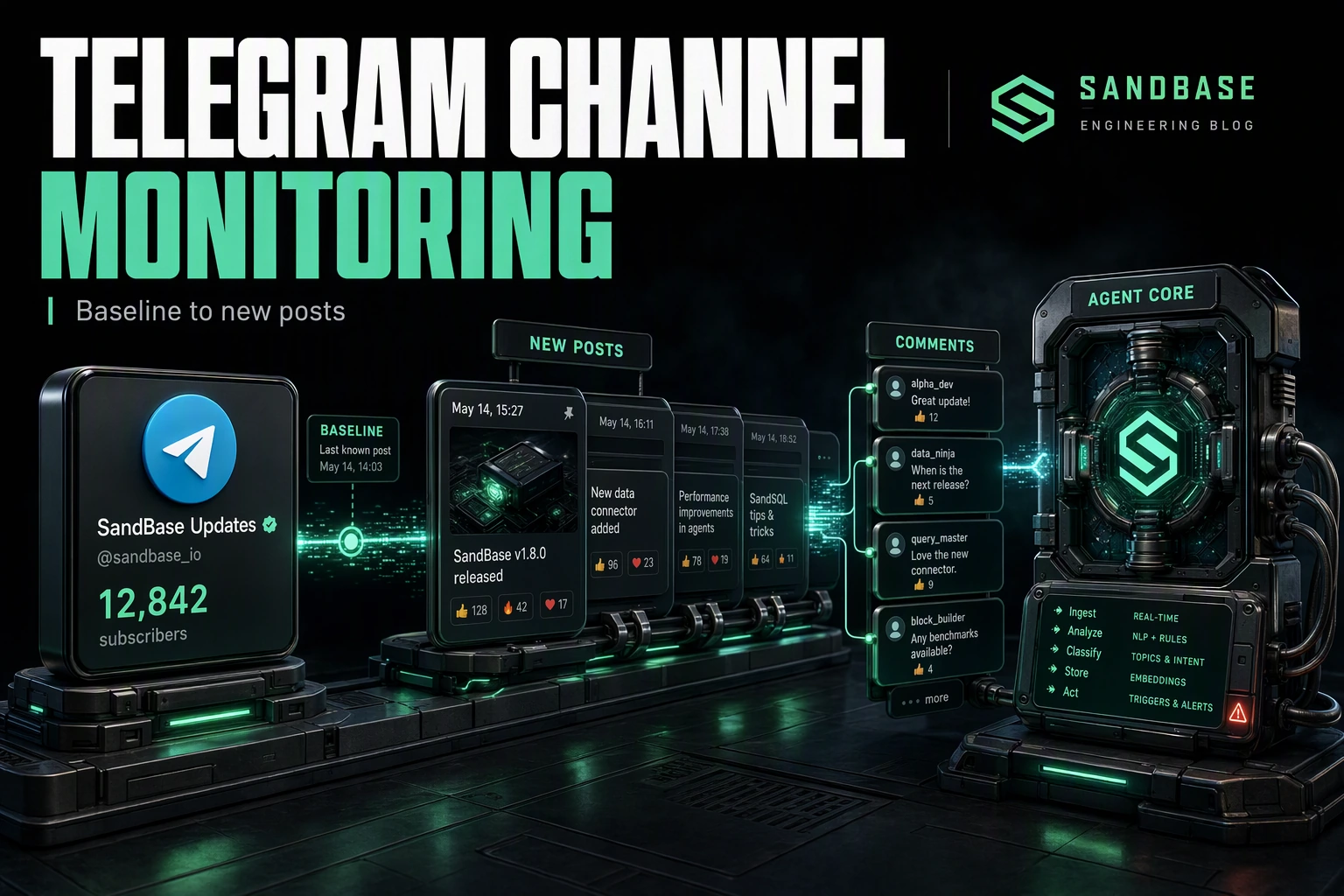
Monitor a public Telegram channel with one REST API: baseline it, poll new posts with the after_cursor, and read engagement — one SandBase key, no MTProto, no login.
Read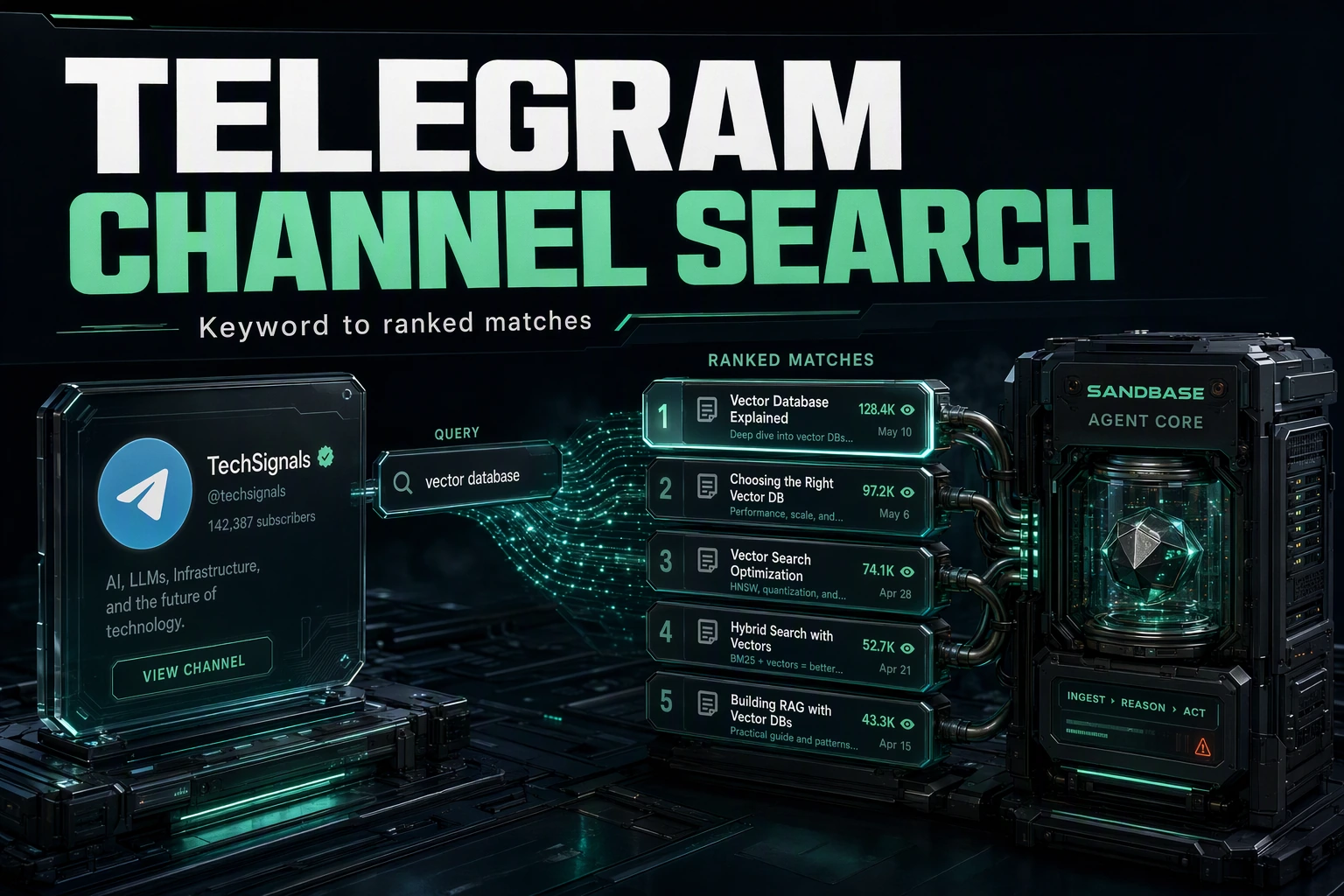
Search a public Telegram channel's history by keyword with one REST API: baseline the channel, run in-channel search, and rank matches — one SandBase key.
Read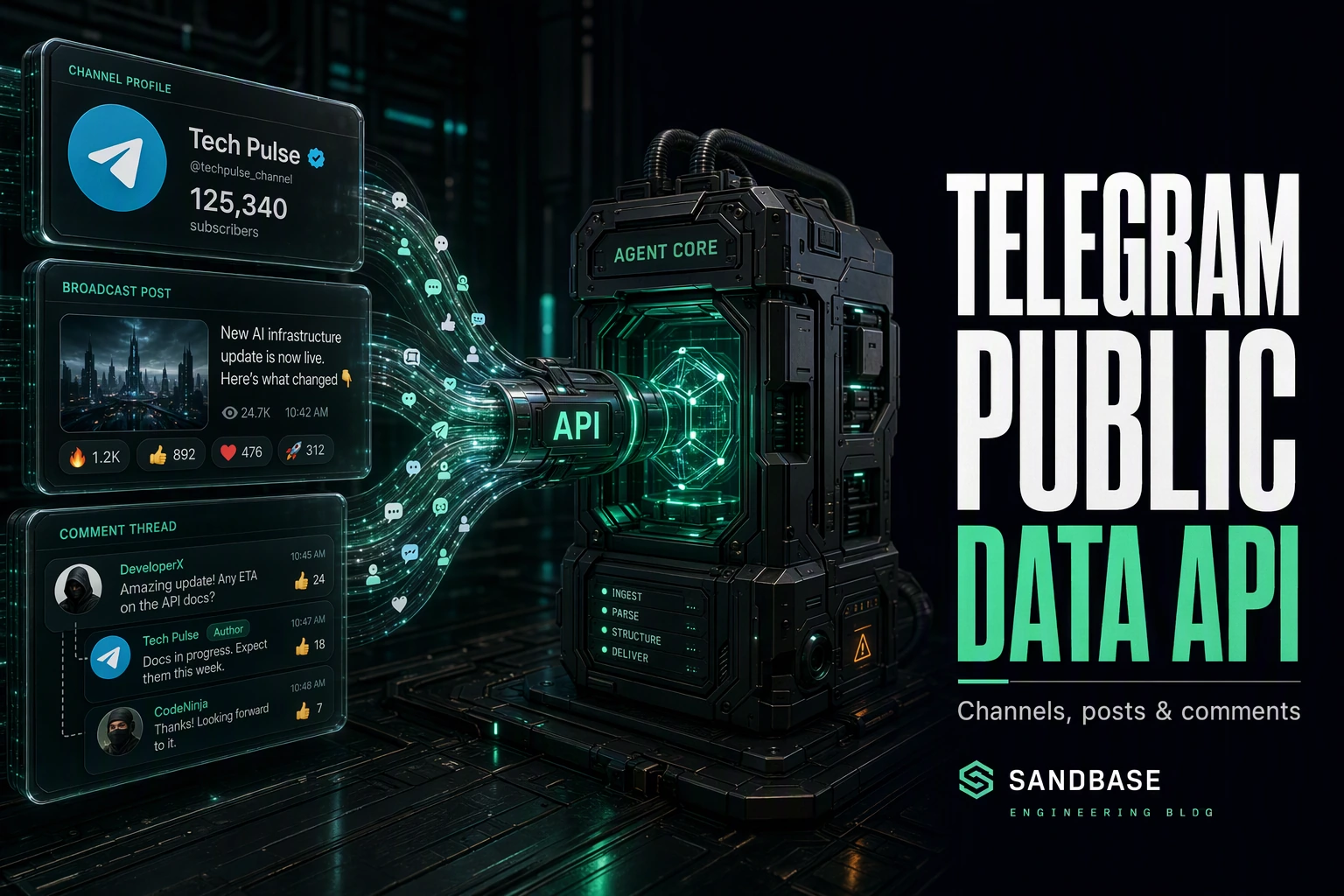
Read public Telegram channels, posts, comments, and search with one REST API. No Telegram login, no MTProto client — one SandBase key, built for agents.
Read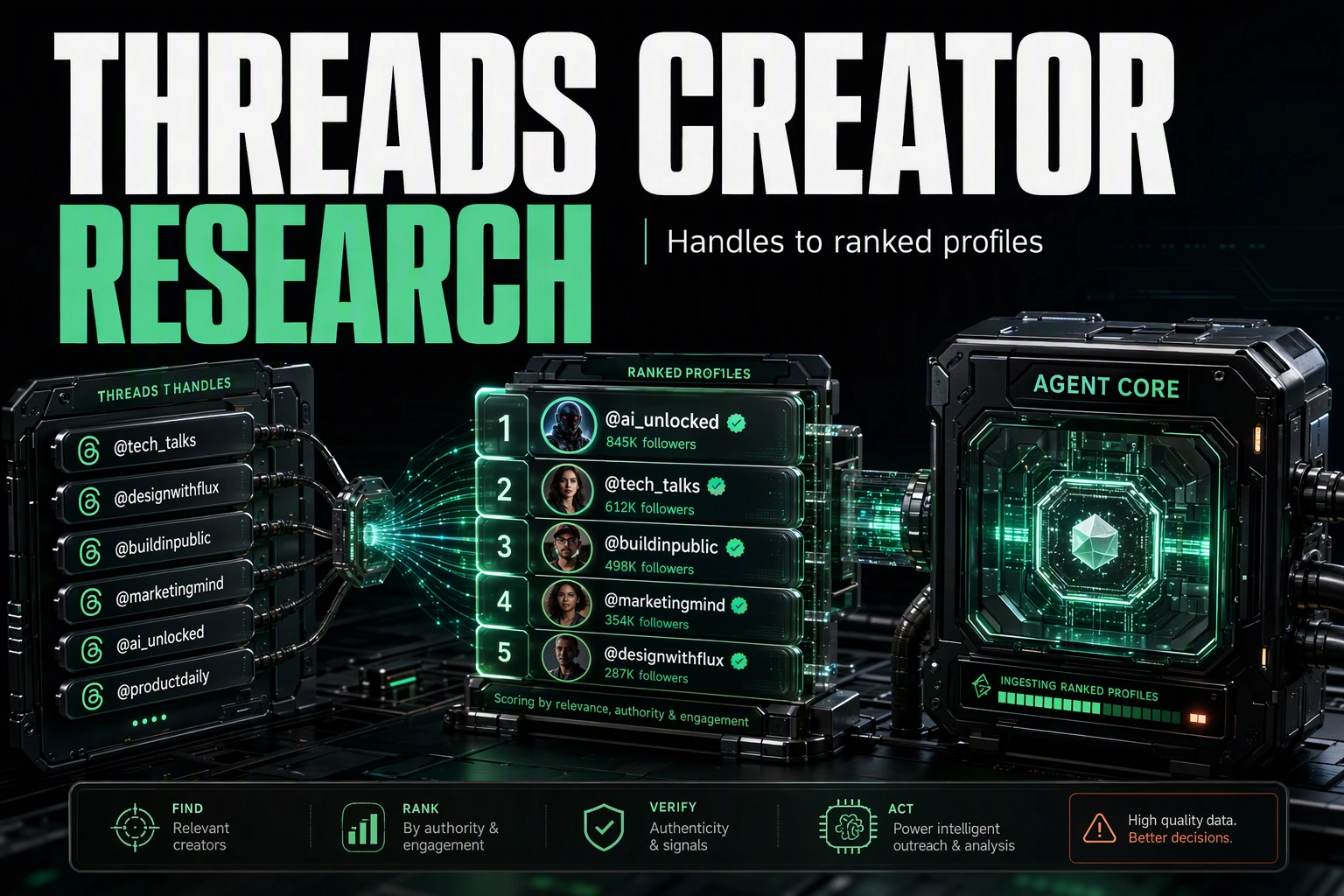
Build a Threads creator-research workflow: resolve a list of handles into profile records, rank by reach, and extract bio links — one SandBase key, no login.
Read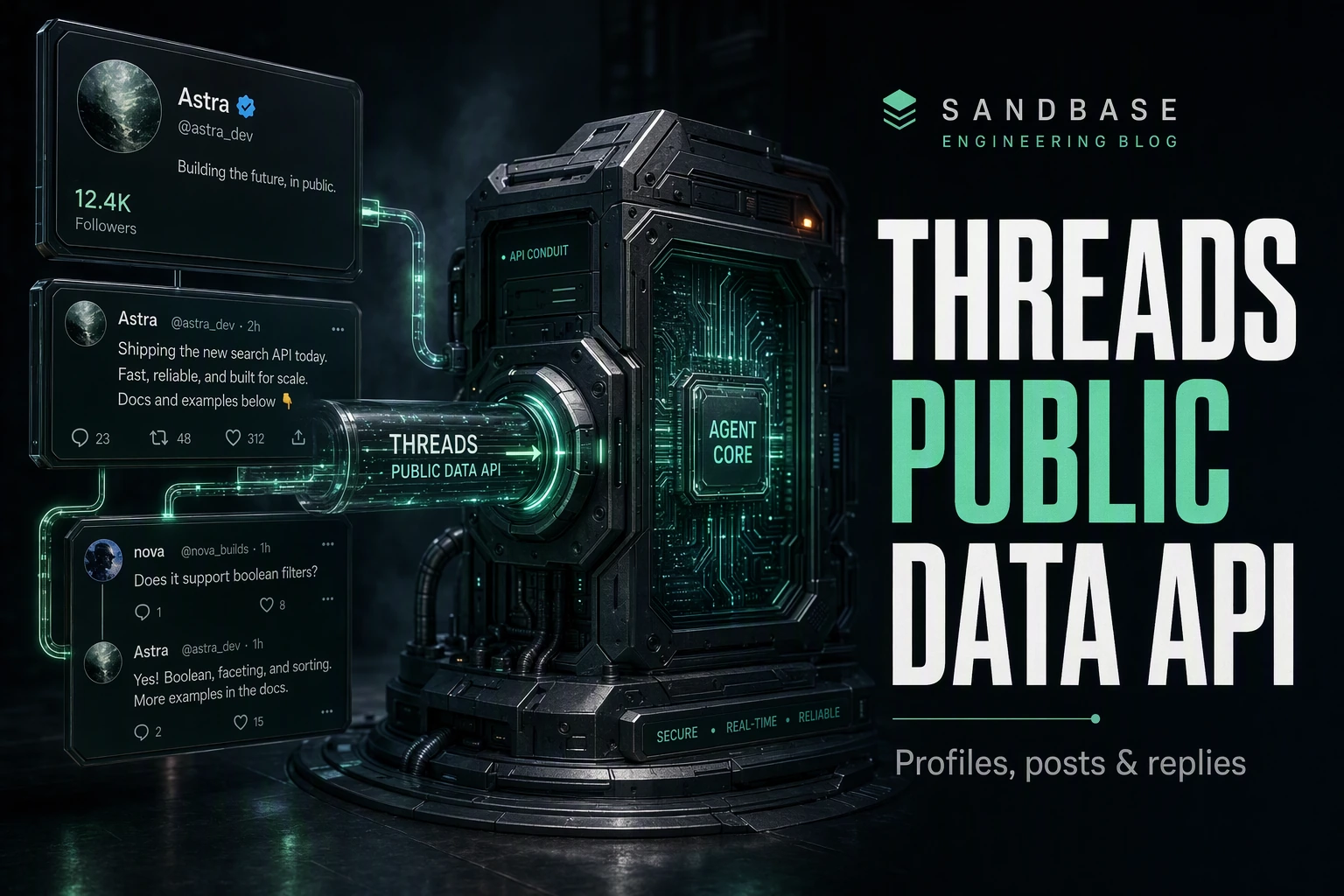
Read public Threads profiles, posts, replies, and search with one REST API. No Threads login, no SDK — one SandBase key, built for agent workflows.
Read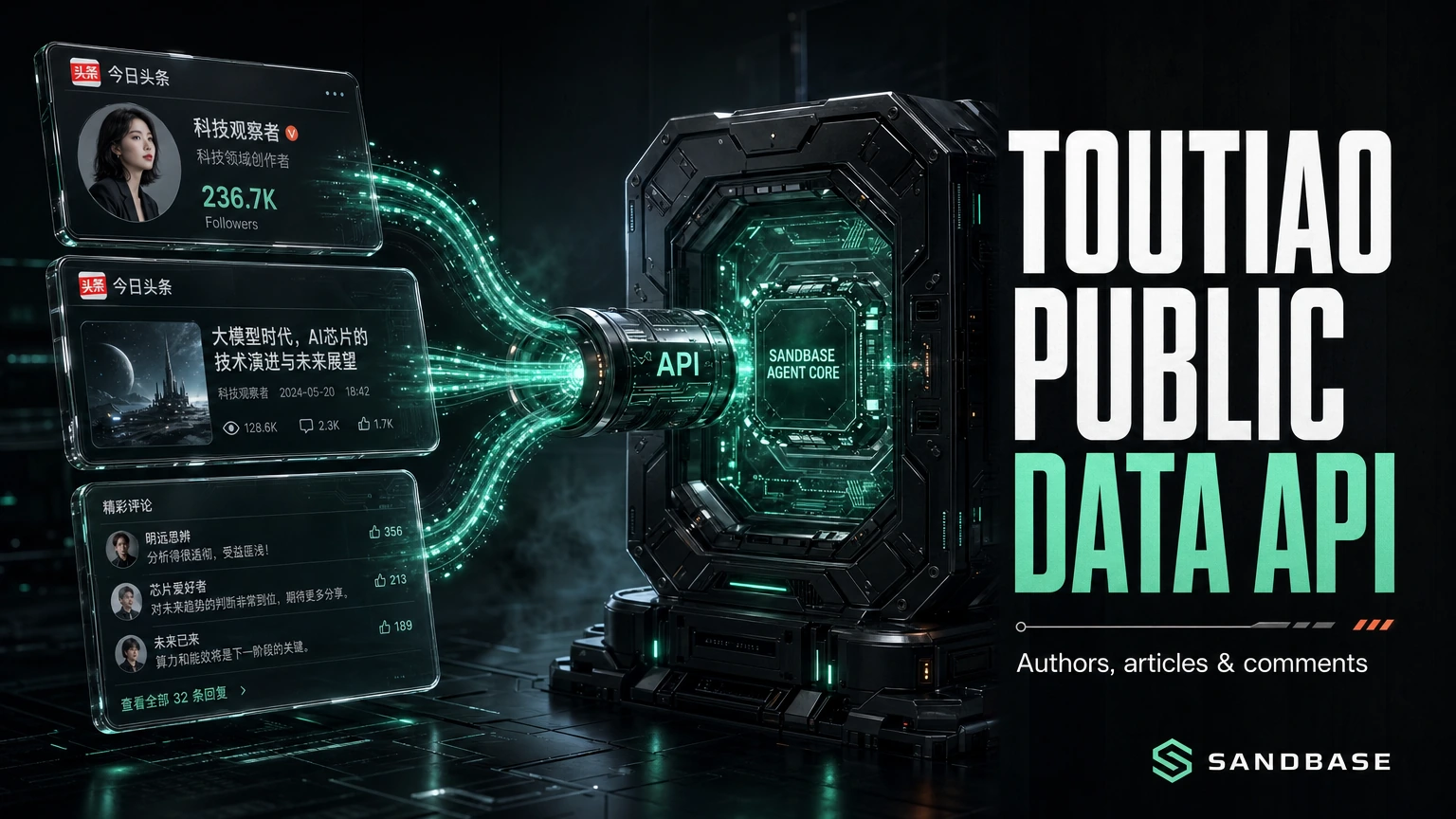
Read public Toutiao authors, articles, videos, and comments with one REST API. No Toutiao login, no SDK — one SandBase key, built for agents.
Read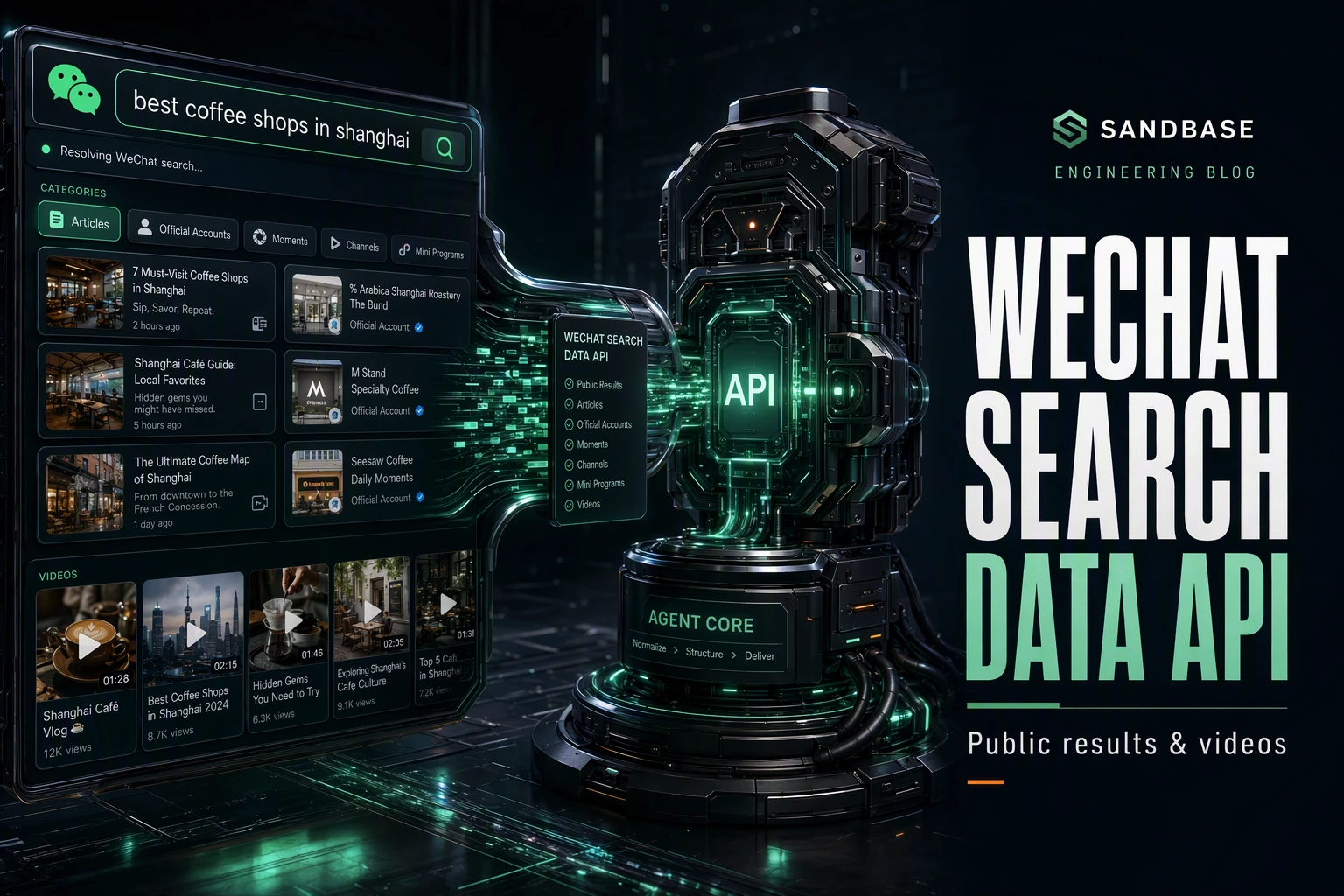
Query WeChat Search (搜一搜) for public results and videos with one REST API. No WeChat login, no SDK — one SandBase key, built for agent workflows.
Read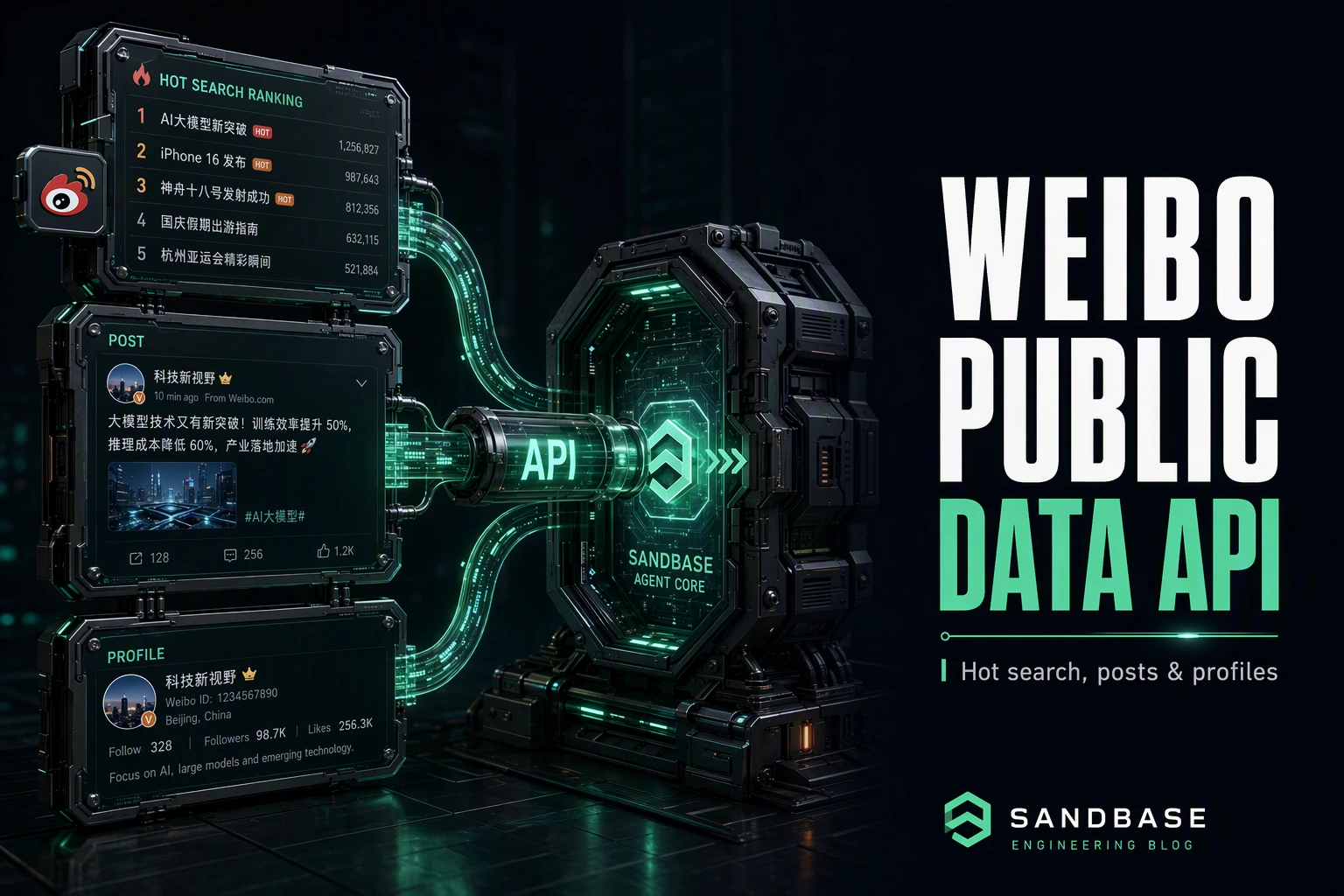
Read public Weibo hot search, posts, and user profiles with one REST API. No Weibo OAuth app, no SDK — one SandBase key, built for agent workflows.
Read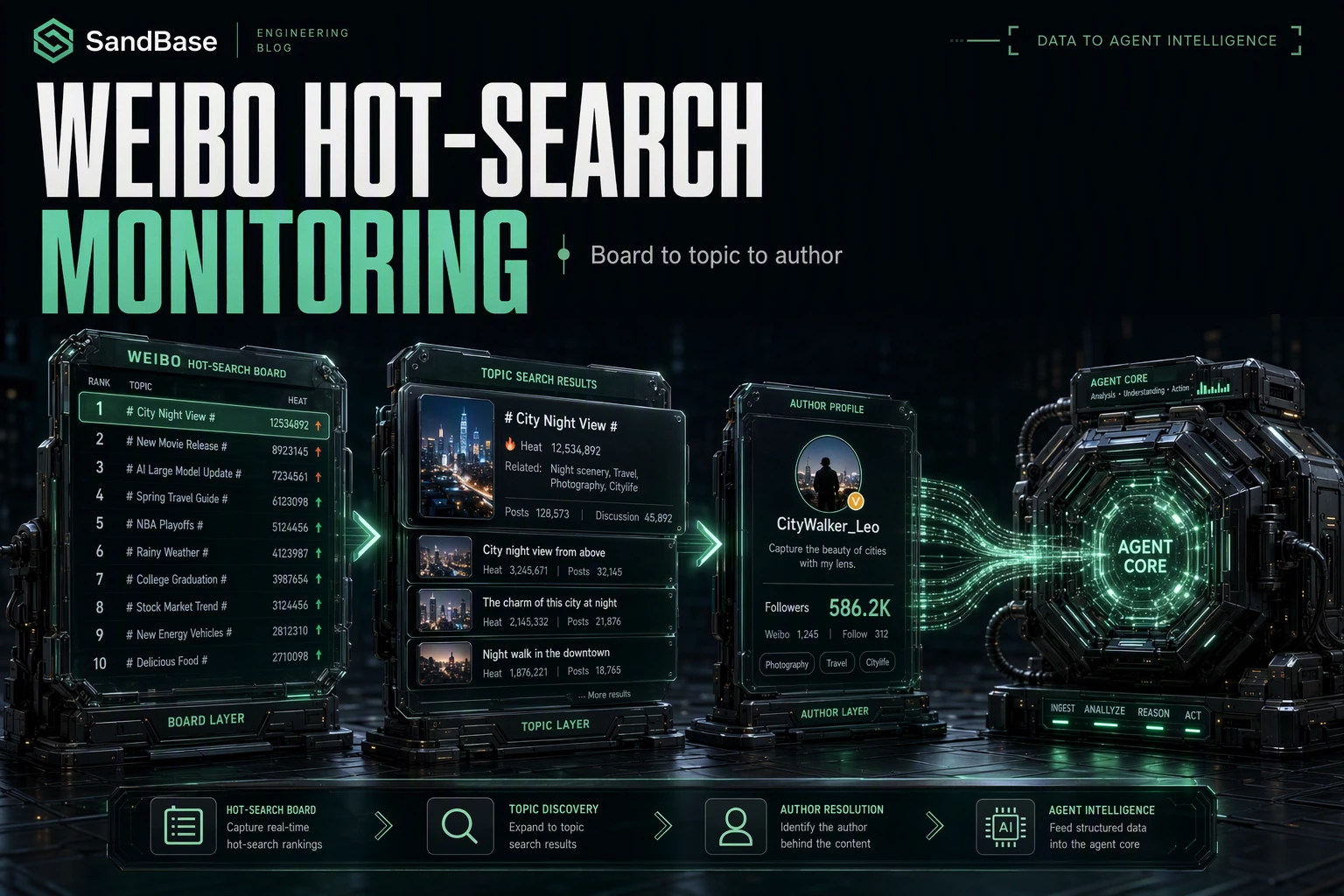
Build a Weibo hot-search monitoring workflow: read the board, search a topic, and profile the author — one SandBase key, no Weibo login.
Read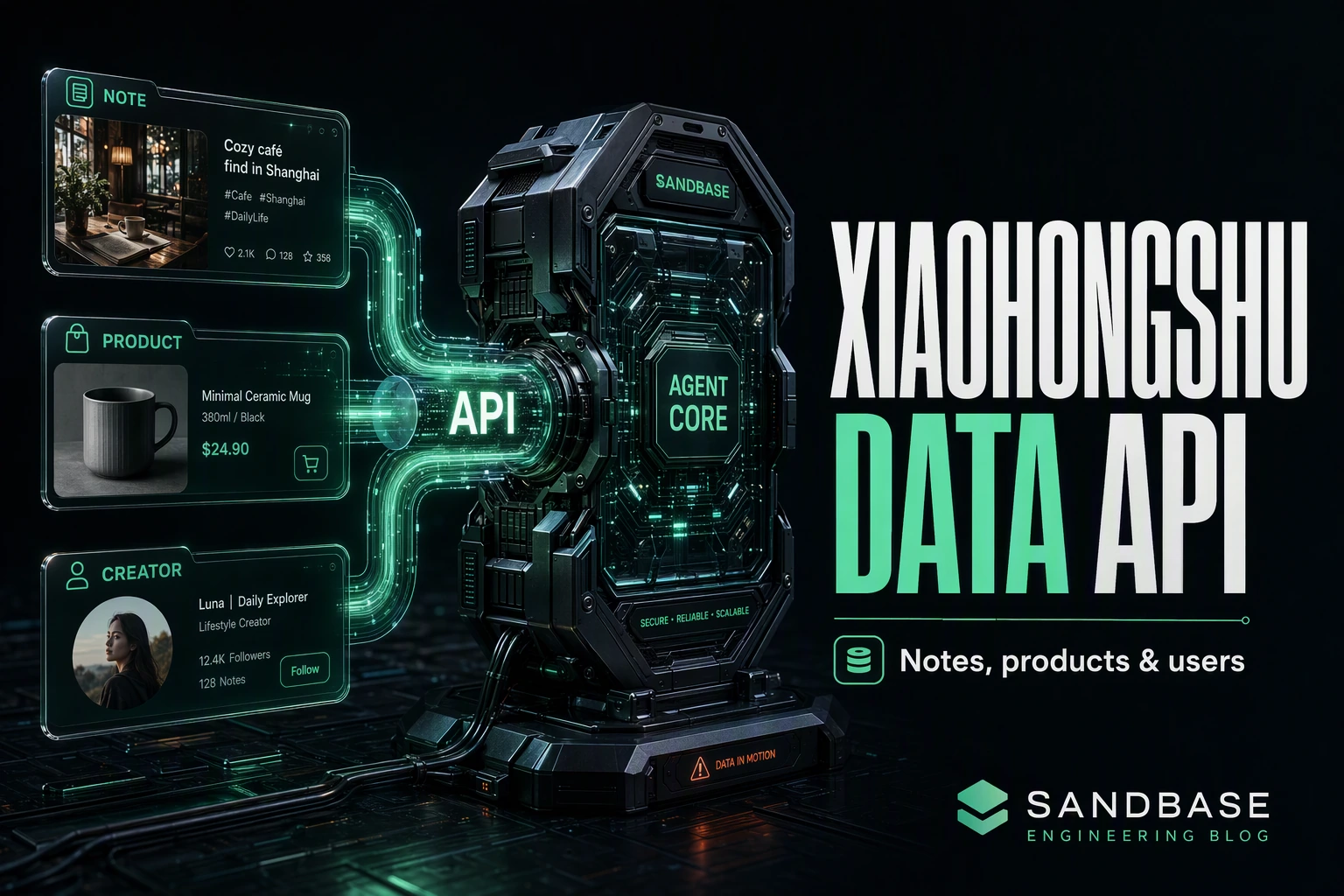
Search public Xiaohongshu (RED) notes, products, users, and images with one REST API. No RED login, no SDK — one SandBase key, built for agents.
Read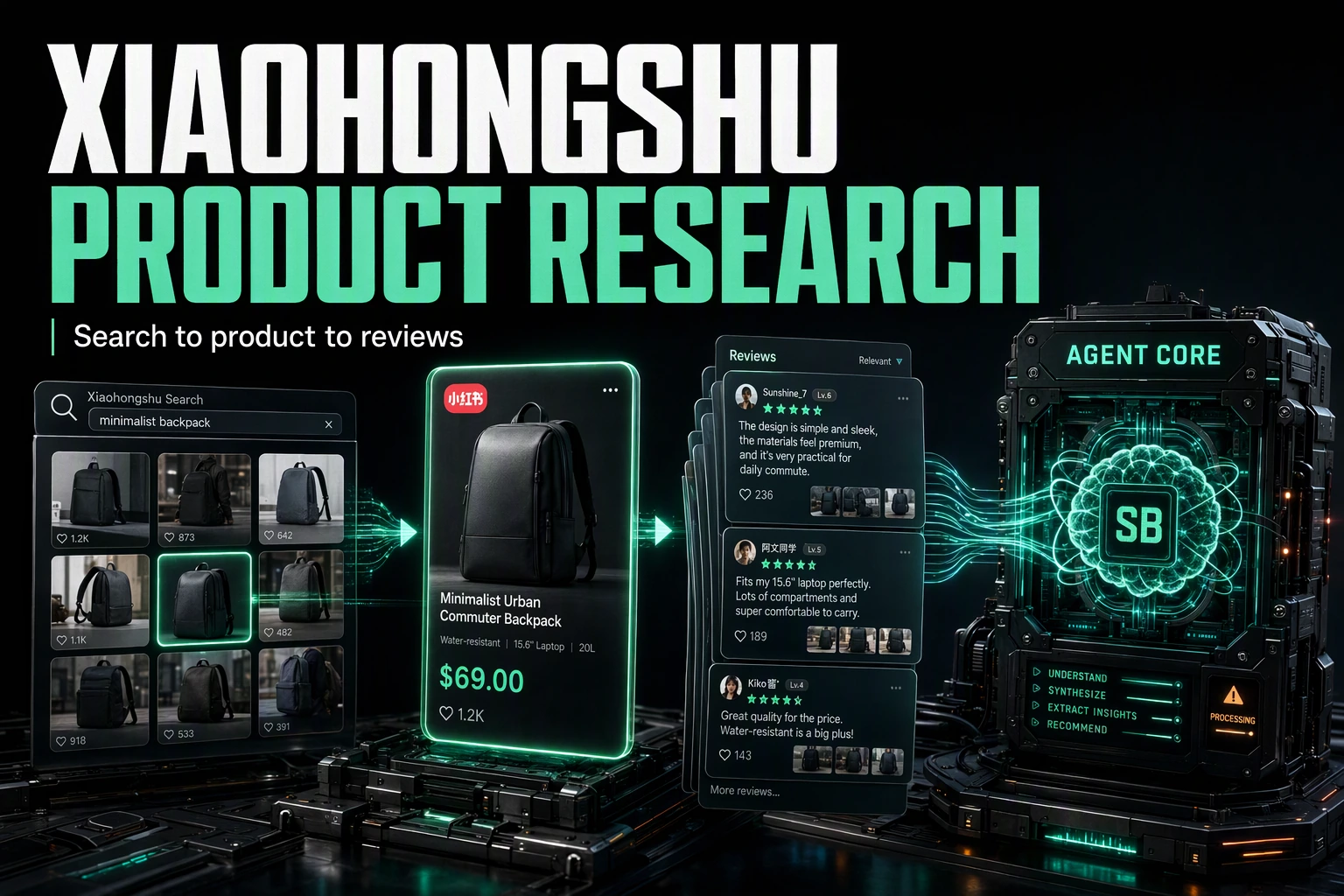
Build a Xiaohongshu product-research workflow: search products, read a product, and pull its reviews — one SandBase key, no RED login.
Read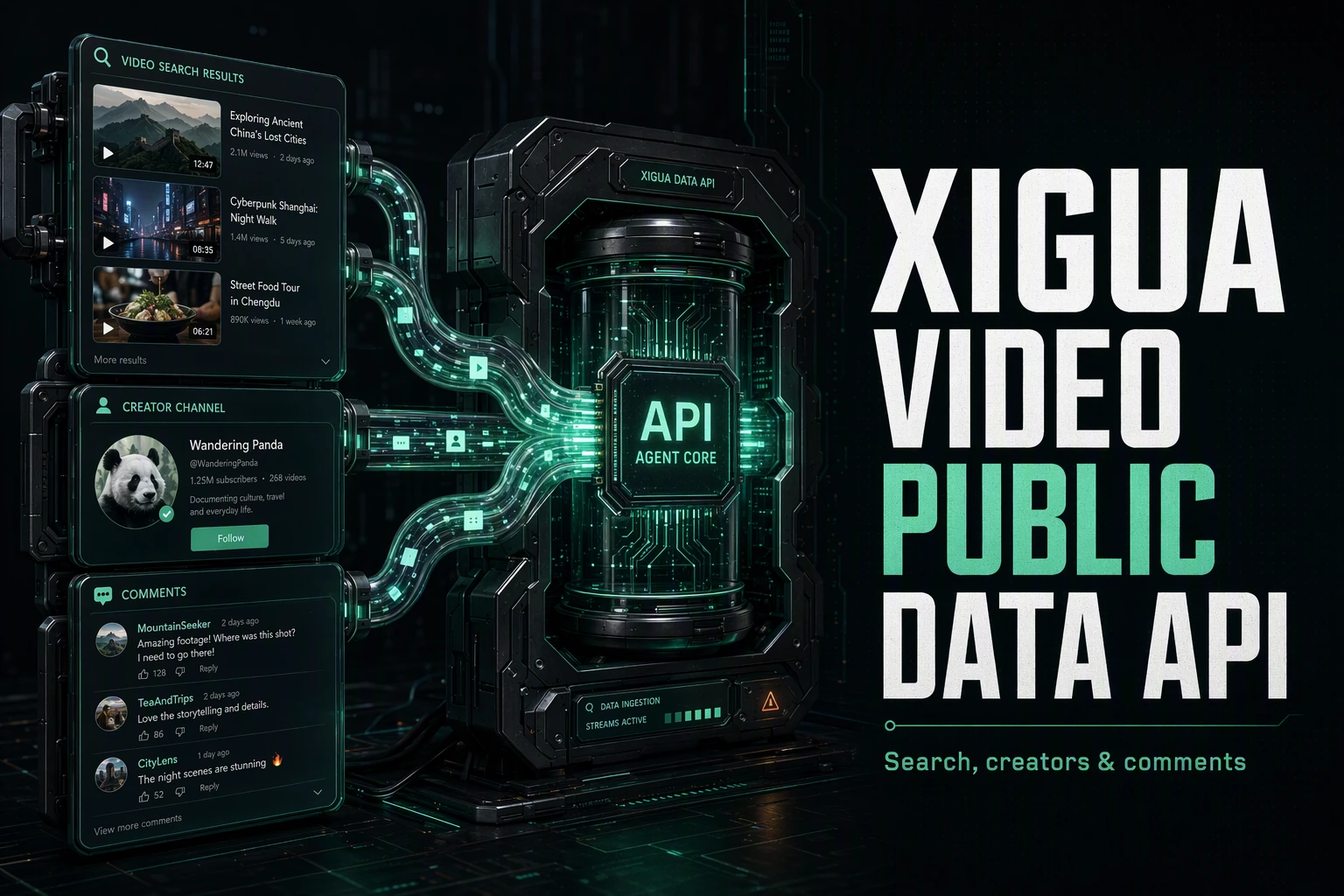
Read public Xigua Video search, users, videos, and comments with one REST API. No Xigua login, no SDK — one SandBase key, built for agent workflows.
Read
Build a Xigua Video research workflow: search a keyword, read a video's detail, and pull its comments — one SandBase key, no Xigua login, no SDK.
Read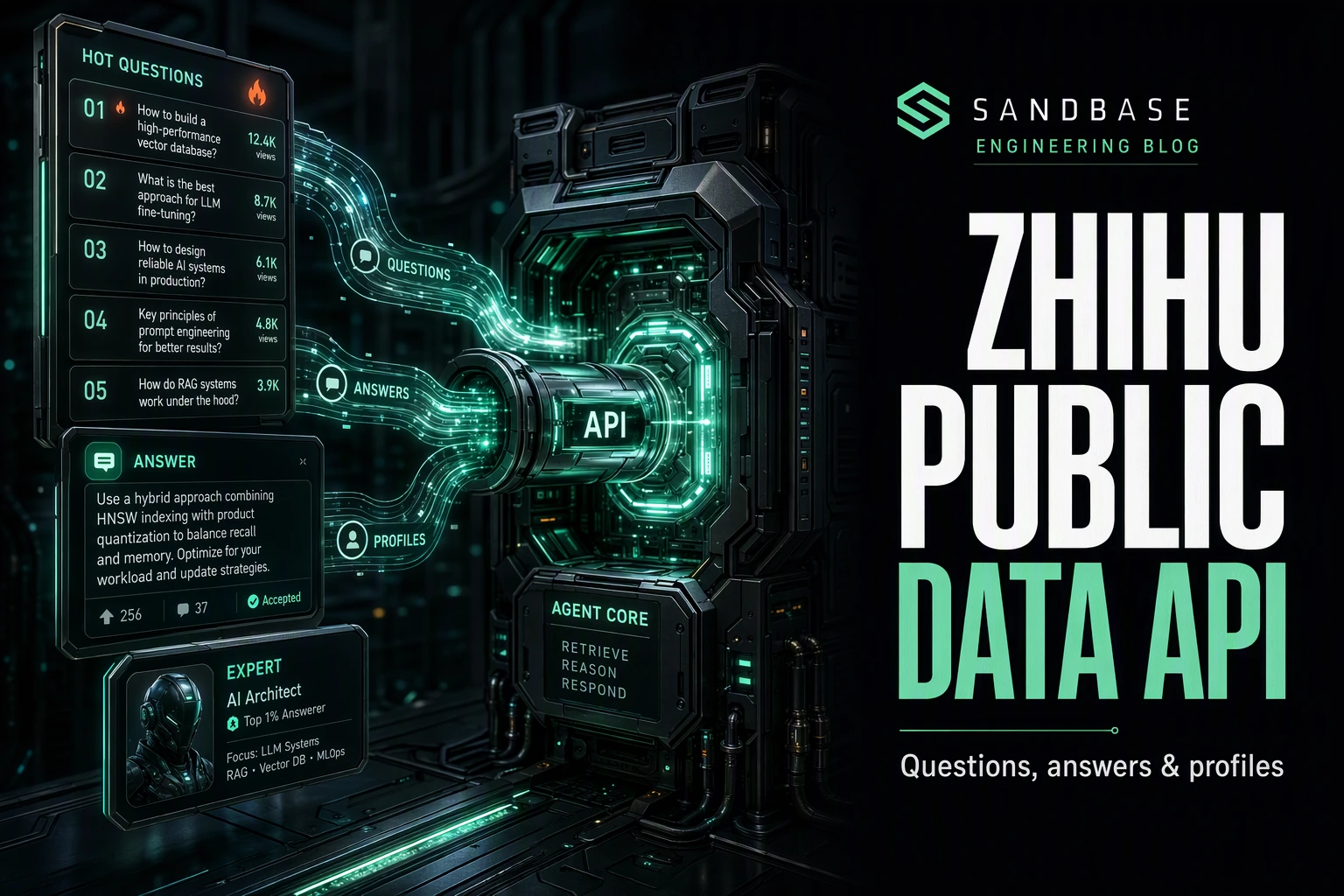
Read public Zhihu questions, answers, articles, hot list, and profiles with one REST API. No Zhihu login, no SDK — one SandBase key, built for agents.
Read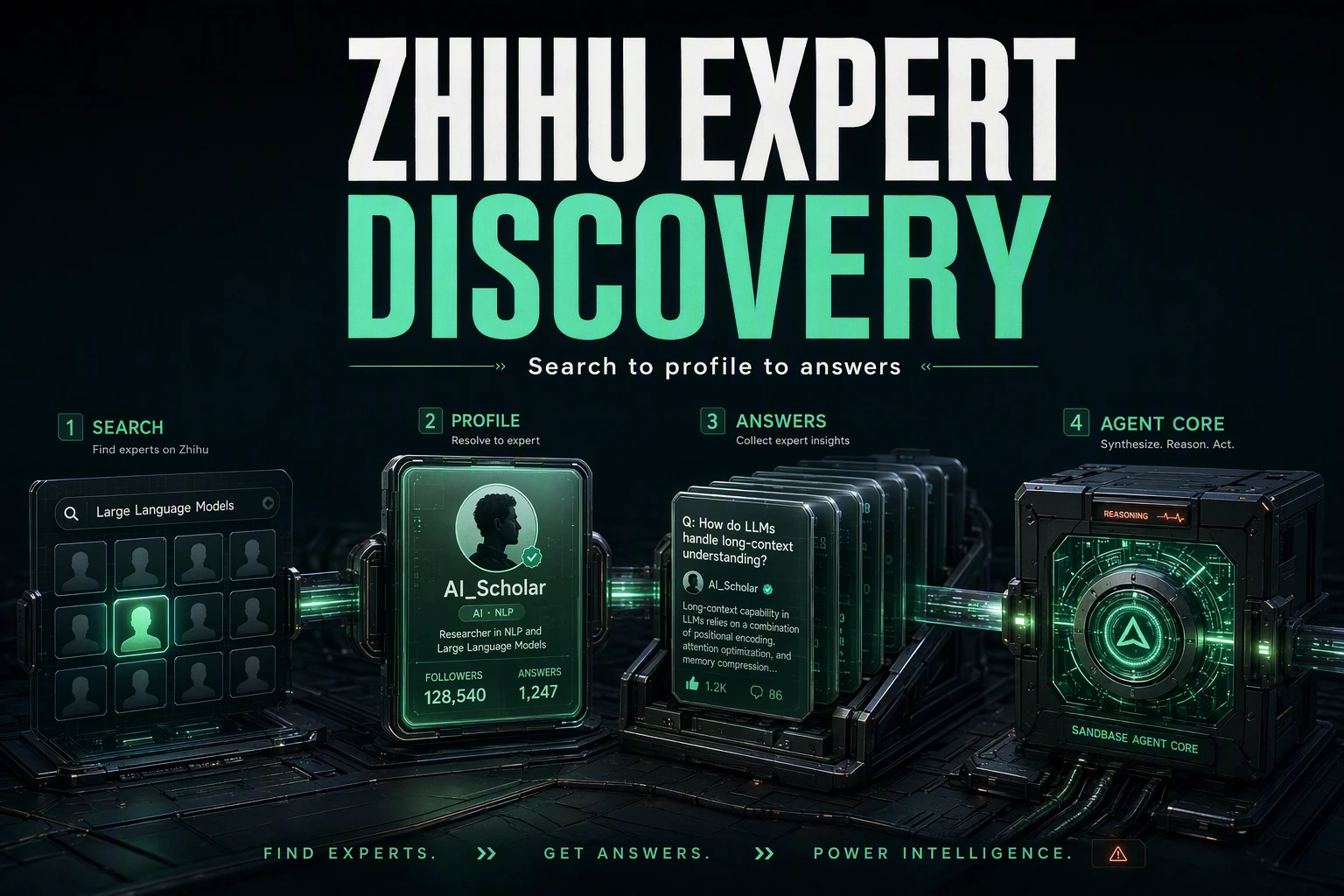
Build a Zhihu expert-discovery workflow: search users, read a profile, and pull their answers — one SandBase key, no Zhihu login.
Read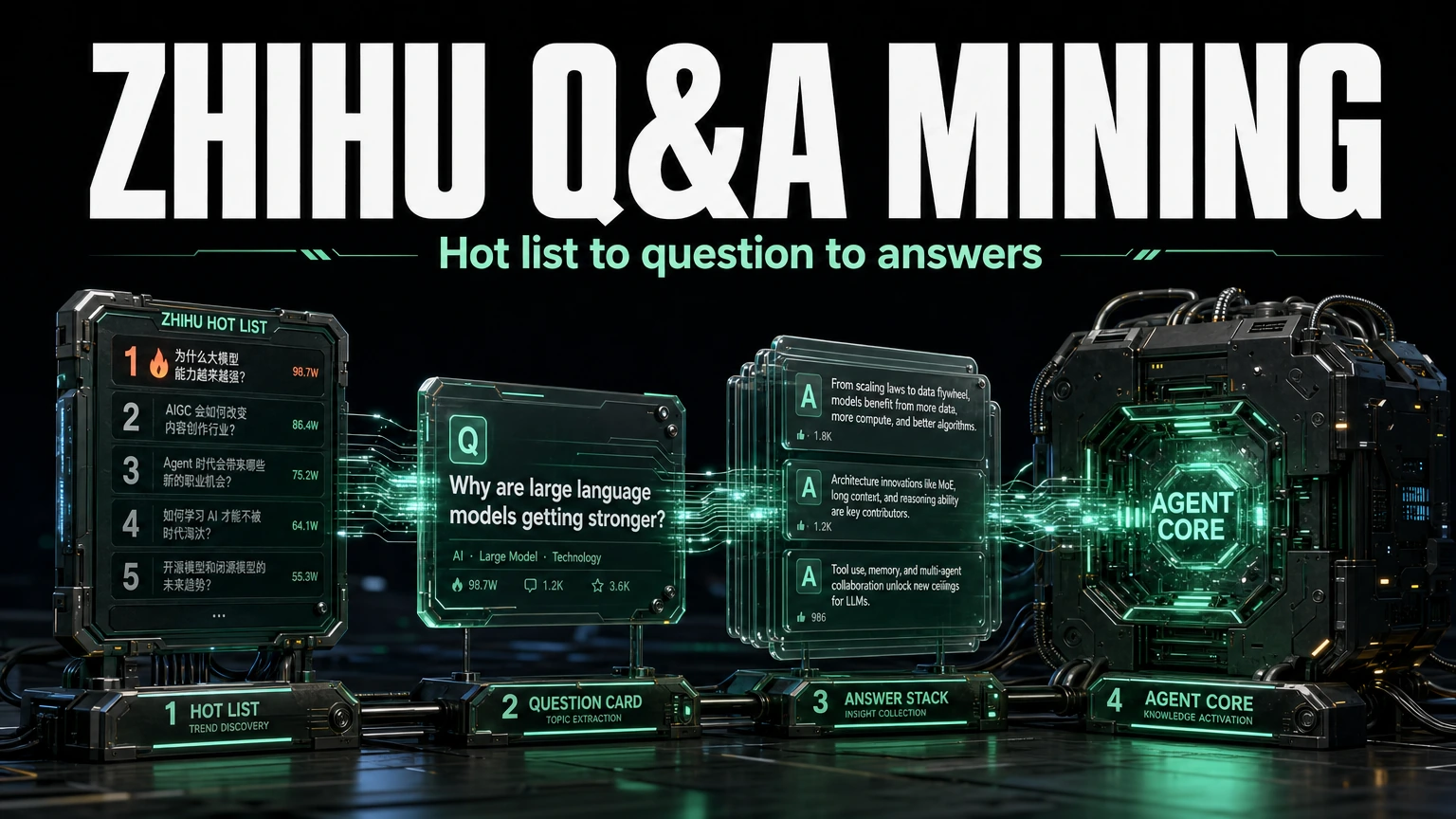
Build a Zhihu Q&A mining workflow: read the hot list, open a question, and pull its answers — one SandBase key, no Zhihu login.
Read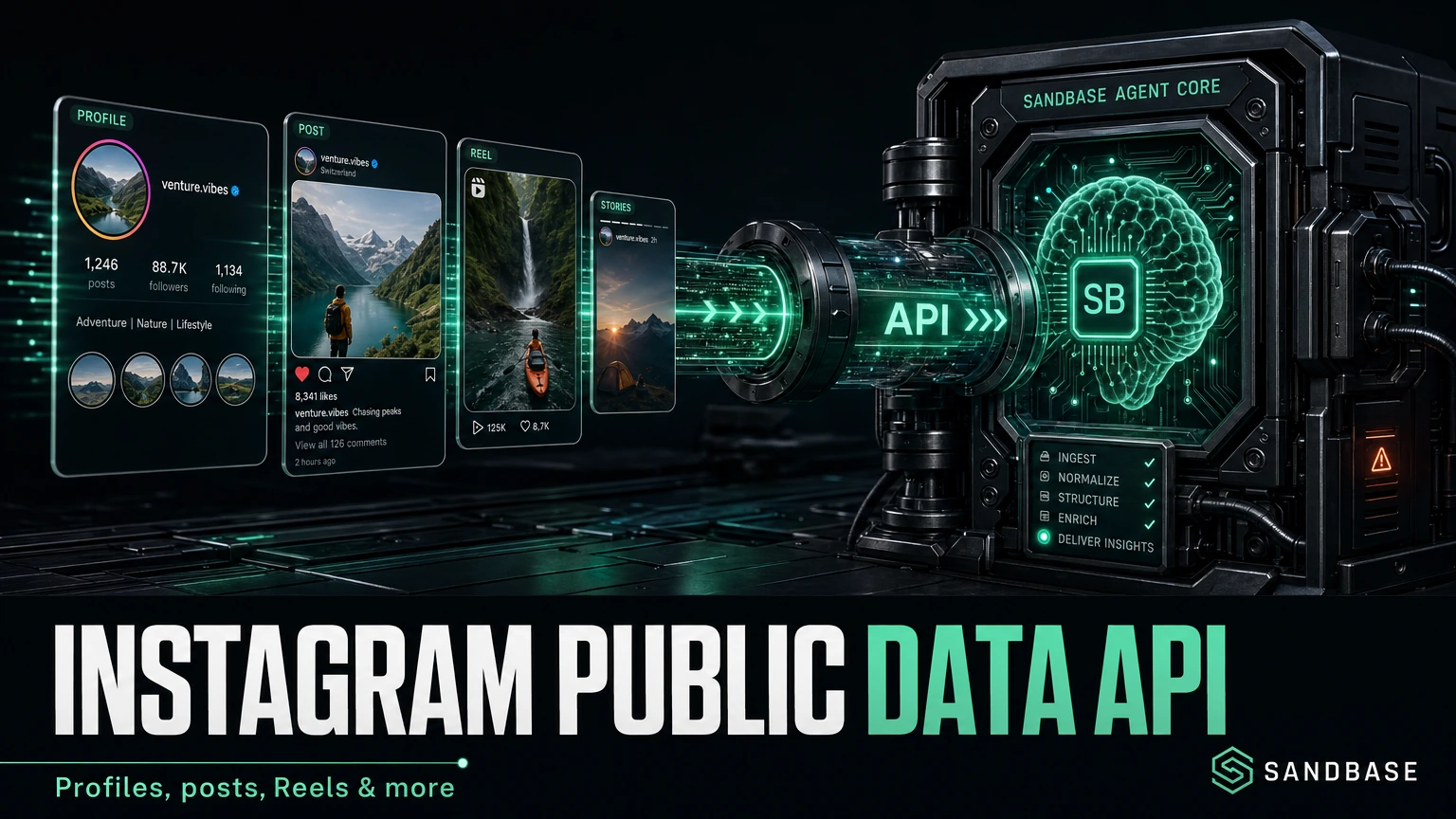
Read public Instagram profiles, posts, Reels, followers, comments, and hashtags with one REST API. No Instagram OAuth or SDK — one SandBase key, built for agents.
Read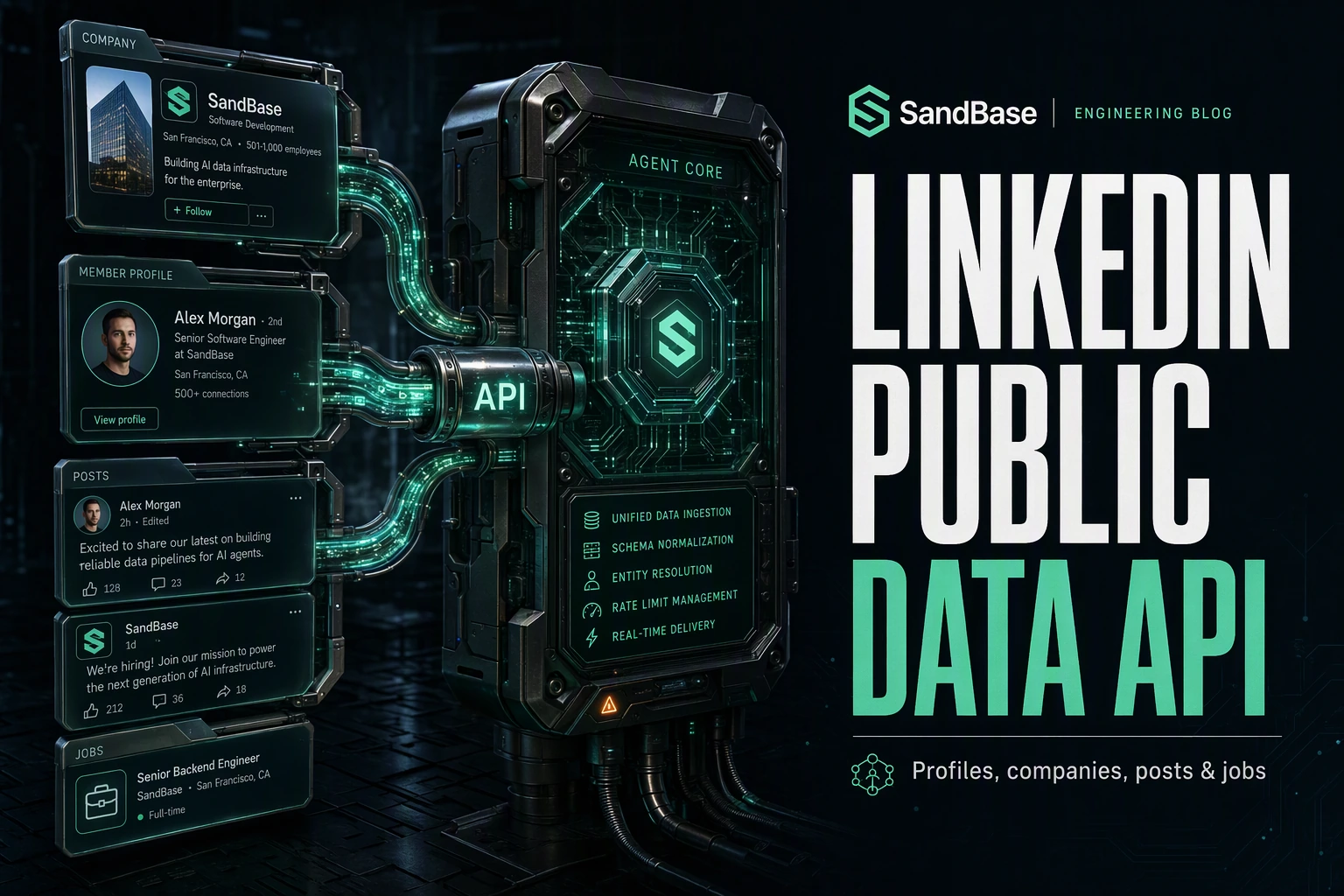
Read public LinkedIn profiles, company pages, posts, and jobs with one REST API. No LinkedIn OAuth, no SDK — one SandBase key, built for agent workflows.
Read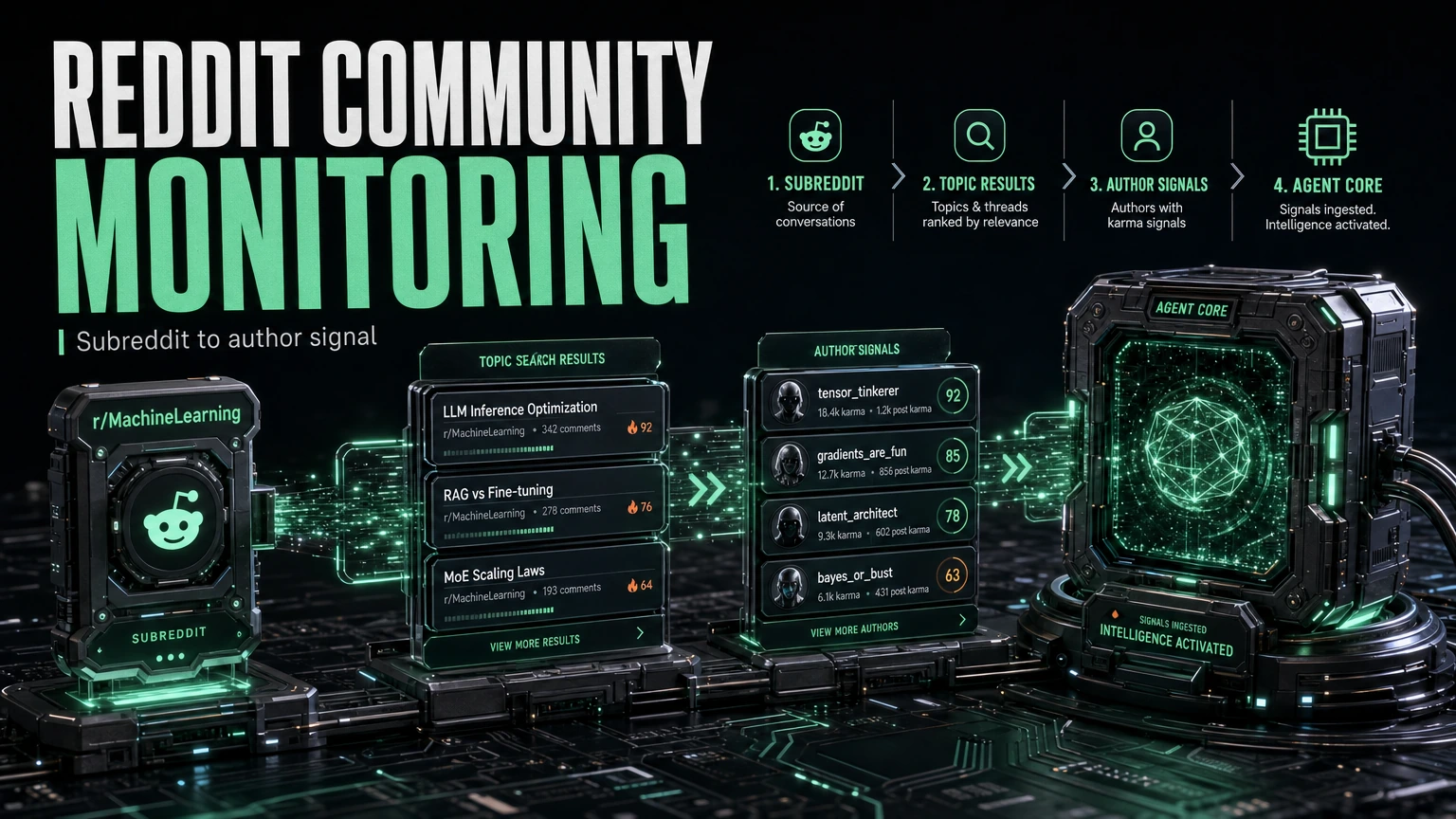
A Reddit community monitoring API workflow: size a subreddit, discover topic conversations, and profile authors — one SandBase key, no OAuth app.
Read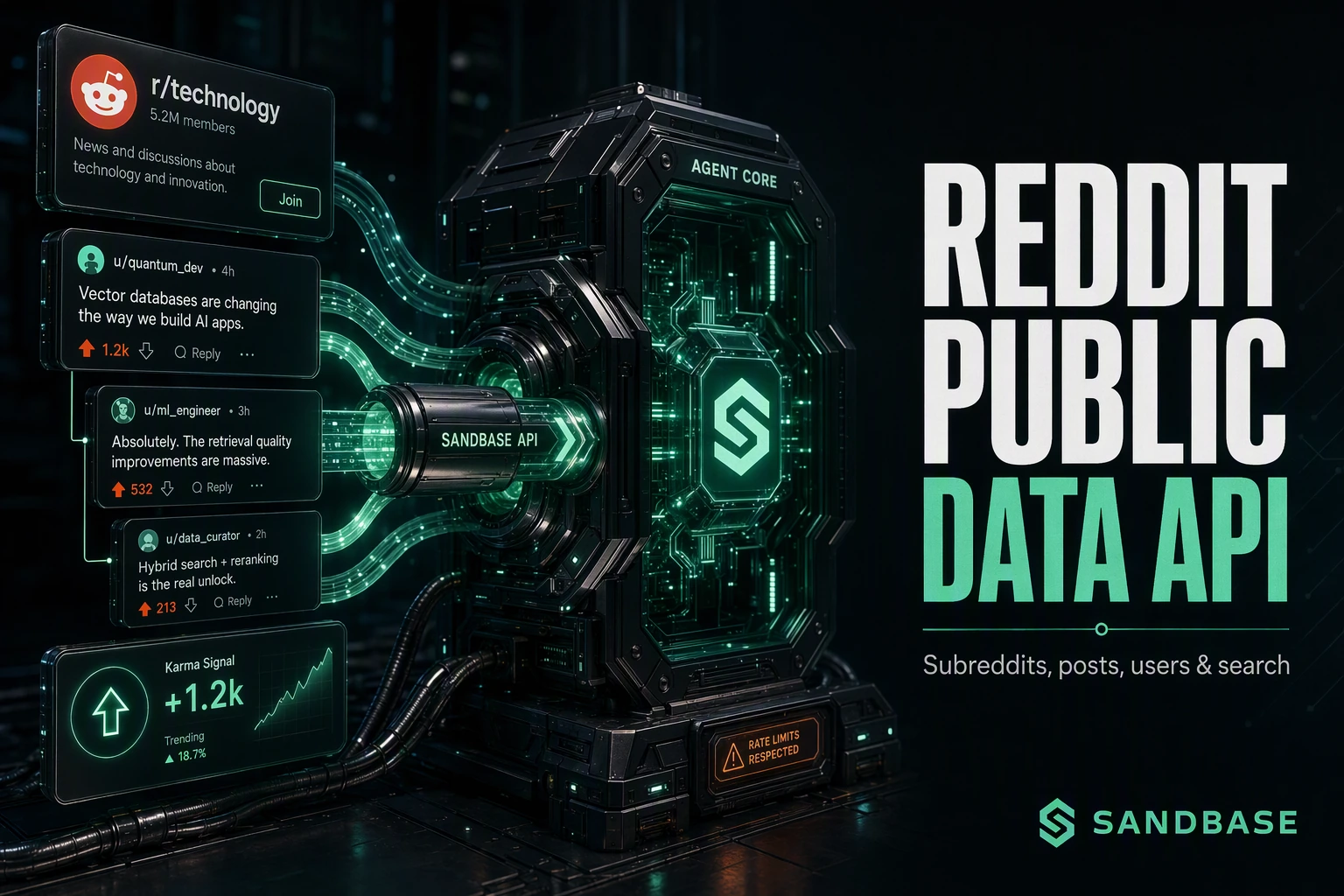
Read public Reddit subreddits, posts, comments, user profiles, and search with one REST API. No Reddit OAuth app, no PRAW — one SandBase key, built for agents.
Read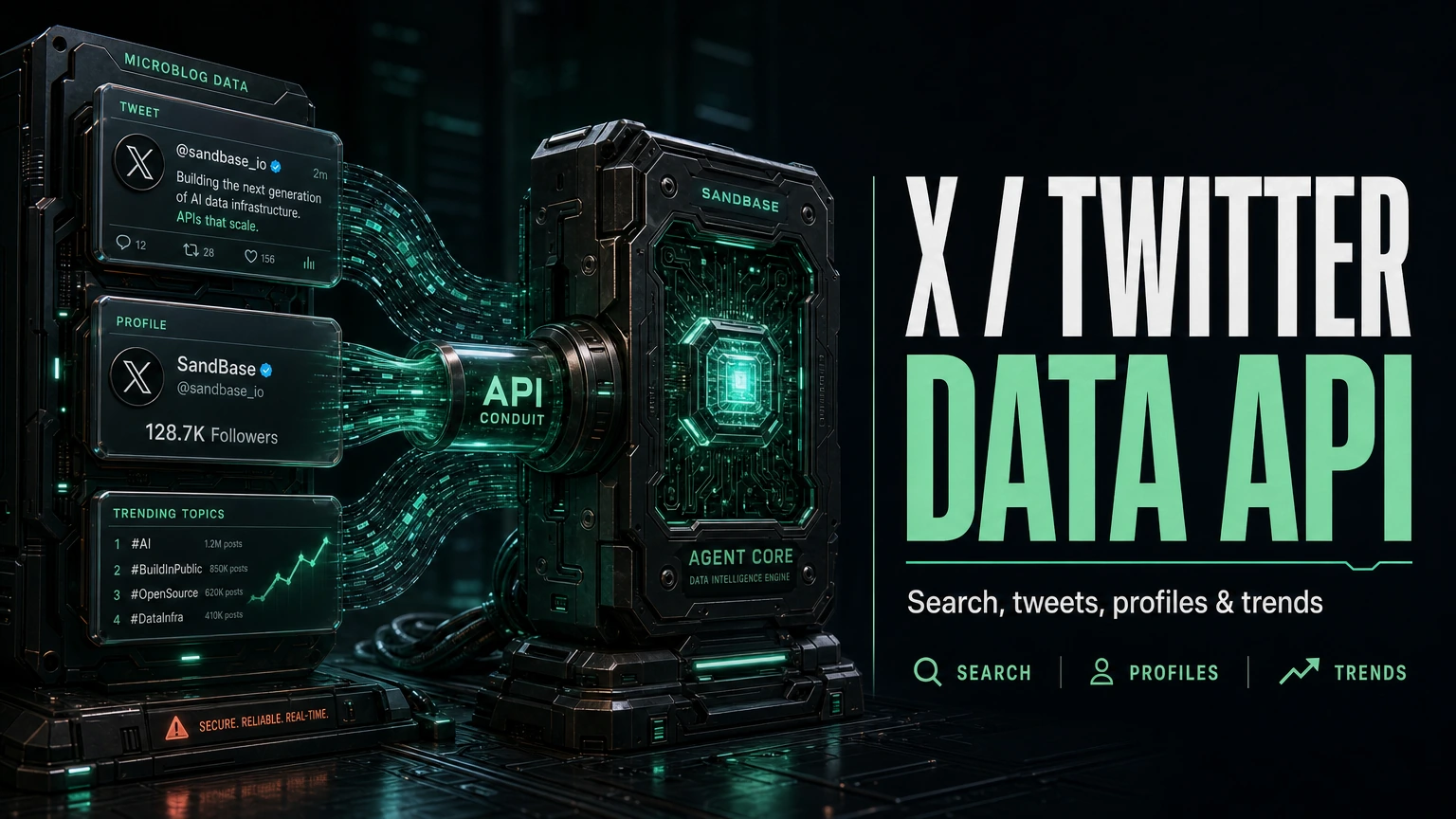
Search X/Twitter and read public tweets, profiles, followers, and trends with one REST API. No X developer tier, no OAuth — one SandBase key, built for agents.
Read
Read public TikTok profiles, videos, comments, Creative Center trends, and shop product data with one REST API. No SDK — one SandBase key, built for agents.
Read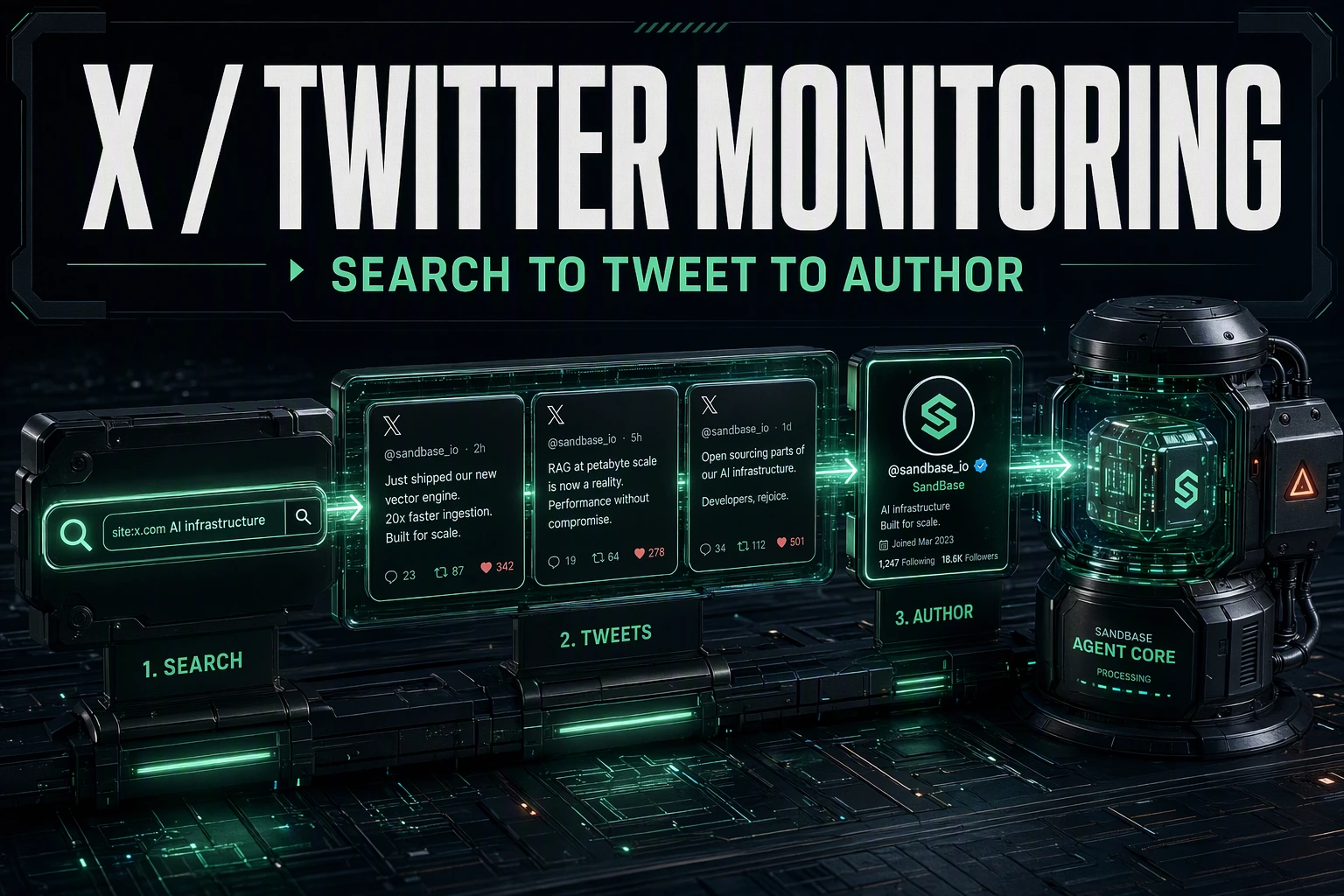
Build an X/Twitter monitoring workflow: search a topic, read a tweet's engagement, and profile its author — one SandBase key, no X developer tier, no OAuth.
Read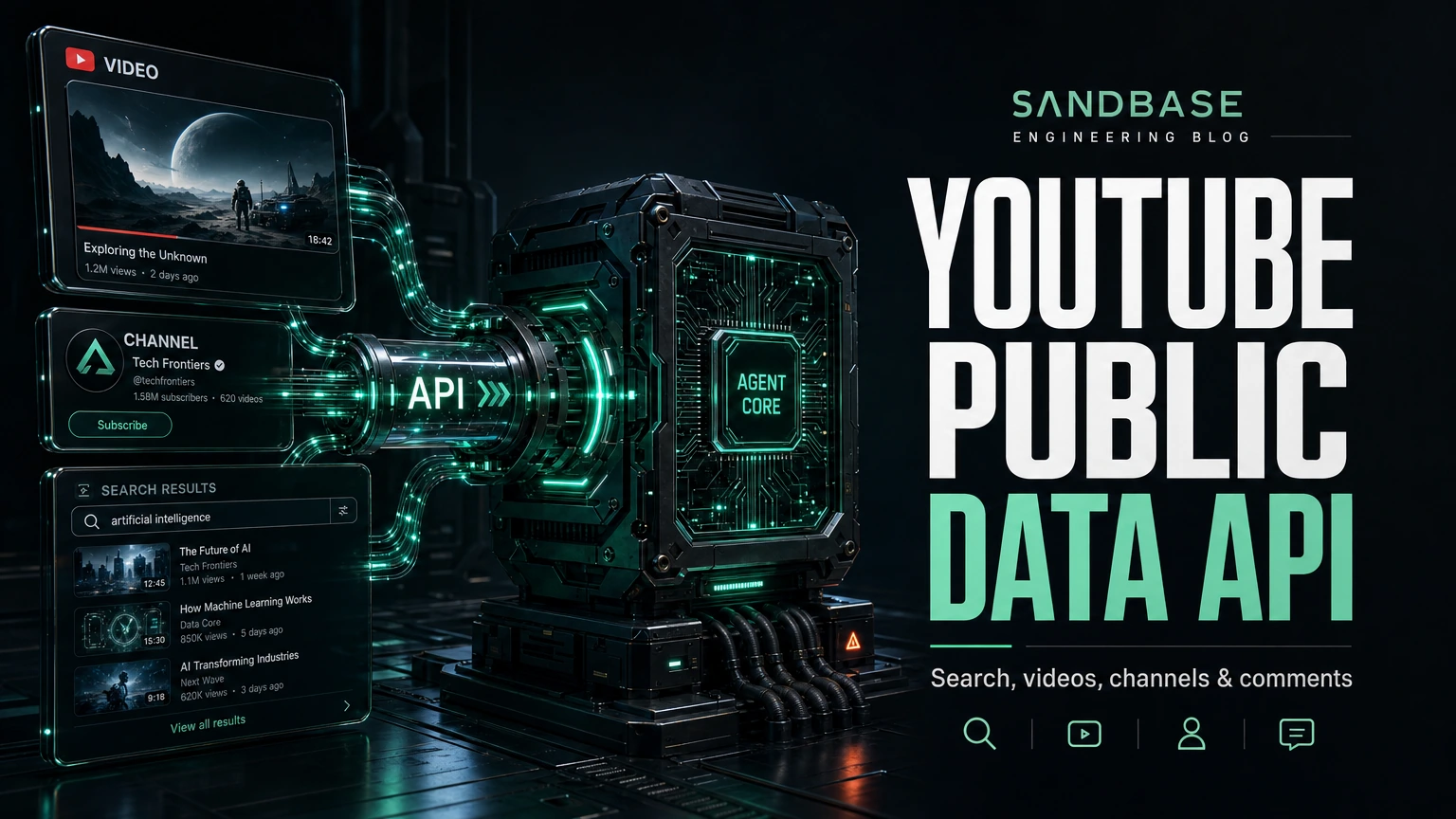
Search YouTube and read public videos, channels, comments, and captions with one REST API — one SandBase key, built for agents.
Read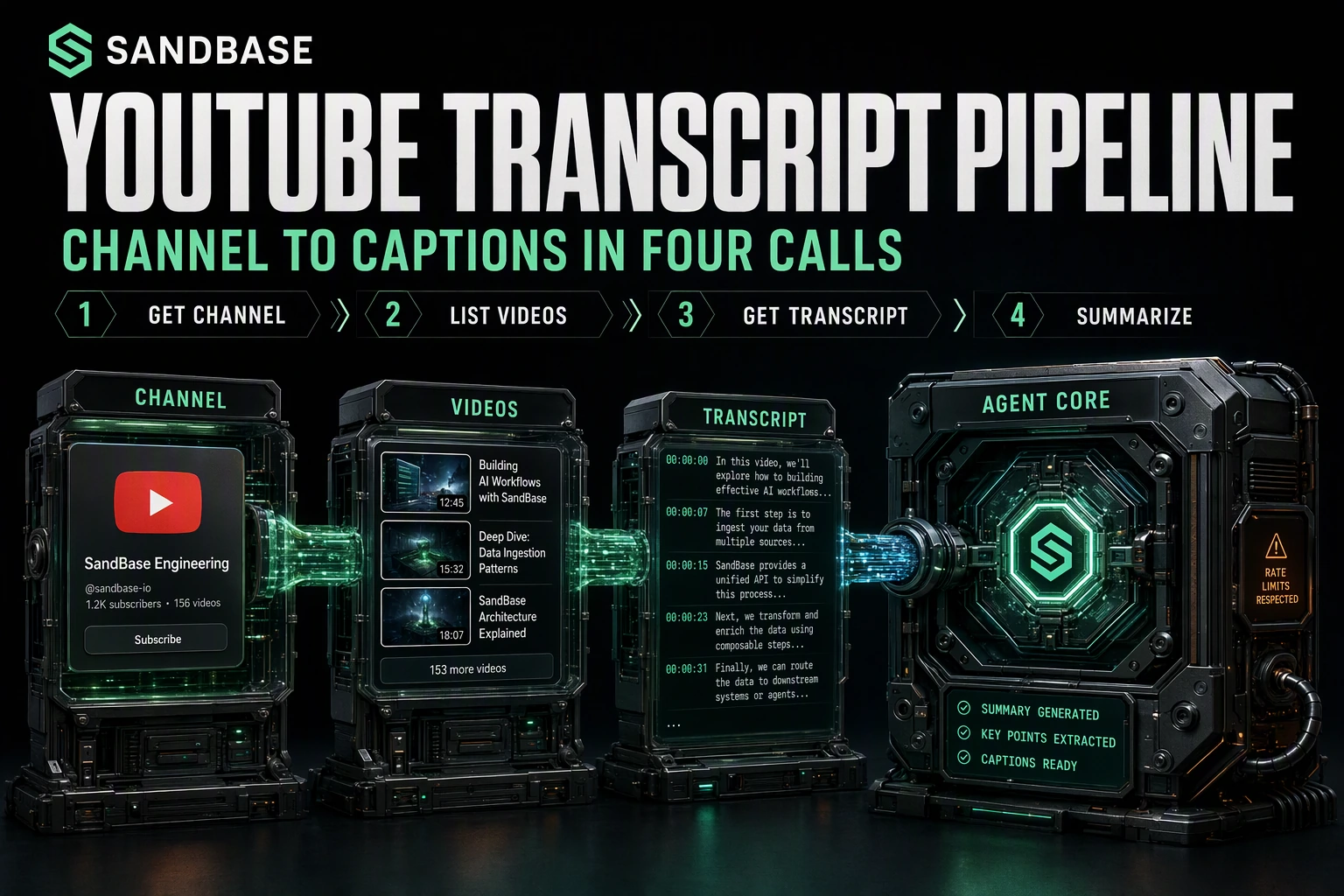
Go from a channel name to caption tracks in four calls: resolve the channel, list videos, read video info, and discover captions — one SandBase key, no OAuth.
Read
An API 400 or upstream error is not automatically a model outage. Inspect the error body, check Responses and Messages parameters, and distinguish safe retries from interrupted streams with completed tool actions.
Read
Learn how to use ChatGPT Sites to build and publish a website, check plan limits and custom domains, and choose model or image APIs for your own workflow.
Read
Claude formalized Fermat’s Last Theorem in Lean. Understand what was checked, why the research model matters, and how to evaluate a small proof yourself.
Read
What Codex Persistent Mode's public prompt establishes about follow-ups, sleep, permissions, and memory—and why code alone does not prove availability.
Read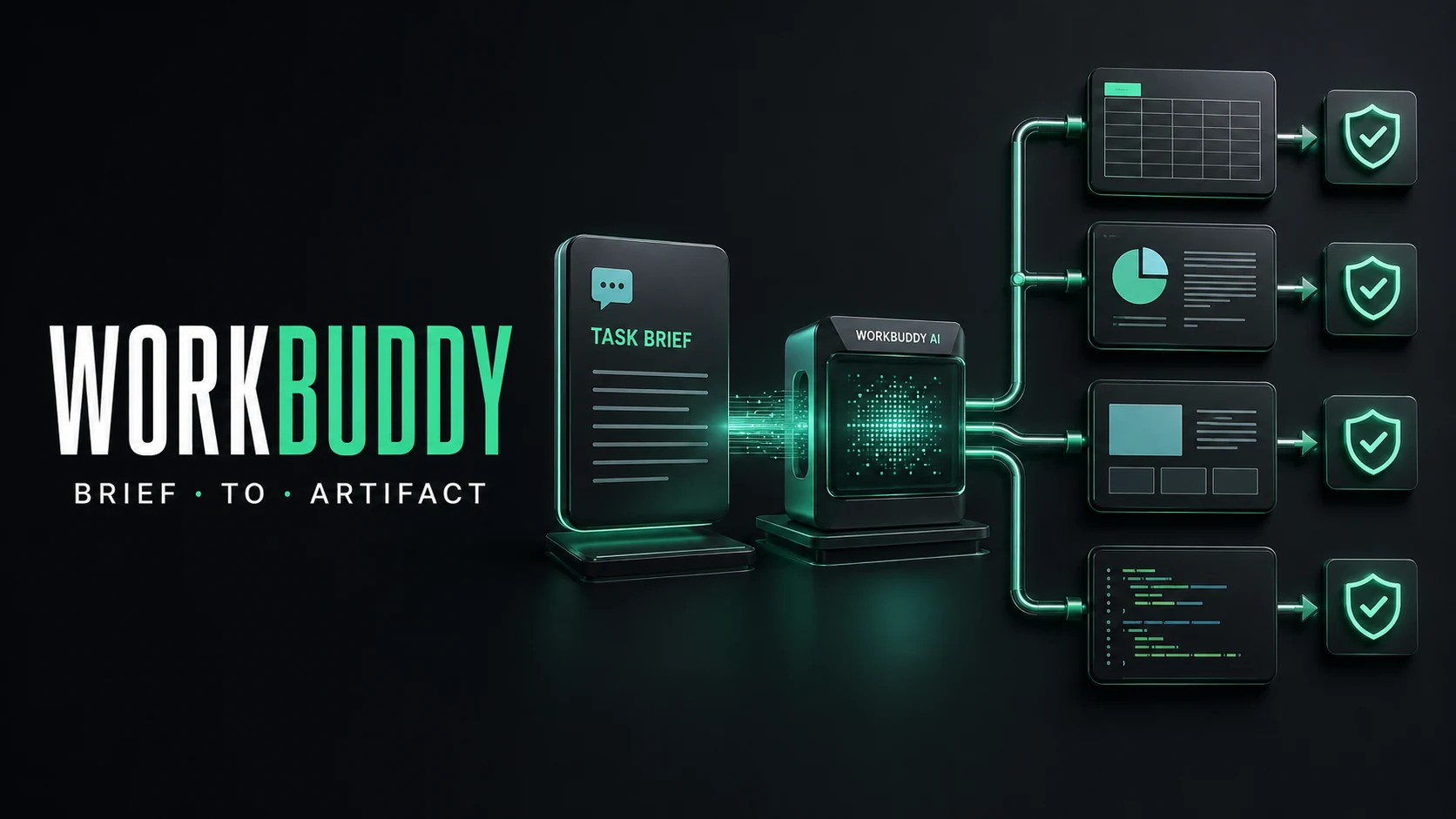
WorkBuddy is a desktop AI workstation for turning natural-language tasks into files, reports, analysis, and code. Here is where it fits—and where it does not.
Read
Why coding agents forget the goal, repeat failed fixes, and skip tests—and how to recover with a task-state record, regression checks, and a bounded restart.
Read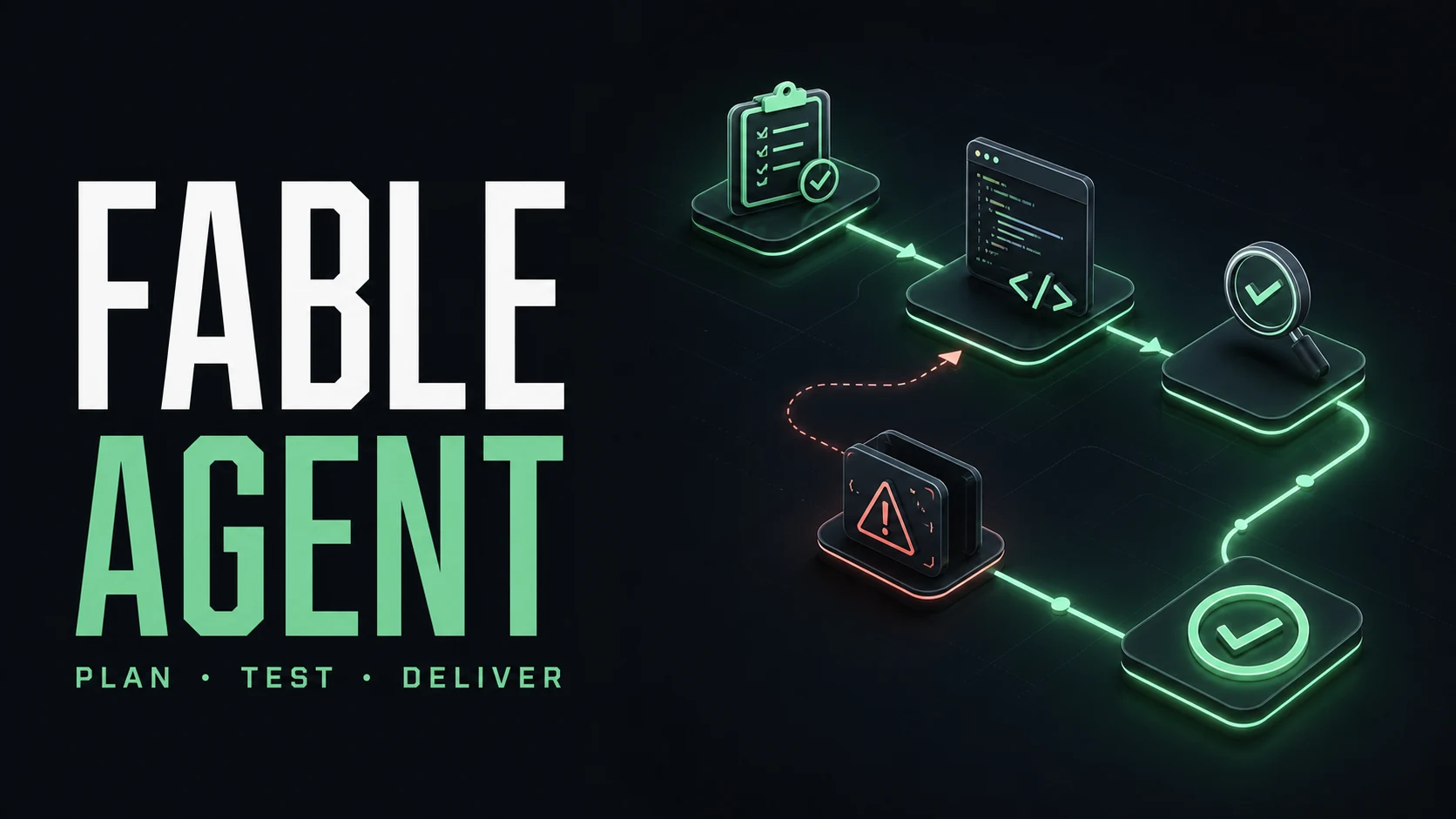
SandBase's Fable 5.1 evaluation design: test a billing-client upgrade across two repositories, recover from tool failures, cap retries, and count accepted-task cost.
Read
Check Claude Code Auto Mode, switch back to Manual, rehearse approvals safely, and audit shared-chat URLs in files and Git history without rewriting history.
Read
Can MiniMax H3 run on 16GB VRAM? Check weight and offload requirements, 4–15-second clips, and the local 768p versus hosted 2K boundary.
Read
Install OpenClaw, preview a Hermes import, distinguish memory-only from full migration, and check recall, credentials, conflicts, and your route back.
Read
Can Cursor still use OpenAI? Check GPT-6 Astra support, why an API key can work outside Cursor but fail inside it, BYOK limits, and replacement models.
Read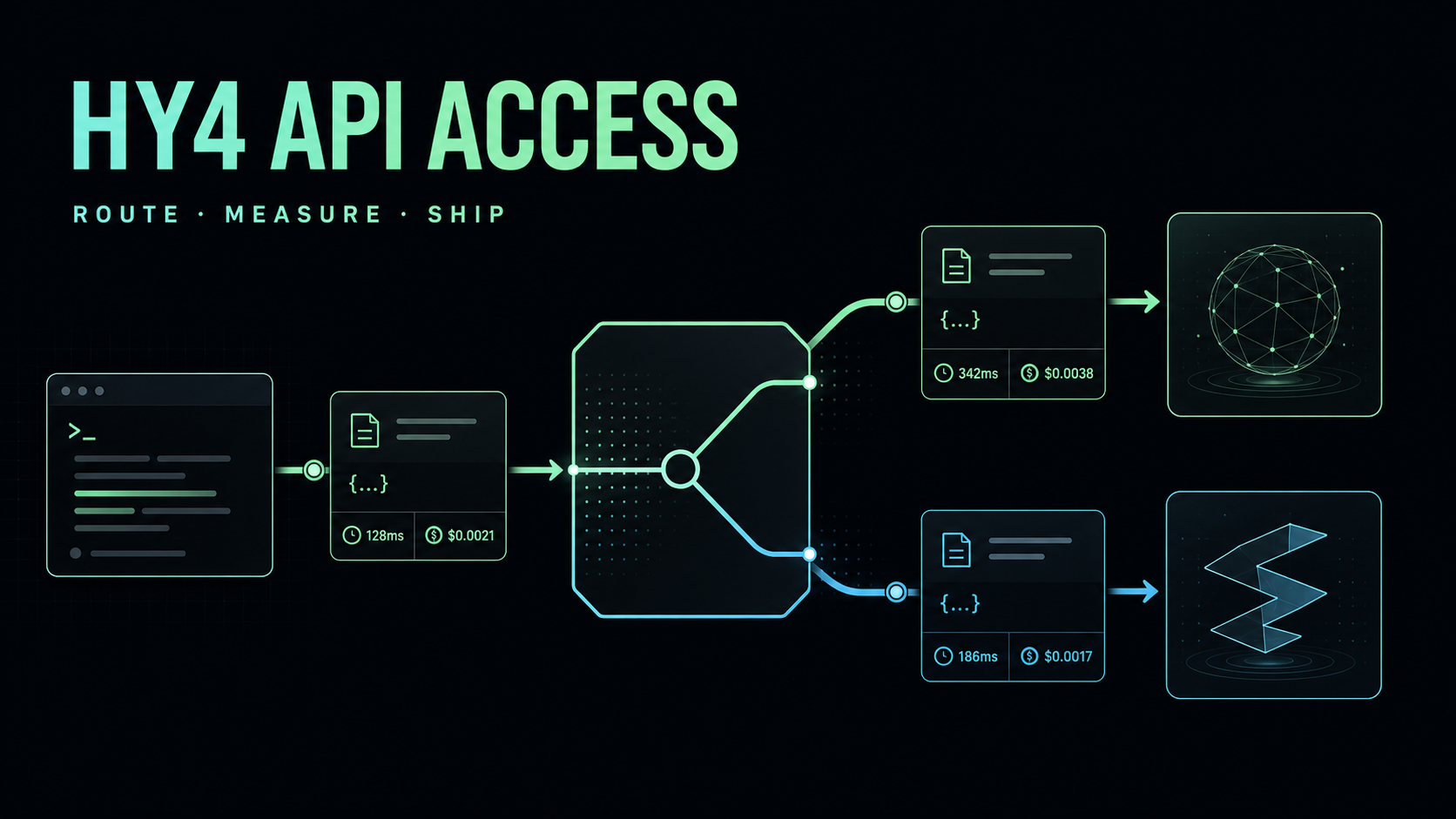
A practical guide to trying Tencent Hunyuan Hy4 preview, reading its pricing, and choosing hosted API versus self-hosting.
Read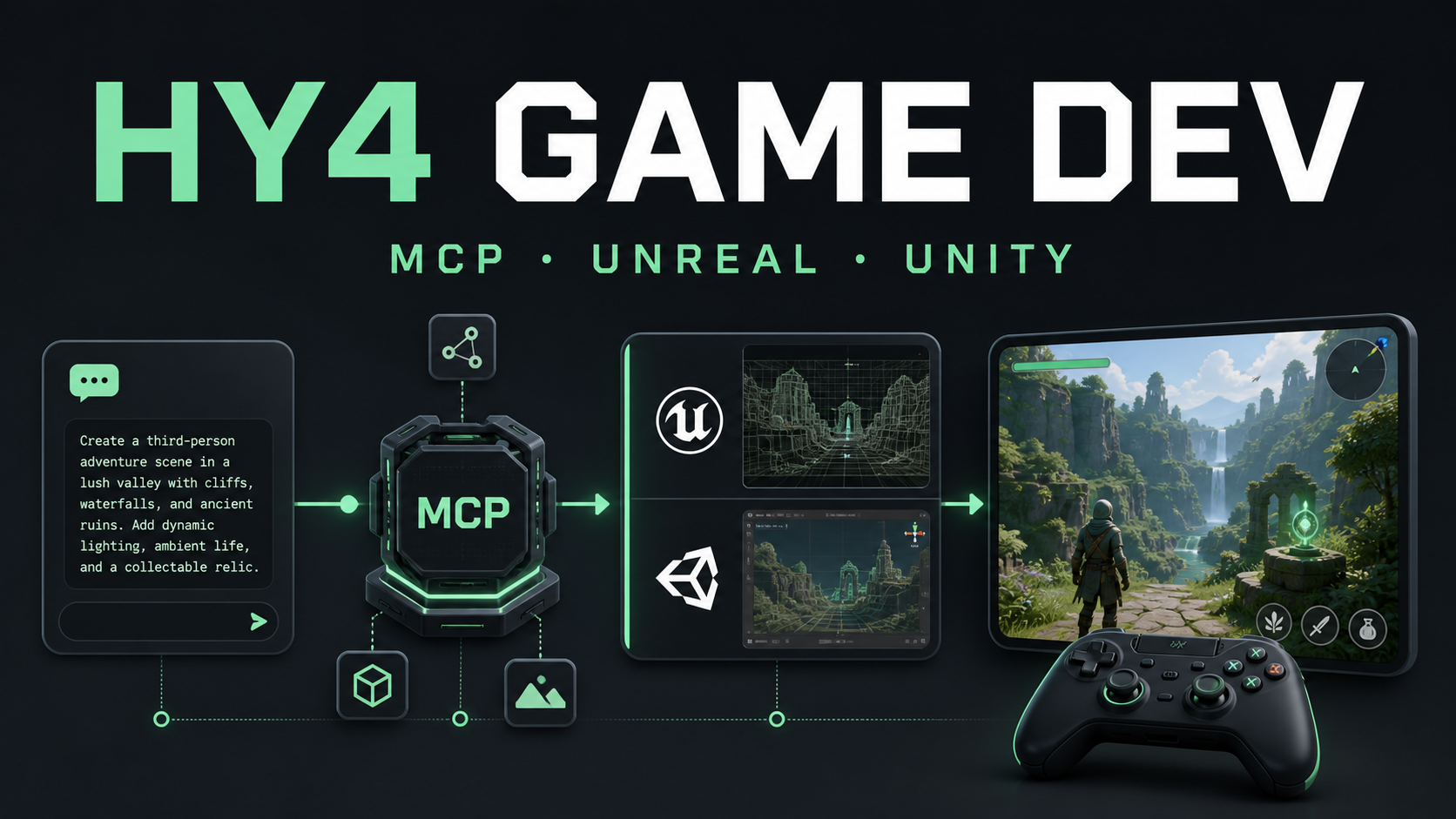
A practical reading of Tencent's Unreal, Unity, and MCP game-development examples for Hy4 preview.
Read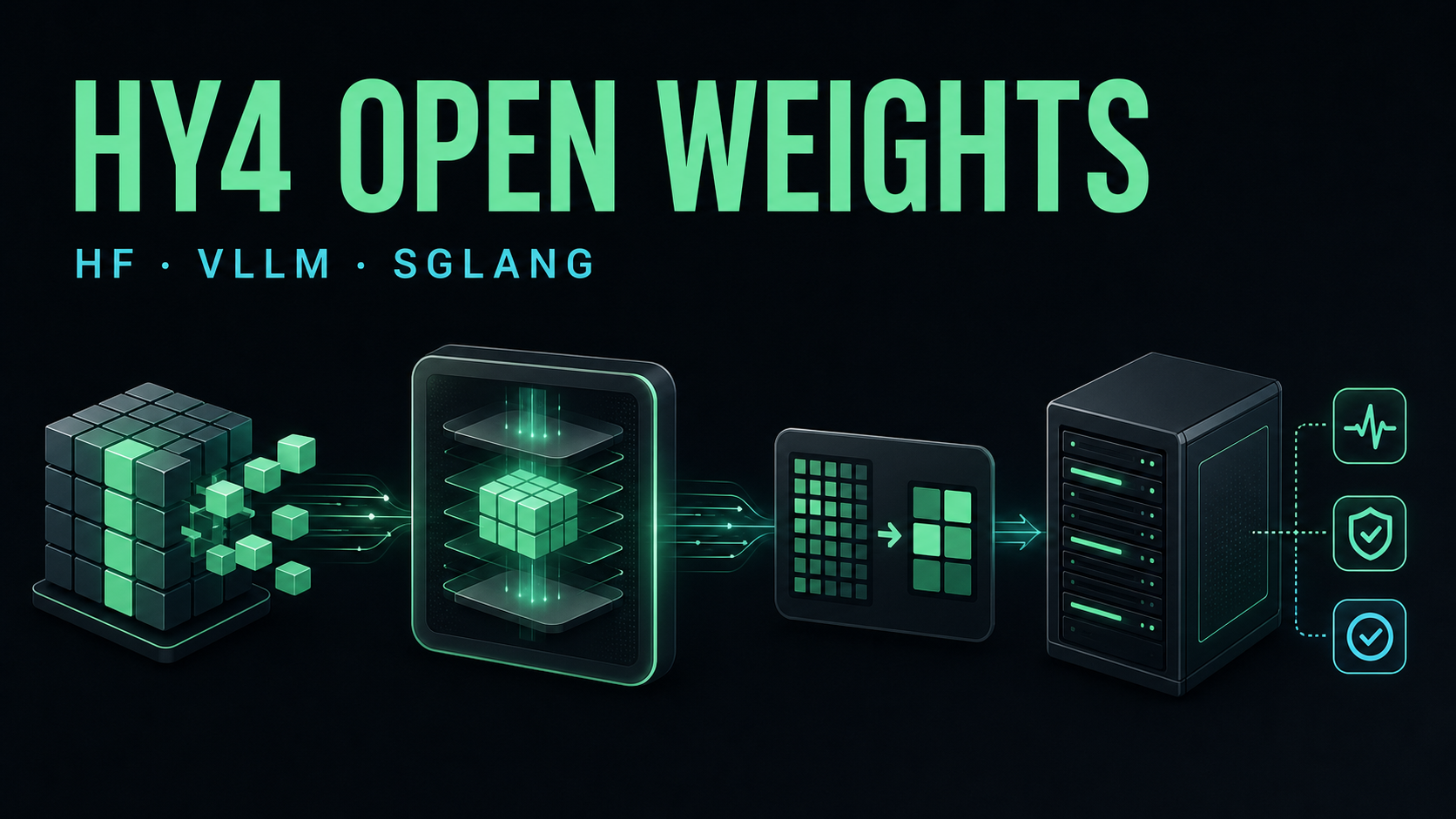
How to estimate weights, quantization, KV cache, networking, and operations before self-hosting Tencent Hunyuan Hy4 preview.
Read
OpenAI has opened the Codex harness, CLI, SDKs, and App Server. Here is why the architecture, ARC-AGI-3 result, and product boundaries matter beyond coding chat.
Read
A practical migration guide for Vercel AI SDK 7 workflow agents, skills, MCP Apps, and durable runs.
Read
Production tracing schema for Cloudflare Agents, tool events, budgets, retries, and privacy.
ReadA cautious guide to Claude text watermark claims, provenance records, and EU AI Act verification.
ReadDeployment checklist for Magpie TTS and open-weight voice agents, including latency, licensing, and serving.
ReadBuild an OpenRouter cost ledger that reconciles cache hits, providers, models, and agent workflows.
ReadA practical map of the 2026 AI agent stack: model providers, tool protocols, Skills, orchestration, and runtimes, with a clear guide to where each layer belongs.
Read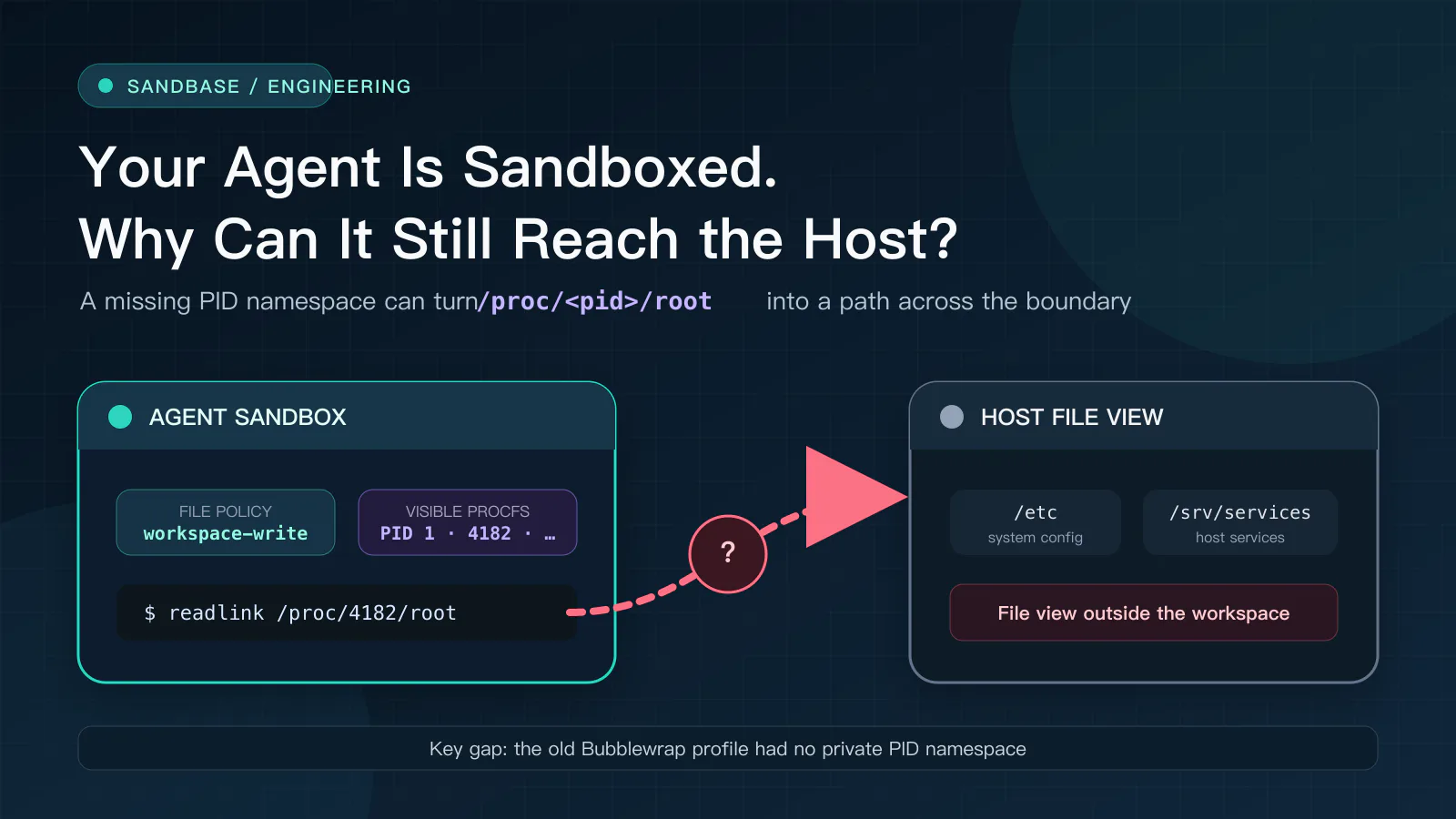
A workspace-write policy can still leave a hidden route through host PIDs and /proc. See the fixed versions and a safe PID-namespace check.
Read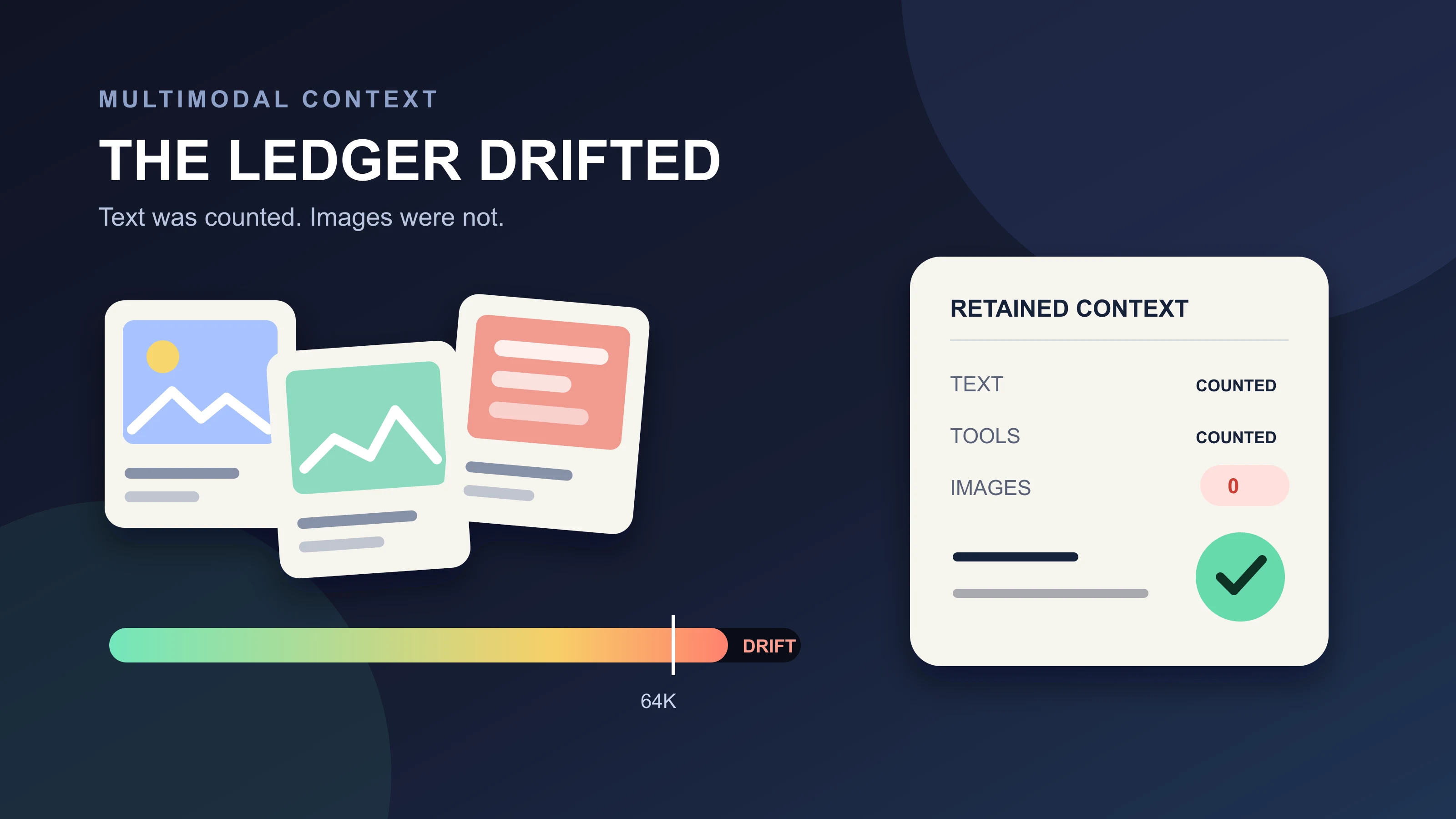
Why image-heavy agent sessions can outgrow a compaction ledger: how screenshots shift retention boundaries and what engineers need to log.
Read
Claude Agent SDK setup guide for Python and TypeScript: installation, pricing, agent loop, permissions, MCP, sessions, and production gateway choices.
Read
Learn how to configure GitHub's official MCP Server with toolsets, read-only mode, OAuth, and lockdown controls for Copilot, Claude, and production coding agents.
Read
Unified AI API guide for developers: compare SandBase, fal, Replicate, and OpenRouter across LLM, image, video, tools, auth, billing, retries, and production trade-offs.
Read
Agent Plugins 1.0 explained: GitHub Copilot plugin structure, portability across VS Code and CLI, MCP and Skills differences, and testing limits.
Read
Anthropic made Computer Use, Browser Use, Skills API, and Files API generally available. Here is how the pieces fit and where production risk remains.
ReadClaude and Codex both use Skills, but their storage, execution, versioning, and trust boundaries differ. A practical guide to choosing and sharing them.
Read
DeepSeek Harness added native images, a vision model, Files API reuse, subagent bundles, and Windows PTY improvements from rc.8 through v0.1.1-rc.2.
Read
Claude Browser Use combines screenshots with page structure. A practical reliability model for choosing APIs, DOM automation, and visual computer use.
Read
MAI-Code-1.1-Flash is rolling into GitHub Copilot with image understanding. A rigorous workflow for turning screenshots into verified code fixes.
Read
A practical look at combining GitHub Copilot SDK with Microsoft Agent Framework: what the harness adds, where trust boundaries sit, and when to use it.
Read
Google's playbook for scaling Agent Skills: standard structure, CI, with-vs-without evals, accuracy and efficiency, ownership, and safe export.
Read
Review Open Multi-Agent's dynamic task DAGs, mixed coding-agent backends, approvals, replay, security defaults, and when the complexity pays off.
Read
Review Orloj's infrastructure-as-code approach to multi-agent systems: declarative resources, governance, workers, retries, isolation, and trade-offs.
Read
Ouroboros can modify its own harness through reviewed Git commits. We examine its memory, evolution loop, benchmark claims, and safety boundaries.
Read
Review UiPath for Coding Agents: how skills and the uip CLI build and operate automations, where approvals sit, and what enterprises must validate.
Read
Warp Agent CLI has become Oz CLI. Learn local and cloud runs, profiles, MCP, skills, orchestration, and how it compares with Claude Code and Codex.
ReadA reproducible workflow combining a portable research Skill with sandboxed execution, audit trails, and replay using two open-source SandBase projects.
Read
NVIDIA Switchyard routes Claude Code, Codex, and OpenClaw to hosted or local LLMs. Learn how protocol translation, routing profiles, and fallback work.
Read
Claude Tag lets teams @mention Claude in Slack channels to delegate real work. Multiplayer, persistent memory, proactive, async. Available for Team and Enterprise.
Read
Inside DeepSeek Harness's agent loop: steps, turns, three waterfalls, tool concurrency, compaction, and the session log invariant explained with code.
Read
How DeepSeek Harness makes everything-is-a-plugin actually work. Deep dive into Capability Seams: the three-role pattern (Definition, Provider, Consumer) that lets you swap any component.
Read
How DeepSeek Harness orchestrates multiple agents: named providers, continuable children, workflow scripts, the Ralph loop, and background jobs explained.
Read
DeepSeek Harness setup and review: npx install, plugin architecture, API limits, and what is safe to test before production.
Read
Agent Plugins is a new open standard for portable AI agent plugin packages. One format, every client. Learn how plugin.json, skills, and MCP servers fit together.
Read
How Cloudflare's serverless platform became the perfect deployment target for stateless MCP servers, with updated SDKs and zero-config scaling.
ReadLearn GitHub Copilot Agent Mode setup, MCP tools, permissions, pricing and runtime limits, with Microsoft Agent Framework examples for .NET and Python.
Read
Google led the biggest MCP spec change since launch—removing stateful sessions entirely. Here's how the 2026-07-28 spec makes MCP cloud-native.
Read
AWS Bedrock AgentCore Runtime Instances guide: understand persistent EC2-backed agents, 14-day sessions, GPU support, pricing, deployment, and use cases.
Read
Meta launches Muse Code, a terminal-native coding agent powered by Muse Spark 1.2. Async background agents, event-log replay, and 24-hour GPU kernel optimization sessions.
Read
Lovable generates full-stack React + Supabase apps from prompts. Pricing, credit system, real limits, and how it compares to Bolt, Cursor, and v0 in 2026.
Read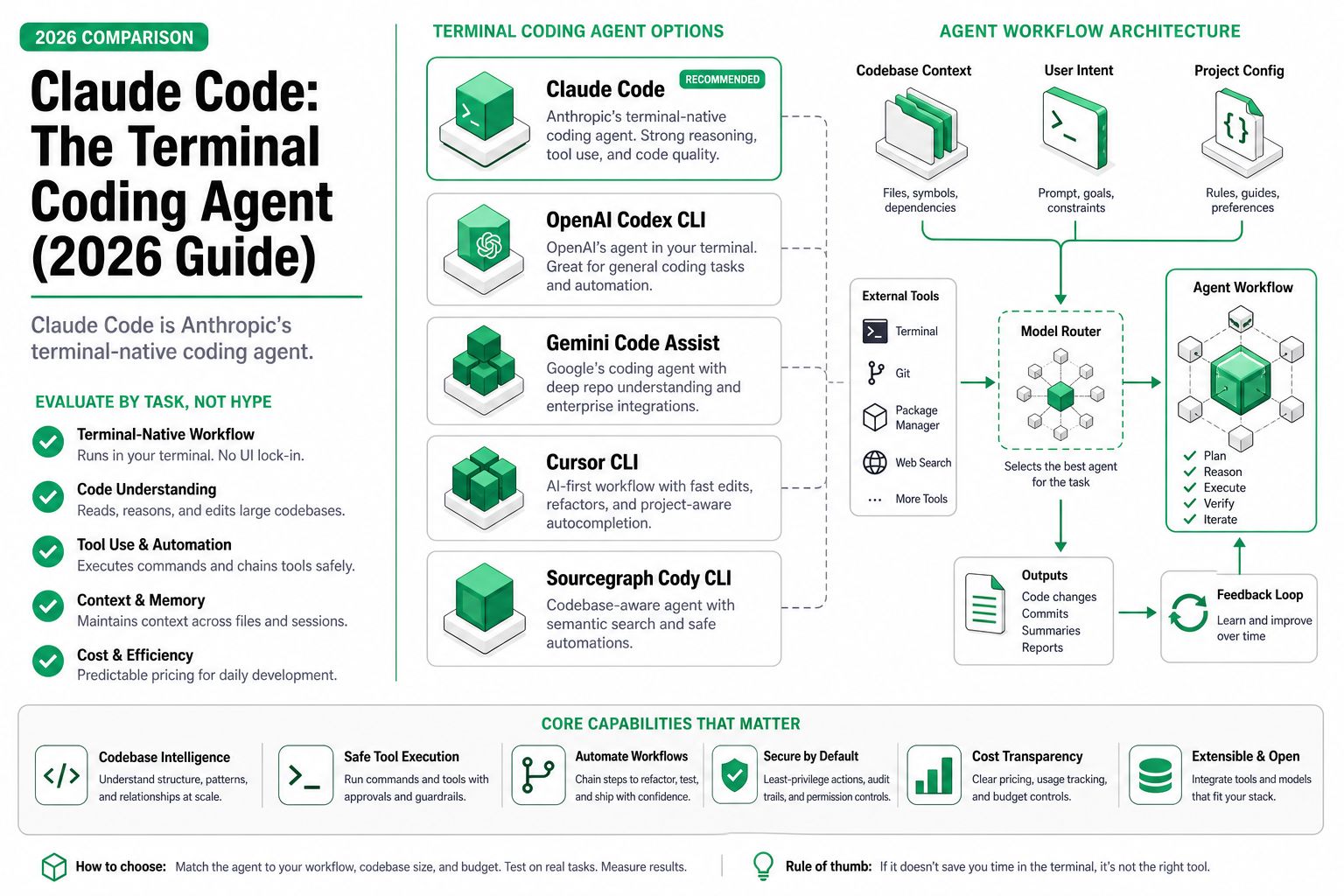
Claude Code is Anthropic's terminal-native coding agent. This guide covers how it works, real usage patterns, costs, and when to use it in 2026.
Read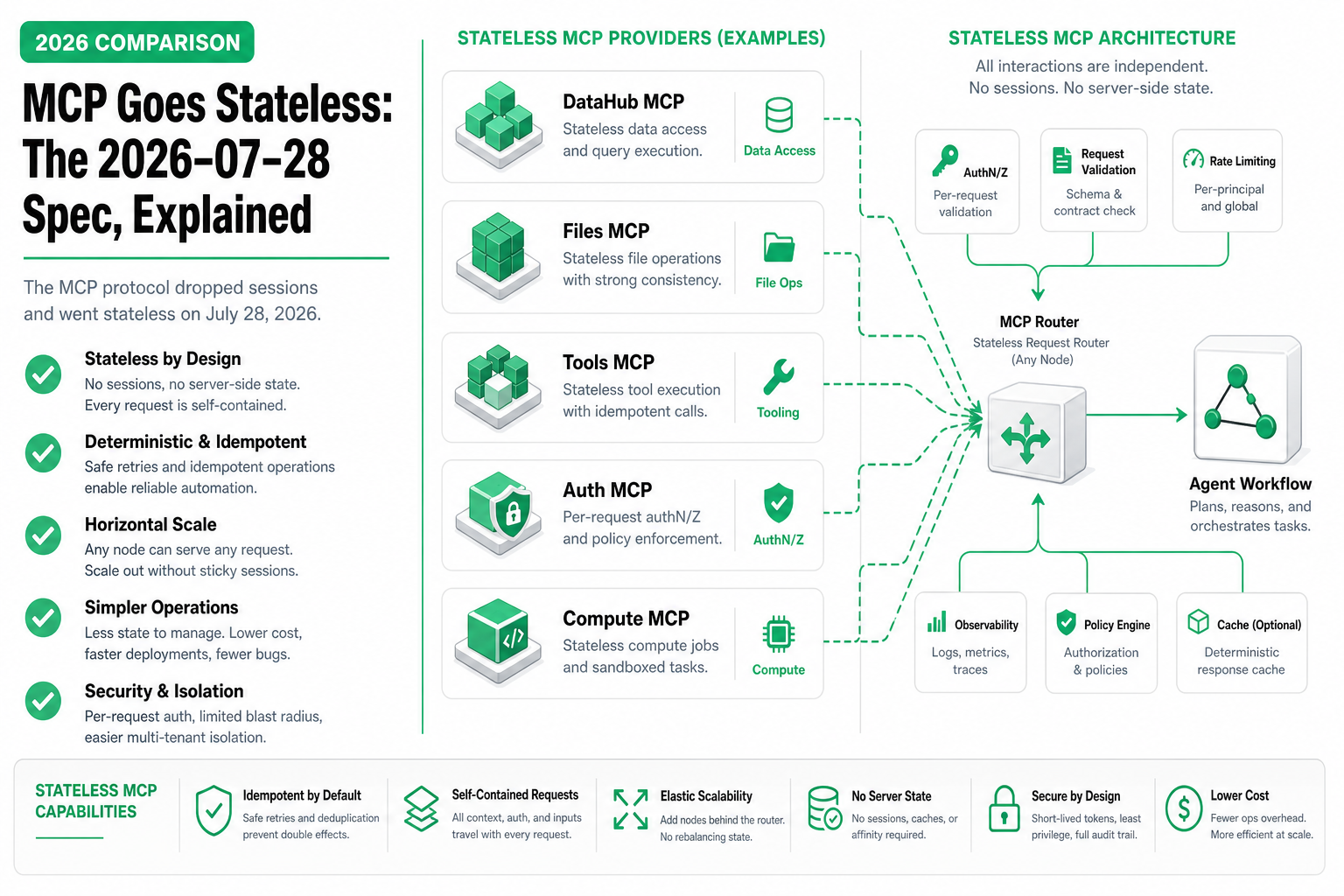
The MCP protocol dropped sessions and went stateless on July 28, 2026. What changed, why it matters for production agents, and how to migrate your servers.
Read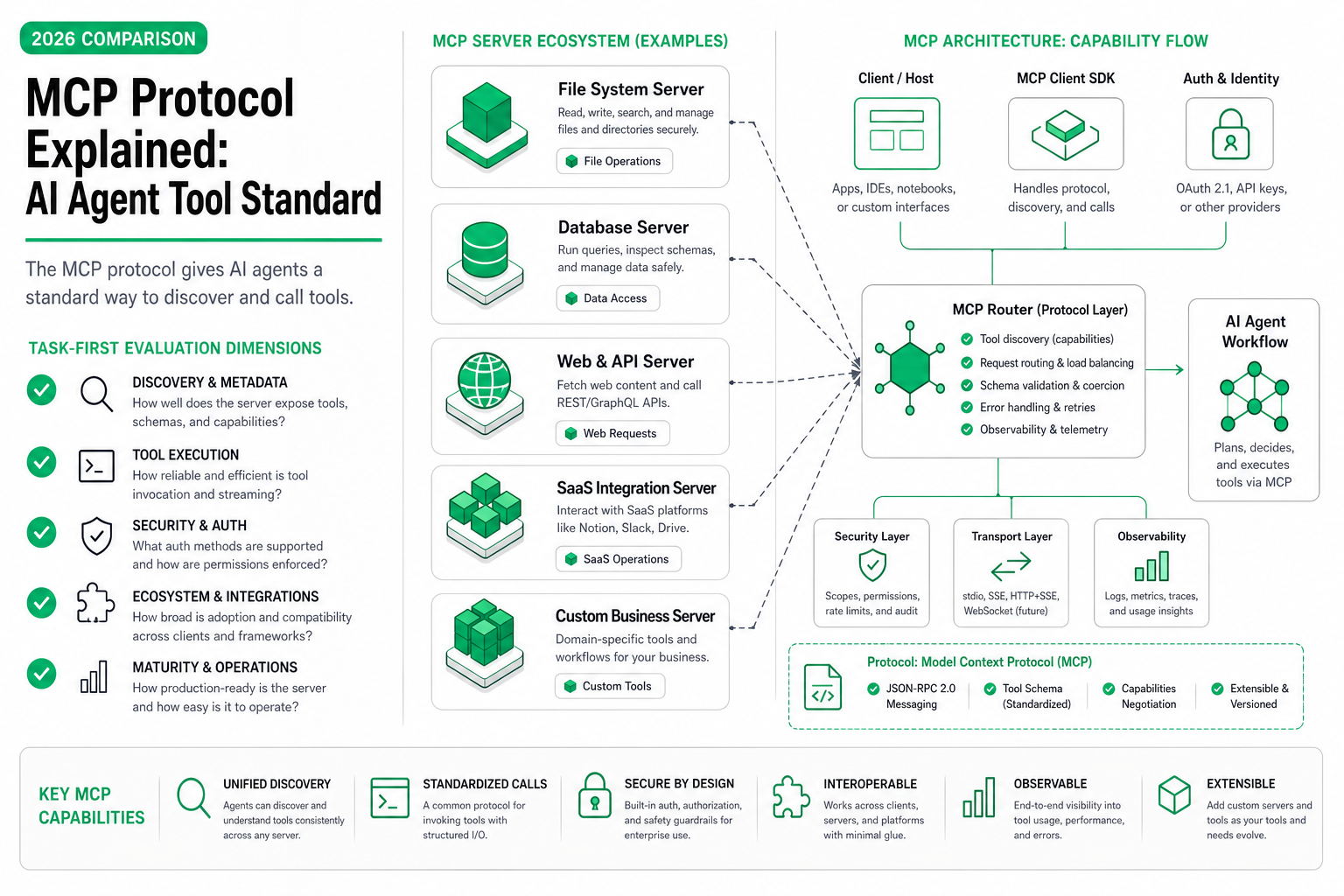
The MCP protocol gives AI agents a standard way to discover and call tools. How it works, how to build a server, and the ecosystem in 2026.
Read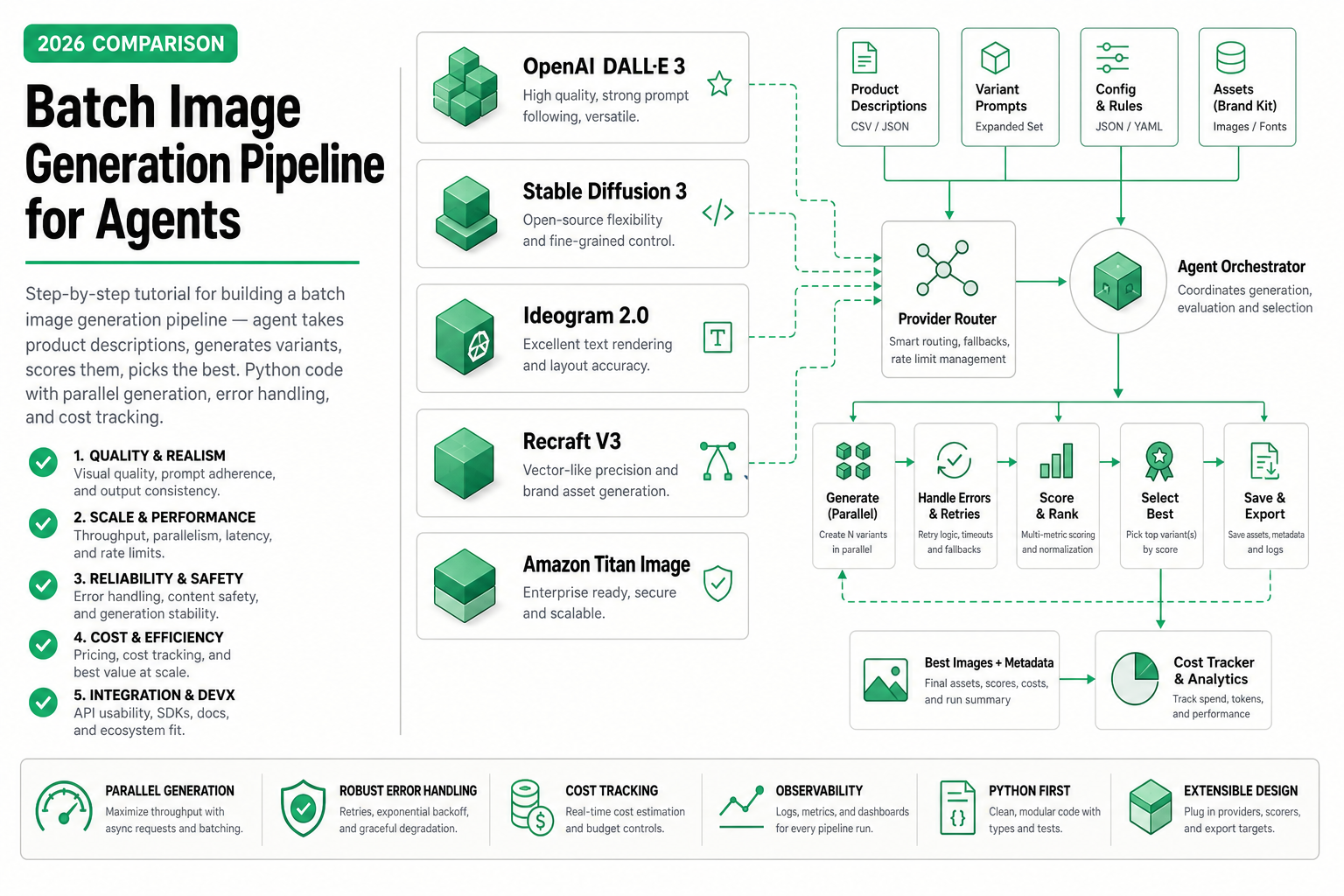
Step-by-step tutorial for building a batch image generation pipeline — agent takes product descriptions, generates variants, scores them, picks the best. Python code with parallel generation, error handling, and cost tracking.
Read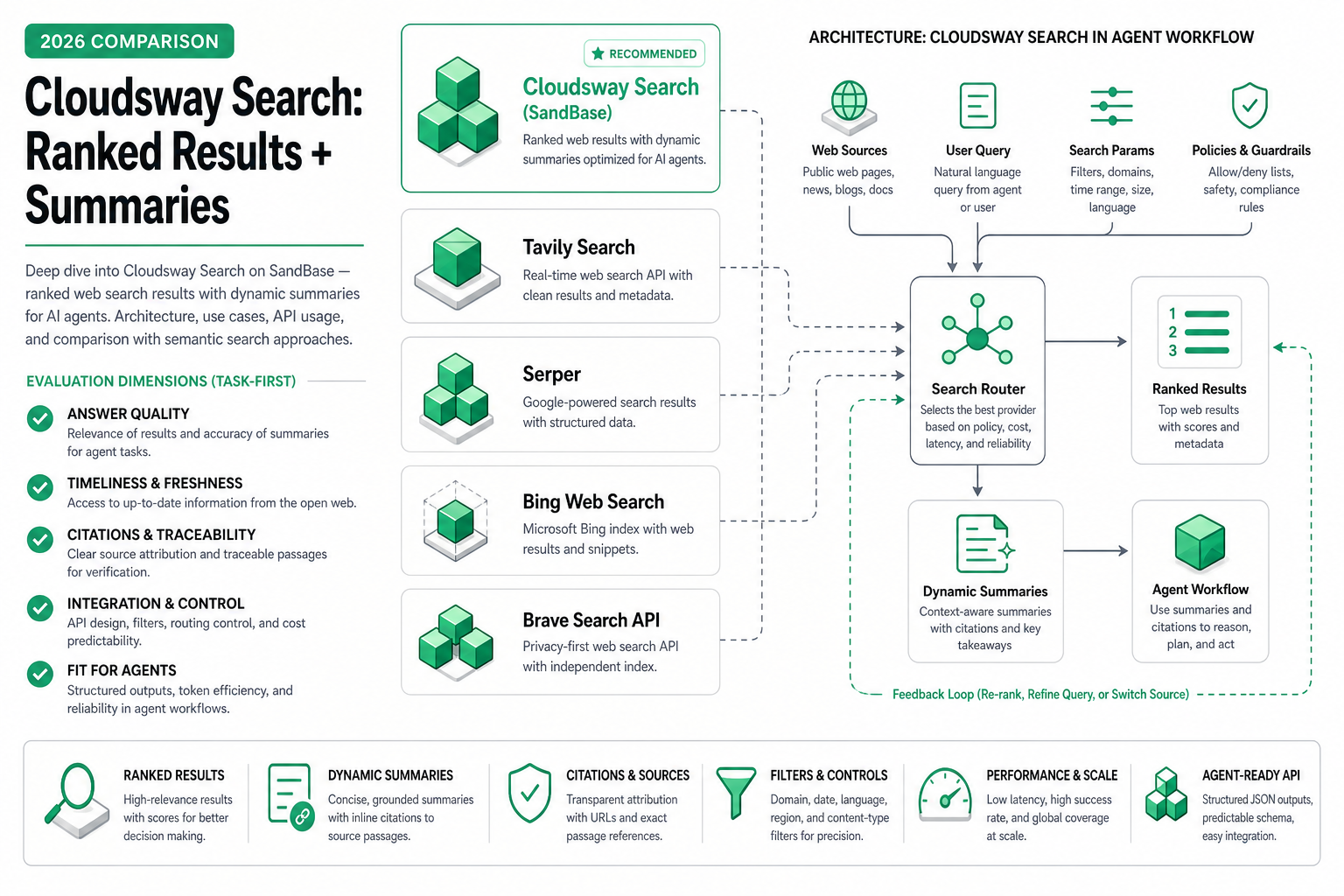
Deep dive into Cloudsway Search on SandBase — ranked web search results with dynamic summaries for AI agents. Architecture, use cases, API usage, and comparison with semantic search approaches.
Read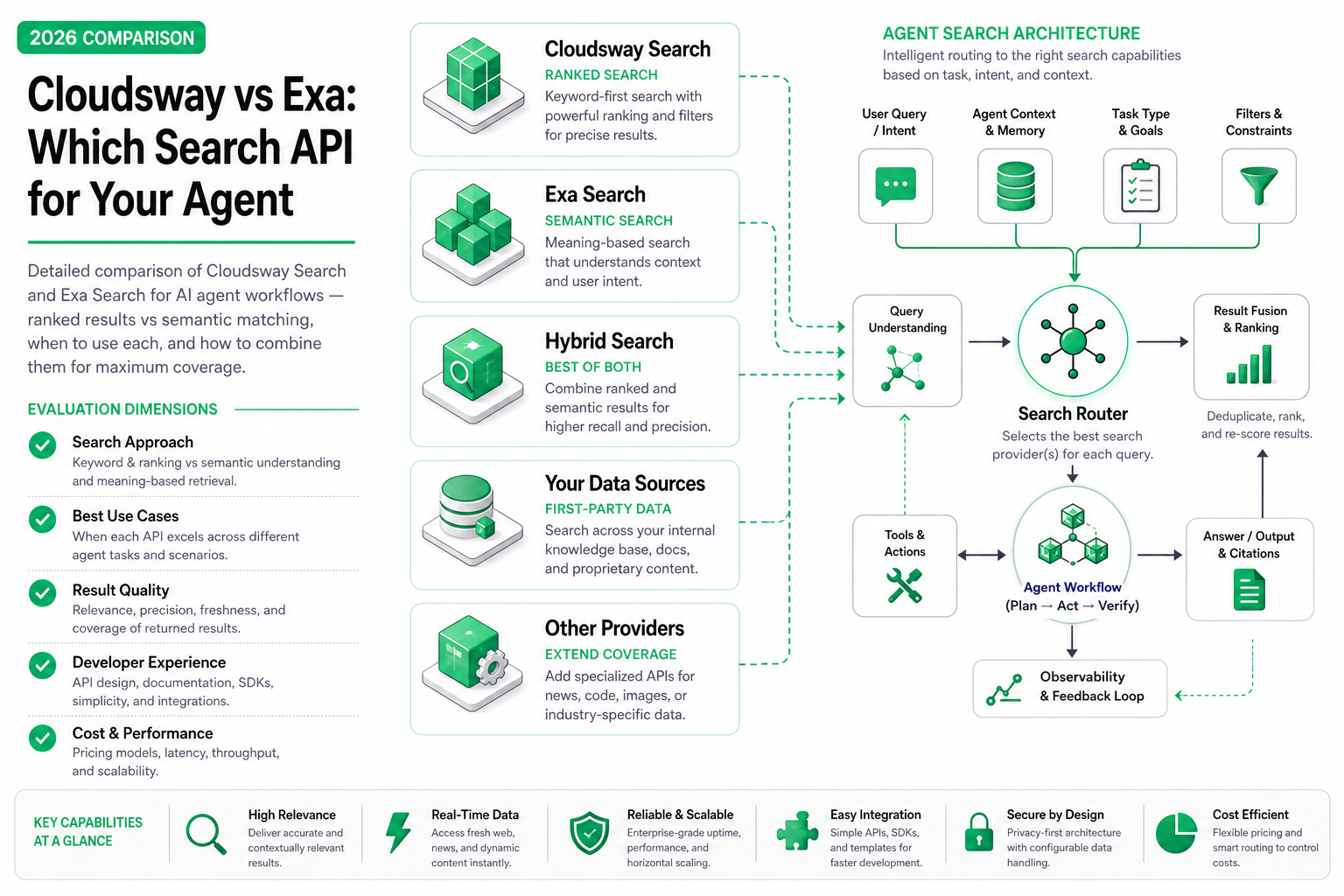
Detailed comparison of Cloudsway Search and Exa Search for AI agent workflows — ranked results vs semantic matching, when to use each, and how to combine them for maximum coverage.
Read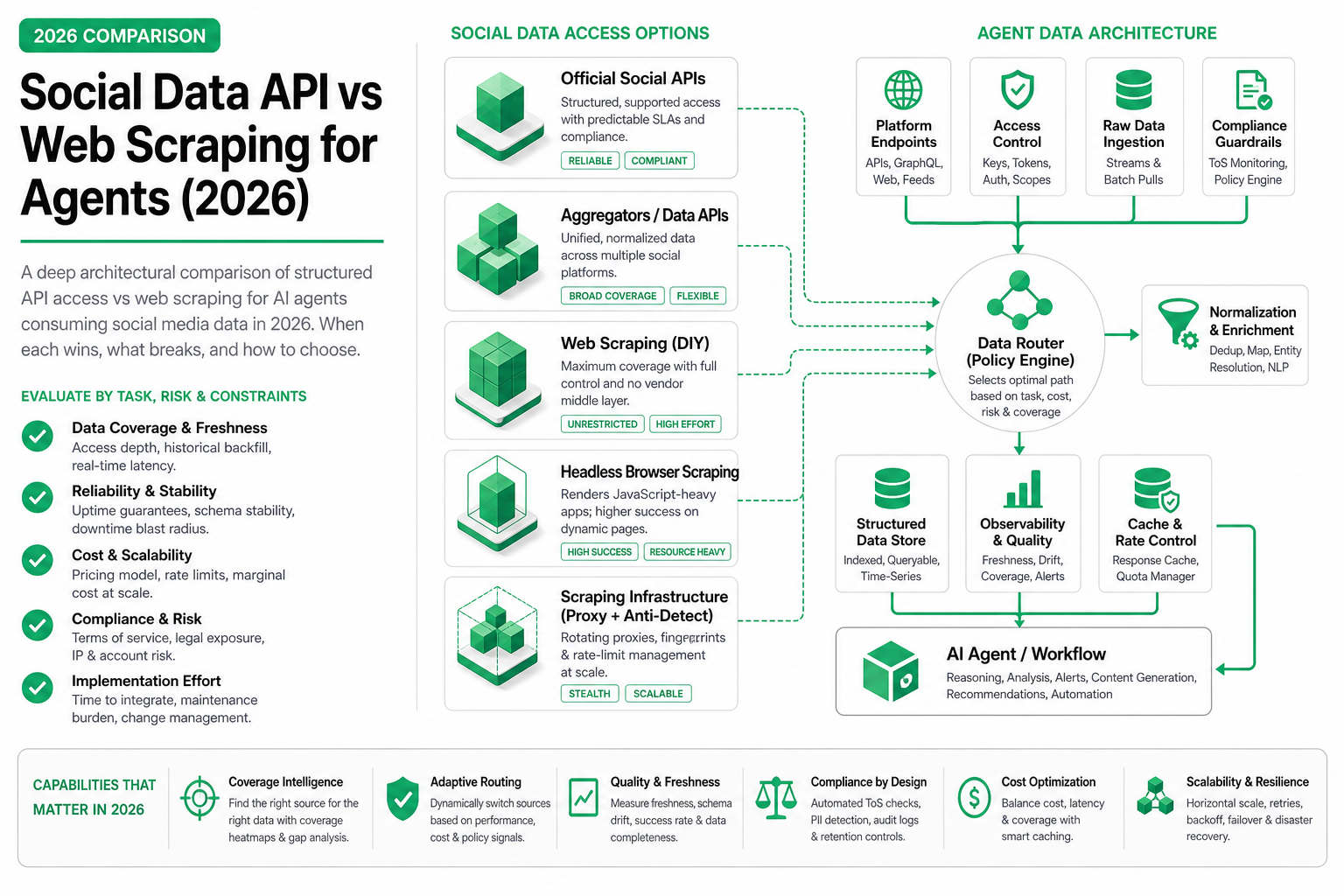
A deep architectural comparison of structured API access vs web scraping for AI agents consuming social media data in 2026. When each wins, what breaks, and how to choose.
Read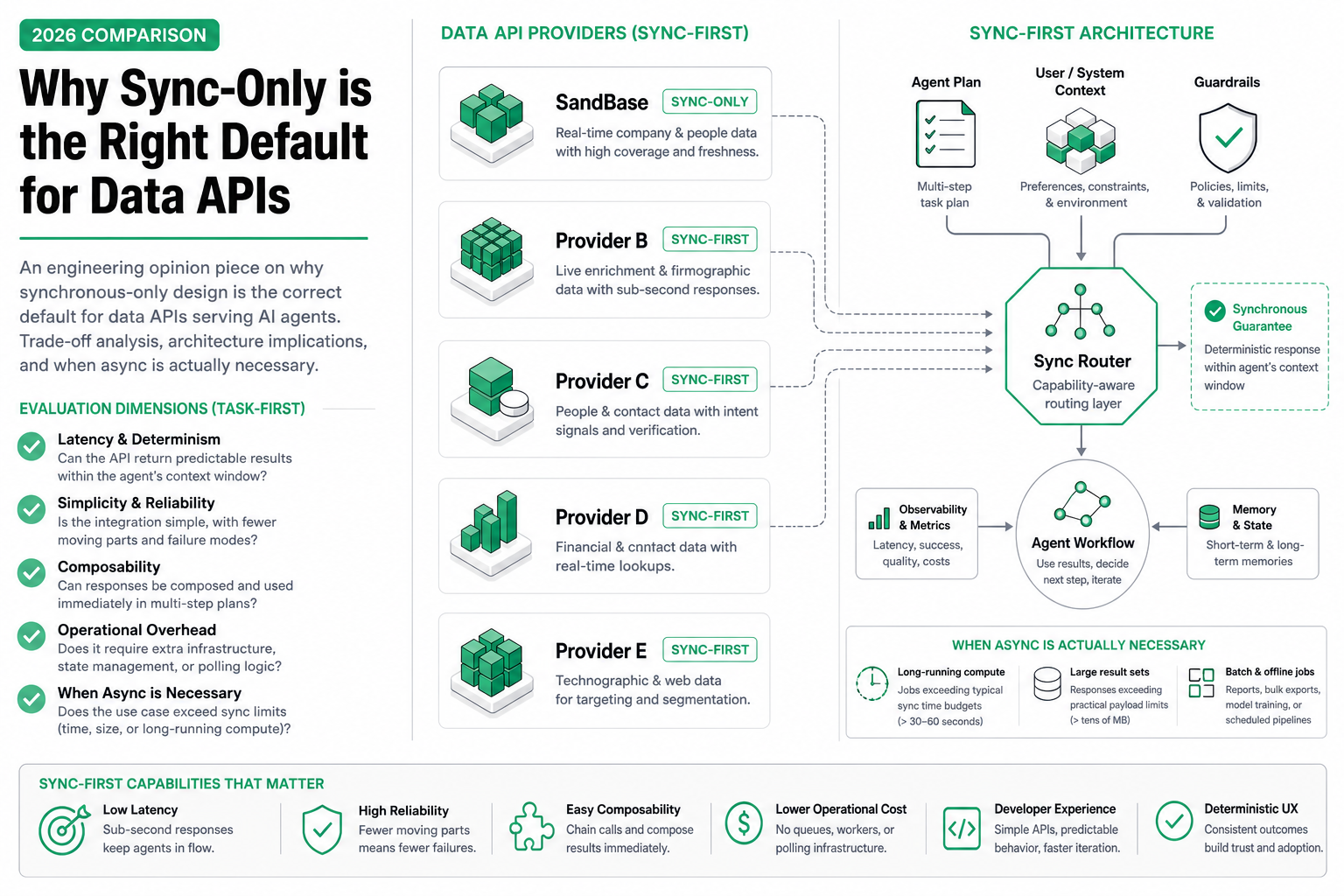
An engineering opinion piece on why synchronous-only design is the correct default for data APIs serving AI agents. Trade-off analysis, architecture implications, and when async is actually necessary.
Read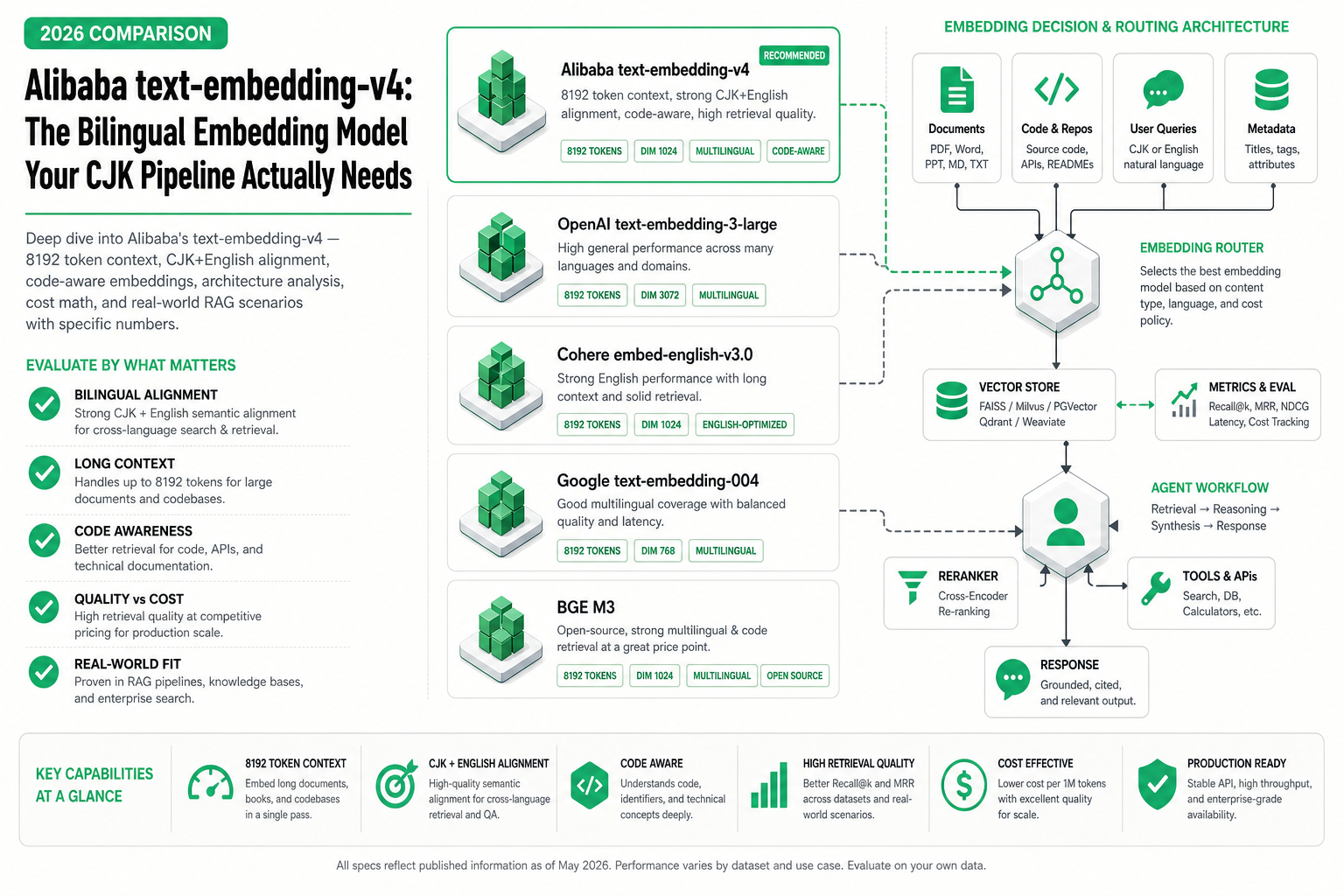
Deep dive into Alibaba's text-embedding-v4 — 8192 token context, CJK+English alignment, code-aware embeddings, architecture analysis, cost math, and real-world RAG scenarios with specific numbers.
Read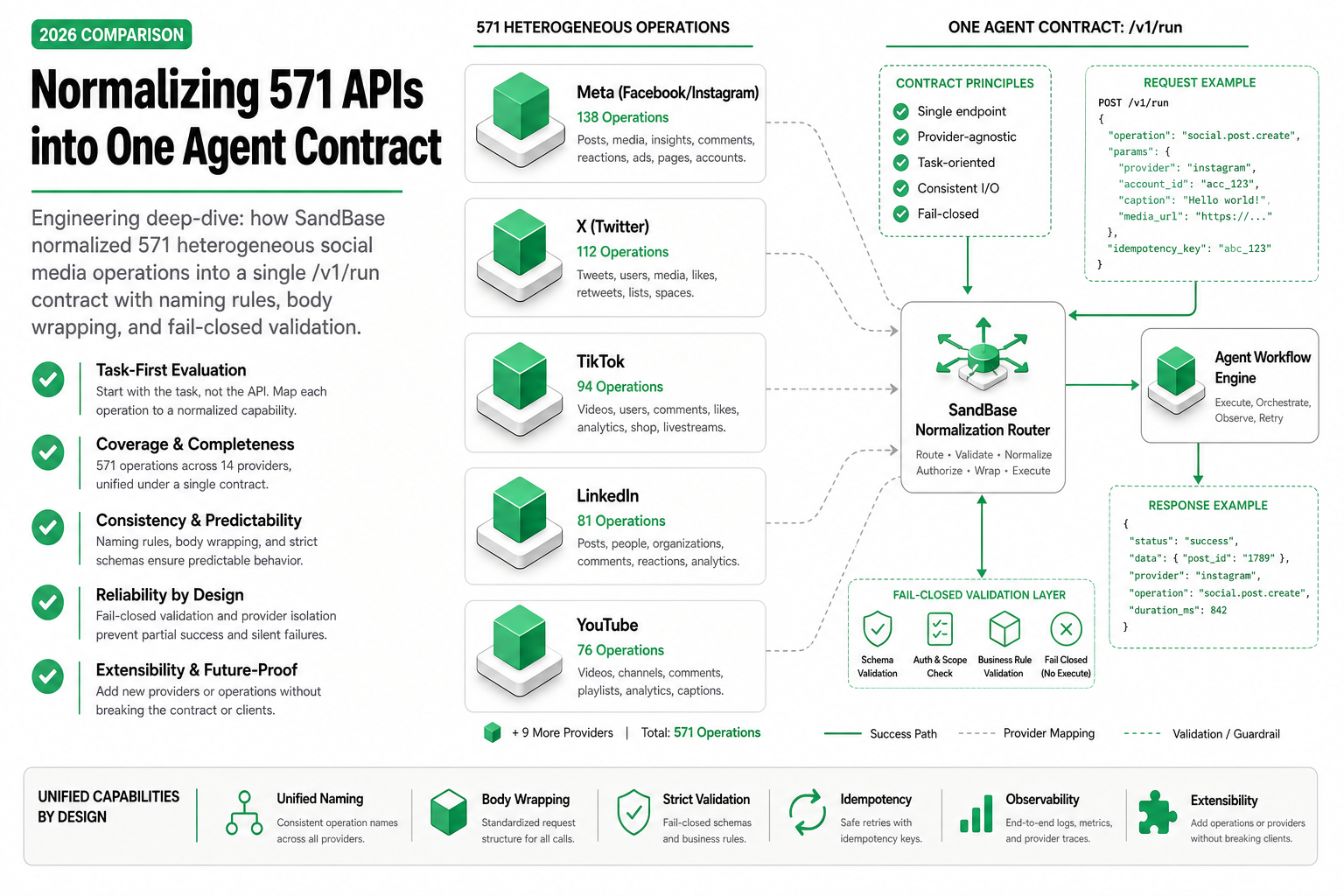
Engineering deep-dive: how SandBase normalized 571 heterogeneous social media operations into a single /v1/run contract with naming rules, body wrapping, and fail-closed validation.
Read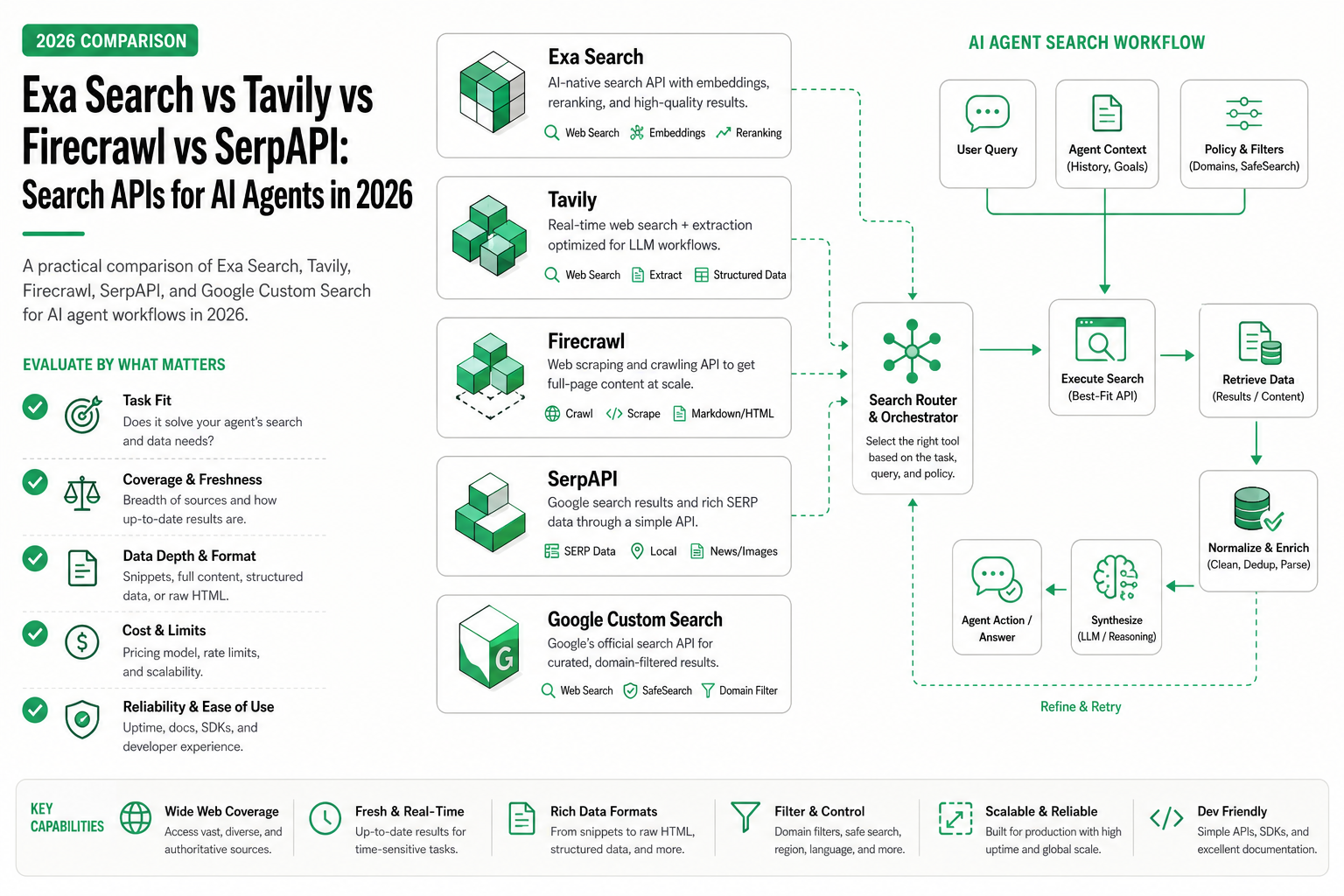
A practical comparison of Exa Search, Tavily, Firecrawl, SerpAPI, and Google Custom Search for AI agent workflows in 2026.
Read