Developer Tools
Instagram Public Data API: Profiles, Posts & Reels | SandBase
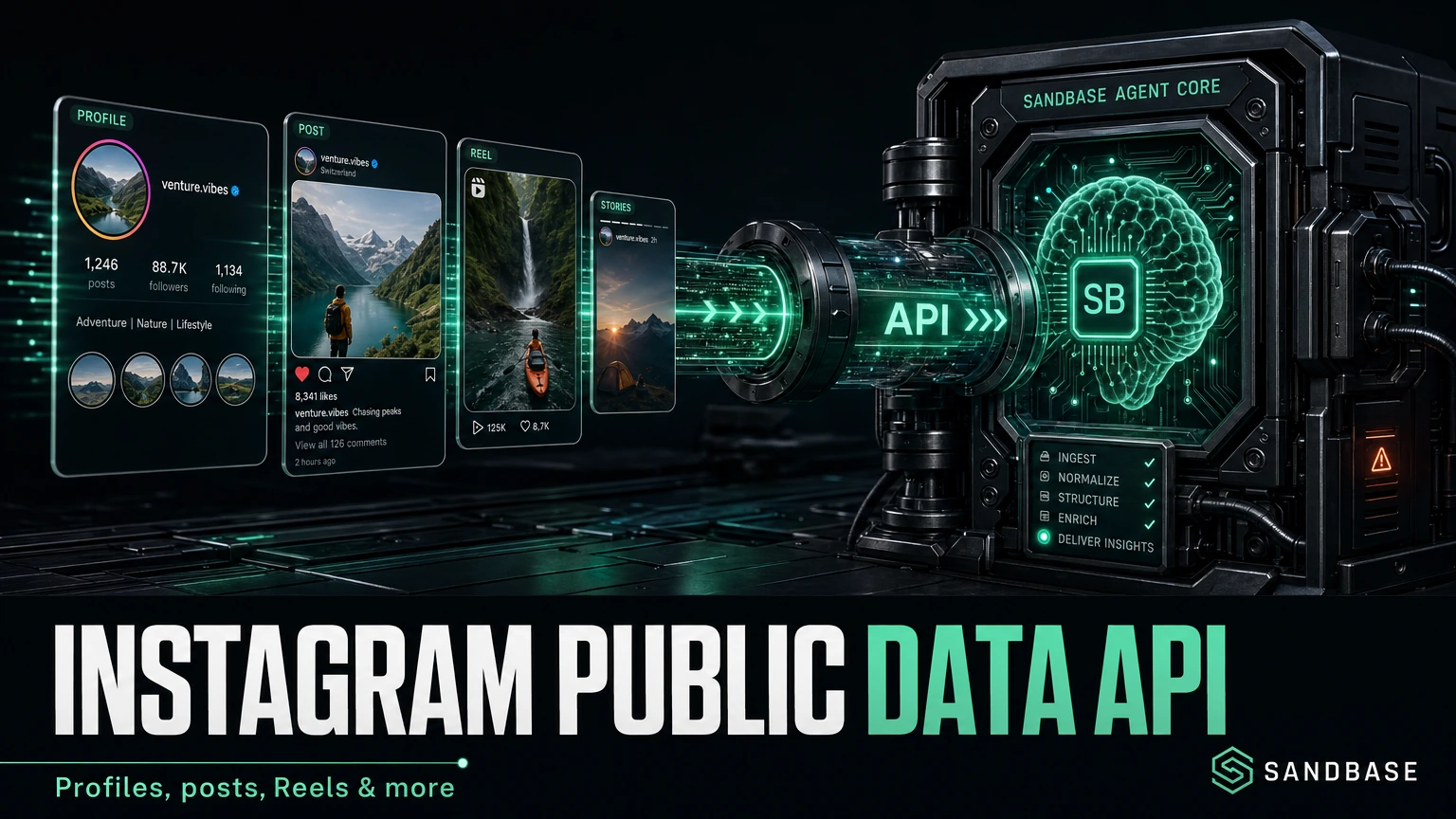
Read public Instagram profiles, posts, Reels, followers, comments, and hashtags with one REST API. No Instagram OAuth or SDK — one SandBase key, built for agents.
ReadInsights on AI agents, model routing, and building production-ready AI systems.
Read public Instagram profiles, posts, Reels, followers, comments, and hashtags with one REST API. No Instagram OAuth or SDK — one SandBase key, built for agents.
Read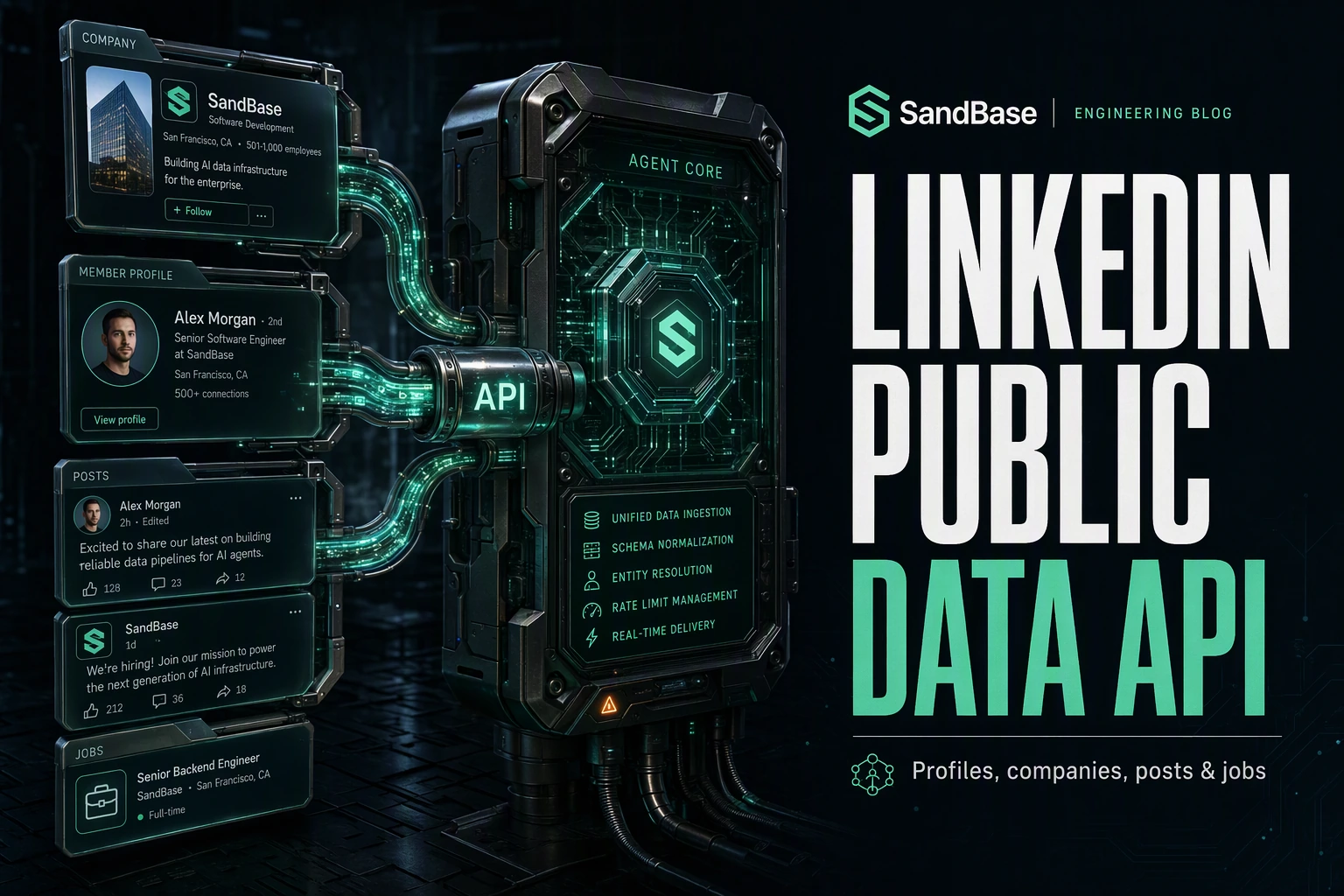
Read public LinkedIn profiles, company pages, posts, and jobs with one REST API. No LinkedIn OAuth, no SDK — one SandBase key, built for agent workflows.
Read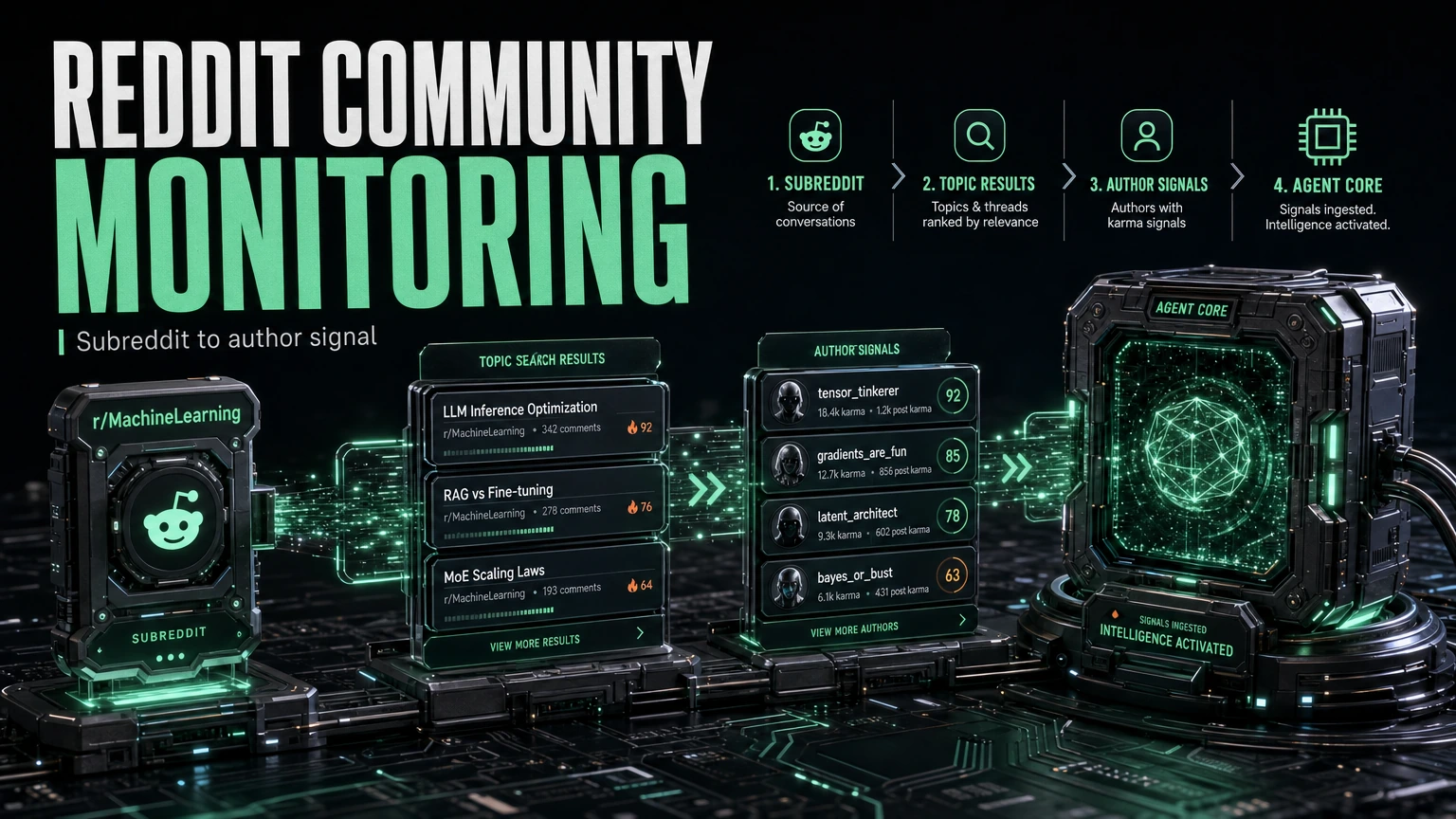
A Reddit community monitoring API workflow: size a subreddit, discover topic conversations, and profile authors — one SandBase key, no OAuth app.
Read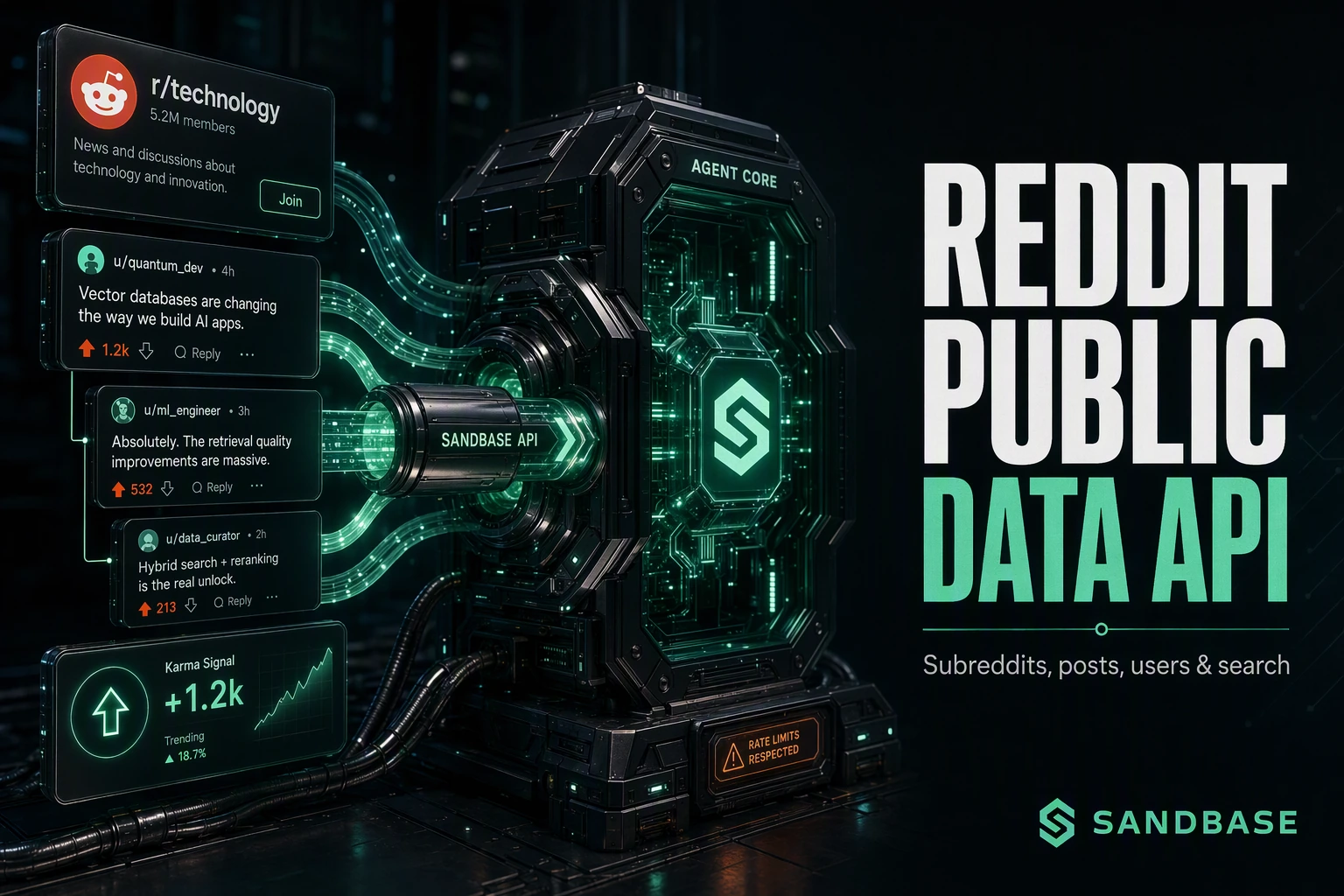
Read public Reddit subreddits, posts, comments, user profiles, and search with one REST API. No Reddit OAuth app, no PRAW — one SandBase key, built for agents.
Read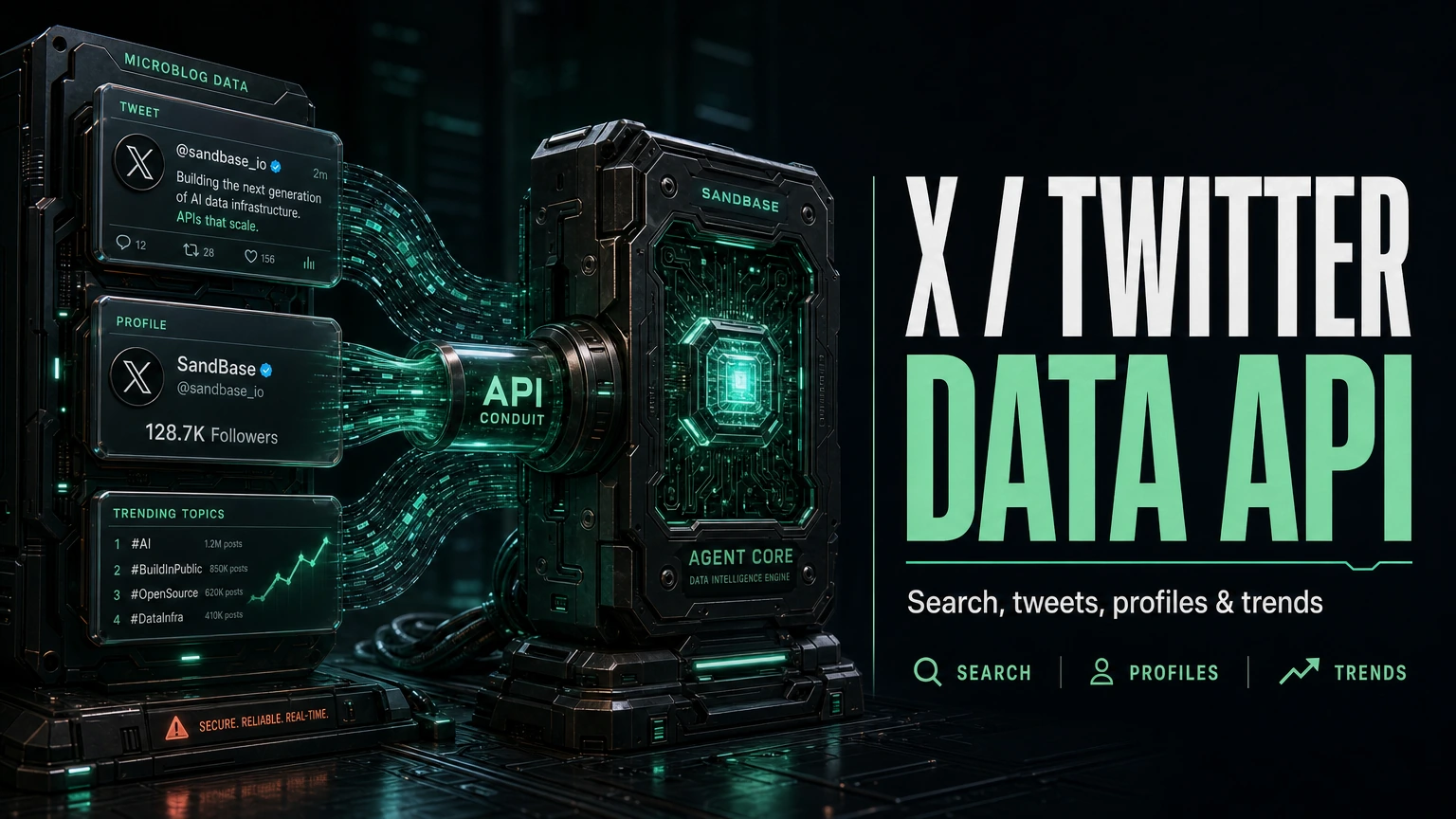
Search X/Twitter and read public tweets, profiles, followers, and trends with one REST API. No X developer tier, no OAuth — one SandBase key, built for agents.
Read
Read public TikTok profiles, videos, comments, Creative Center trends, and shop product data with one REST API. No SDK — one SandBase key, built for agents.
Read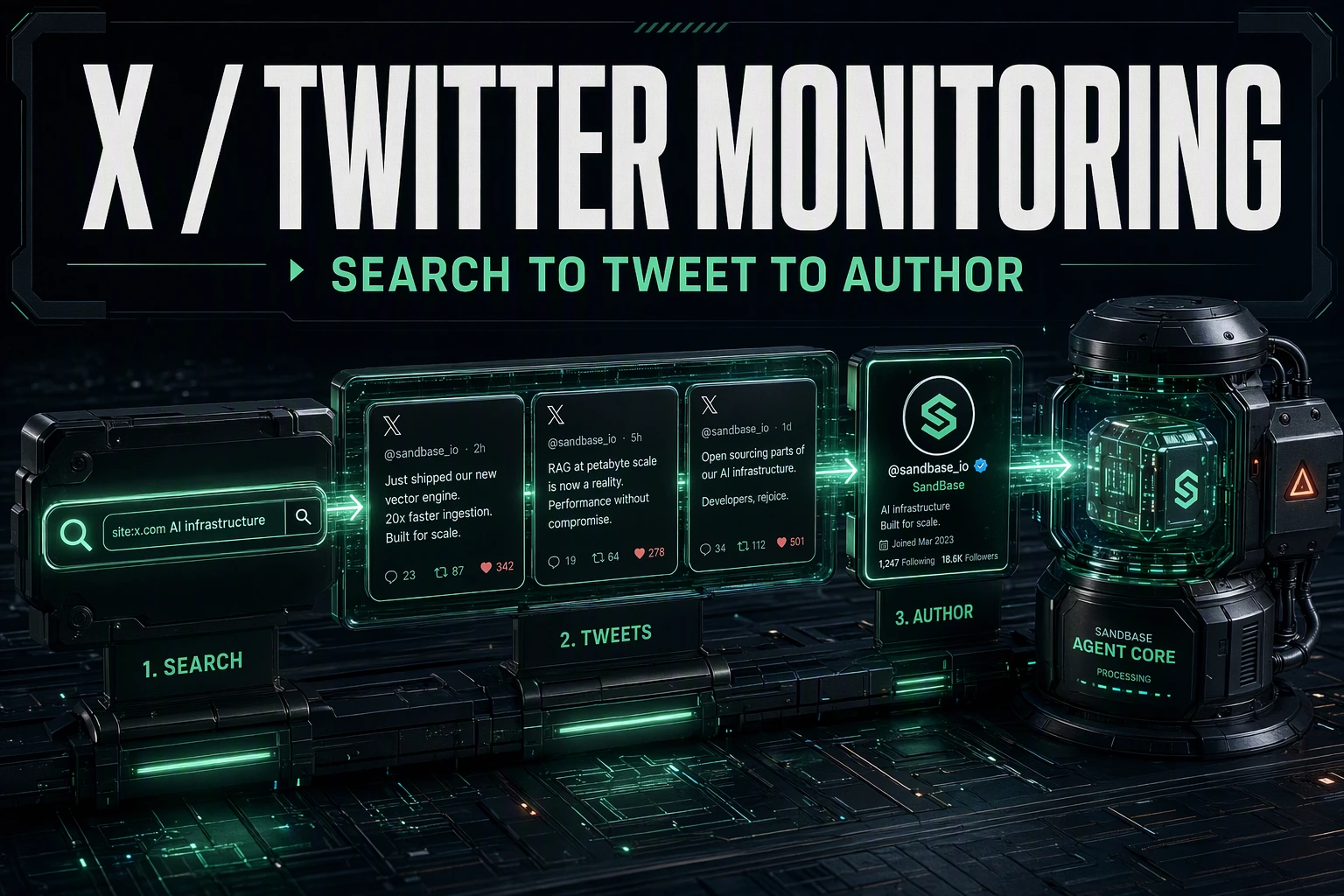
Build an X/Twitter monitoring workflow: search a topic, read a tweet's engagement, and profile its author — one SandBase key, no X developer tier, no OAuth.
Read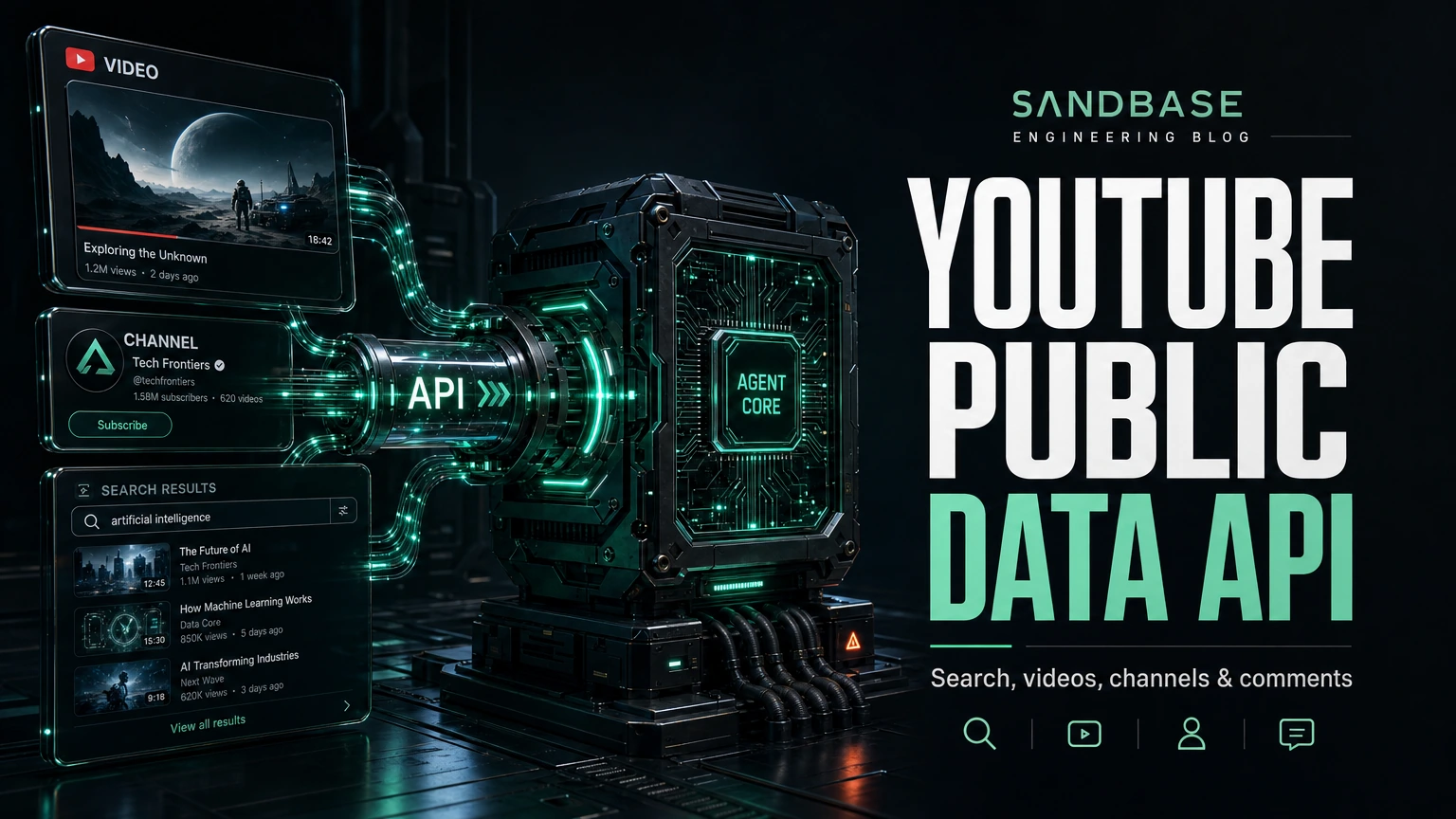
Search YouTube and read public videos, channels, comments, and captions with one REST API — one SandBase key, built for agents.
Read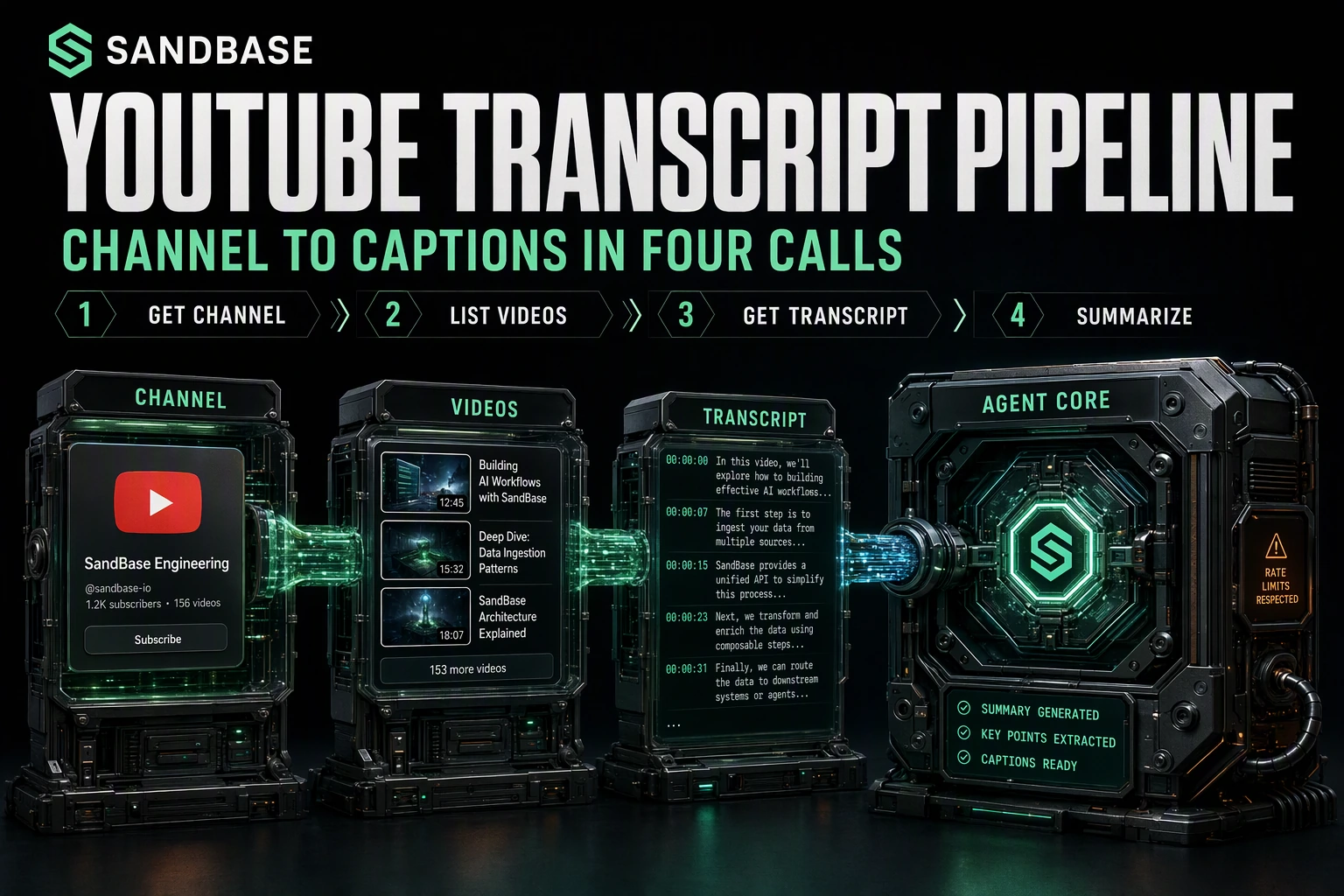
Go from a channel name to caption tracks in four calls: resolve the channel, list videos, read video info, and discover captions — one SandBase key, no OAuth.
Read